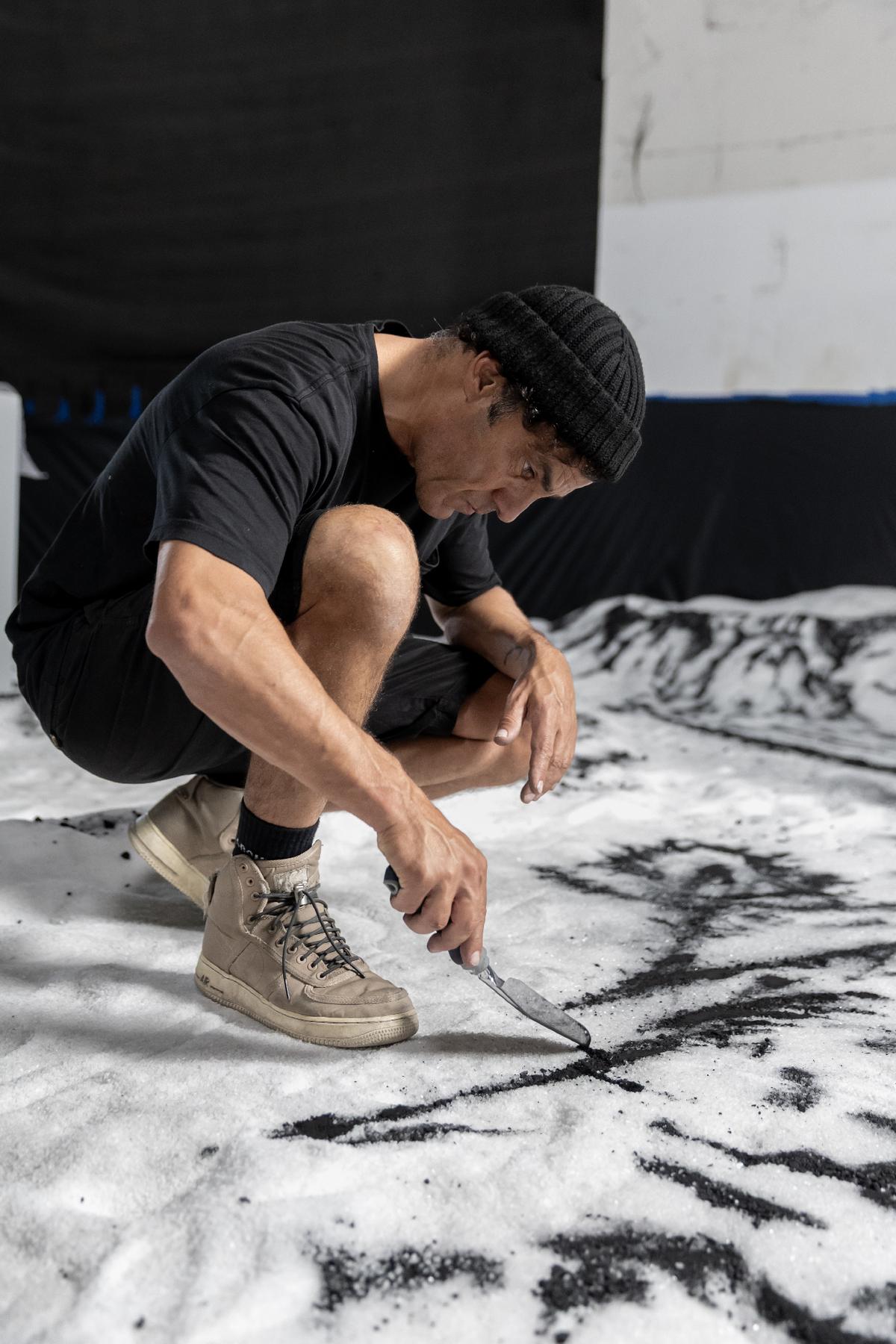
Matías Duville on Representing Argentina at the 61st Venice Biennale
Why It Matters
The project spotlights Argentina’s ecological narrative on a world‑stage, while the Biennale’s visibility amplifies the country’s contemporary art discourse and its capacity to influence global cultural conversations.
Key Takeaways
- •Duville's "Monitor Yin Yang" turns pavilion into walkable salt‑charcoal landscape
- •Installation expands drawing into spatial, sonic, and time‑based experience
- •Work reflects Argentine Patagonia's vastness and ecological tensions
- •Biennale provides Argentine artists unprecedented global visibility and dialogue
- •Duville argues art anticipates ecological issues before political discourse
Pulse Analysis
The 61st Venice Biennale, running from May to November 2026, continues its legacy as the premier arena for contemporary art, drawing over 100 national pavilions and millions of visitors. This year’s curatorial focus, "In Minor Keys," invites artists to explore subtle intensities and temporal nuances, a framework that aligns closely with Matías Duville’s practice. Duville, known for translating the raw expanses of Patagonia into immersive installations, brings his latest work, "Monitor Yin Yang," to the historic Arsenal venue, positioning Argentina at the heart of the global conversation.
"Monitor Yin Yang" reimagines the Argentine pavilion as a tactile landscape composed of salt and charcoal, materials that echo the mineral richness and stark contrasts of southern Argentine terrain. By extending drawing beyond the wall into a three‑dimensional, sound‑infused environment, Duville creates a living score where each visitor’s movement alters perception. The installation’s emphasis on chaos and open‑ended evolution mirrors ecological cycles, underscoring the artist’s belief that art can pre‑emptively surface environmental concerns before they enter policy debates.
Beyond its aesthetic ambition, Duville’s participation underscores the strategic importance of national pavilions amid rising geopolitical tensions. While the pavilion does not seek to cement a monolithic Argentine identity, it leverages the country’s peripheral perspective—vastness, distance, and resource‑based challenges—to foster both difference and commonality within the Biennale’s collective. This nuanced stance not only elevates Argentine contemporary art on an international platform but also illustrates how cultural institutions can act as early warning systems, translating ecological anxieties into immersive experiences that resonate across borders. The convergence of artistic innovation and global visibility positions the Biennale as a catalyst for broader cultural and environmental dialogue.
Matías Duville on Representing Argentina at the 61st Venice Biennale
Comments
Want to join the conversation?
Loading comments...