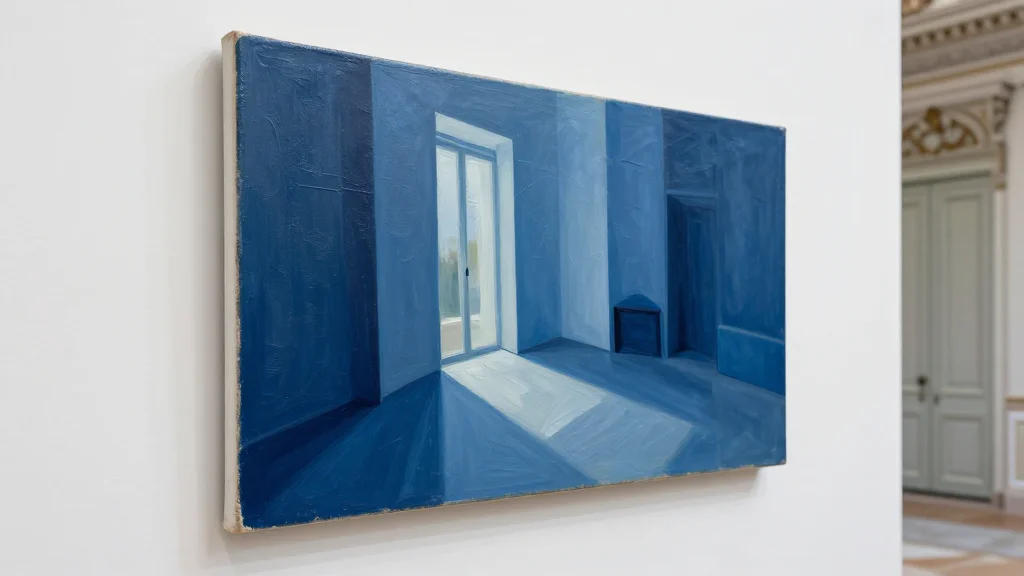
Matthew Wong’s Rhapsodies in Blue Claim Their Place in Art History
Why It Matters
Wong’s soaring market prices and posthumous museum exposure signal a growing appetite for self‑taught, non‑Western voices in the global art market, reshaping collector priorities and institutional narratives.
Key Takeaways
- •Self-taught Hong Kong-born painter Matthew Wong sold works for up to $6.6 million.
- •Wong produced up to three canvases daily, mastering modernist styles by 2016.
- •Solo show “Interiors” at Venice Biennale highlights his blue‑hued interior series.
- •Record auction prices reflect rapid market acceptance of Asian‑born contemporary artists.
- •Wong’s work explores loneliness, virtual‑real tension, resonating with global audiences.
Pulse Analysis
Matthew Wong’s meteoric rise illustrates how self‑taught talent can disrupt traditional art hierarchies. Emerging from a modest background in Hong Kong and Ontario, Wong leveraged social media to bypass gatekeepers, quickly attracting New York representation and institutional interest. His paintings, marked by luminous blues and intricate brushwork, fuse Western modernism with Chinese calligraphic sensibilities, creating a visual dialect that resonates with collectors seeking fresh narratives beyond Euro‑centric canons. The recent Venice Biennale showcase underscores this cross‑cultural appeal, positioning Wong alongside peers like Michael Armitage and Amoako Boafo who similarly reinterpret Western art histories through non‑Western lenses.
The market’s response has been striking: auction houses have recorded sales exceeding $6 million for works created only a few years before Wong’s untimely death. Such figures reflect a broader shift where investors prioritize artists who embody both aesthetic innovation and compelling personal stories. Wong’s prolific output—often three canvases a day—demonstrated an urgency that translates into scarcity, further driving price appreciation. Galleries and museums now view his oeuvre as a bridge between the digital age’s rapid visual consumption and the timeless emotional depth of classic painting.
Beyond financial metrics, Wong’s legacy raises important conversations about mental health, neurodiversity, and representation in the arts. Diagnosed with autism and Tourette’s, he infused his canvases with themes of isolation and the tension between virtual and physical spaces, resonating with a generation accustomed to online immersion. As institutions integrate his work into major exhibitions, they not only enrich the narrative of 21st‑century figurative painting but also signal a commitment to diversifying the canon, ensuring that voices like Wong’s shape the future of contemporary art.
Matthew Wong’s rhapsodies in blue claim their place in art history
Comments
Want to join the conversation?
Loading comments...