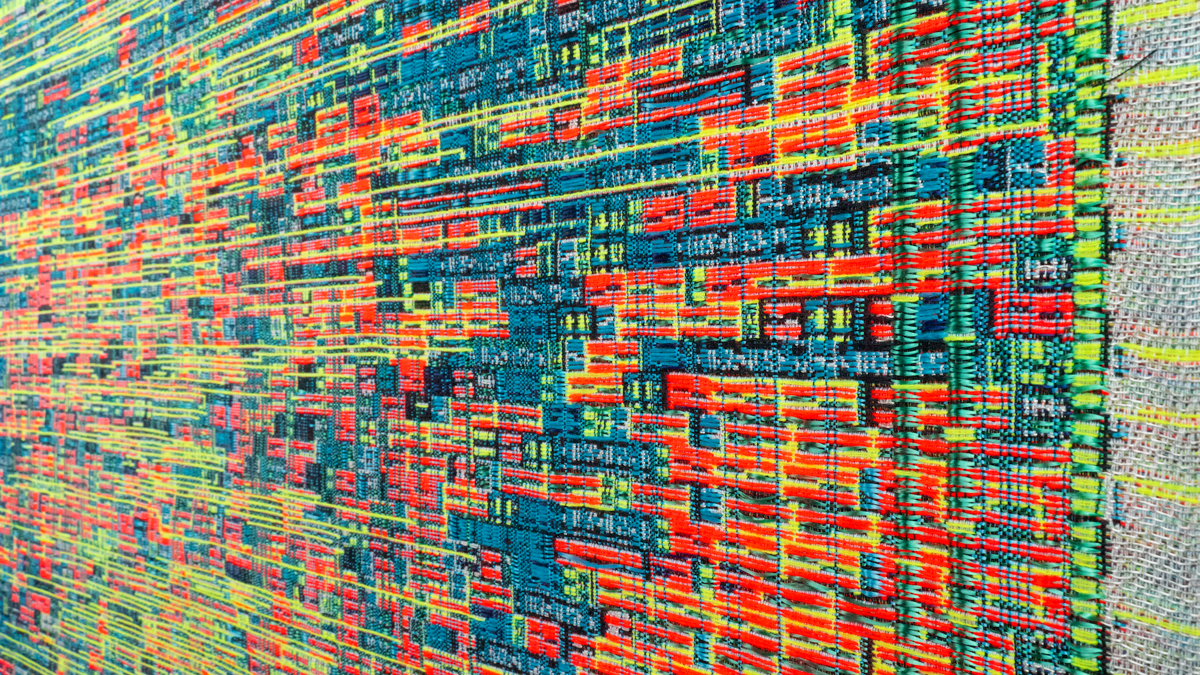
Merging Craft Practices and New Media at the Museum of Craft and Design
•March 11, 2026
0
Why It Matters
The show signals a shift in cultural institutions toward integrating craft into new‑media narratives, expanding audience reach and opening new market opportunities for hybrid art practices.
Key Takeaways
- •Exhibition merges video art with traditional craft techniques
- •Themes: encoding, looping, sampling link media and materiality
- •Nineteen artists range from video pioneers to digital natives
- •Curators aim to reinsert craft into new media discourse
- •Exhibition runs through August 16, 2026 at San Francisco MCD
Pulse Analysis
The boundary between handcrafted objects and digital media has long been a point of contention in contemporary art discourse. Historically, museums and galleries treated video and film as separate from the tactile world of ceramics, textiles, and glass, relegating craft to a peripheral status. Recent scholarly work and curatorial experiments, however, are challenging that divide, arguing that materiality and screen‑based practices share underlying processes of transformation, repetition, and reinterpretation. "Video Craft" embodies this shift, positioning the museum as a laboratory where the physical and the virtual intersect.
Curated by Sarah Mills, PhD, and Ariel Zaccheo, the exhibition groups works into three thematic clusters—encoding, looping, and sampling—to make the conceptual links explicit. "Encoding" captures the translation of ideas across media, often resulting in structural metamorphosis. "Looping" emphasizes the rhythmic, tactile qualities common to knitting stitches and video playback, while "sampling" draws on historical patterns and re‑contextualizes them within a digital framework. Featuring artists from Beryl Korot, a video art pioneer, to emerging figures like Sabrina Gschwandtner, the show demonstrates how contemporary creators harness screen technology to amplify, rather than diminish, material engagement.
For cultural institutions, "Video Craft" offers a blueprint for attracting diverse audiences and generating fresh revenue streams. By foregrounding the synergy between craft and new media, museums can tap into collector interest in hybrid works that straddle traditional and digital markets. The exhibition also encourages cross‑disciplinary collaborations, prompting artists, technologists, and artisans to explore shared vocabularies of encoding, looping, and sampling. As the art world continues to blur the lines between the tactile and the virtual, such programs will likely become a staple of forward‑thinking curatorial practice.
Merging Craft Practices and New Media at the Museum of Craft and Design
0
Comments
Want to join the conversation?
Loading comments...