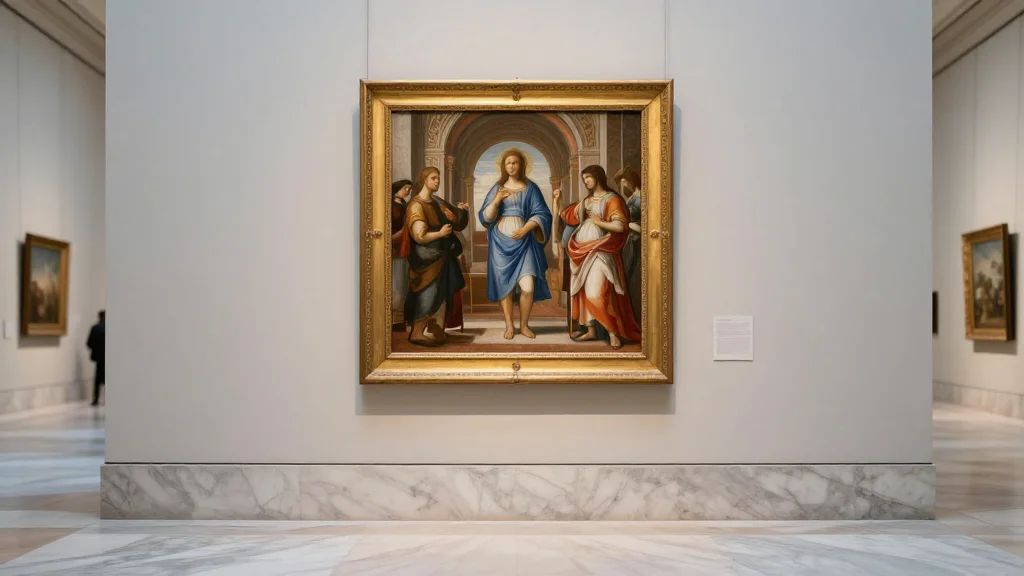
Metropolitan Museum Launches First U.S. Raphael Retrospective, 170 Works

Why It Matters
The Met’s Raphael retrospective reshapes public perception of a master whose name has long been relegated to the periphery of popular art history. By foregrounding his collaborative methods and entrepreneurial spirit, the exhibition invites a re‑evaluation of how Renaissance workshops operated and how those practices echo in today’s art ecosystem. Beyond cultural enrichment, the show demonstrates the commercial viability of deep‑dive historic exhibitions, encouraging institutions to invest in ambitious loans and scholarly catalogues. This could stimulate a new wave of museum‑driven market activity, influencing auction trends and collector behavior toward under‑represented masters.
Key Takeaways
- •Metropolitan Museum opens first major U.S. Raphael retrospective, featuring 170+ works.
- •Curated by Carmen Bambach, who emphasizes Raphael’s collaborative and business‑savvy practices.
- •Exhibition runs through June 2026, drawing loans from European museums and private collections.
- •Shows a shift in taste, revisiting Raphael’s “perfect, gracious, harmonious” style for modern audiences.
- •Potential market impact: rising interest and prices for Raphael drawings and related Renaissance art.
Pulse Analysis
Raphael’s re‑emergence on the American stage reflects a broader trend of museums leveraging iconic yet under‑exploited figures to attract both scholarly attention and ticket revenue. The Met’s decision to assemble a comprehensive body of work mirrors past successes with Picasso and Van Gogh retrospectives, but it also carries a distinct risk: the public’s limited familiarity with Raphael could translate into lower attendance than anticipated. However, Bambach’s framing of Raphael as a proto‑modern collaborator taps into current narratives about interdisciplinary practice, likely resonating with younger, digitally native visitors.
Historically, Renaissance retrospectives have been Euro‑centric, often confined to the continent of origin. By situating Raphael in a New York context, the Met not only democratizes access but also repositions the city as a global hub for high‑caliber historic exhibitions. This move could pressure other major institutions—such as the Getty or the Louvre—to pursue similarly ambitious projects, intensifying competition for loaned works and scholarly resources. In the longer term, the exhibition may catalyze a reassessment of the Renaissance canon, prompting museums to revisit other “third‑ranked” masters and diversify their narrative offerings.
From a market perspective, the exhibition’s emphasis on Raphael’s entrepreneurial instincts aligns with collectors’ growing appetite for artworks that embody both aesthetic and historical significance. Auction houses have already reported modest price gains for Raphael drawings, suggesting that heightened visibility can translate into tangible financial outcomes. If the Met’s model proves profitable, we may see a wave of museum‑backed exhibitions designed explicitly to stimulate market demand, blurring the line between cultural stewardship and commercial strategy.
Metropolitan Museum Launches First U.S. Raphael Retrospective, 170 Works
Comments
Want to join the conversation?
Loading comments...