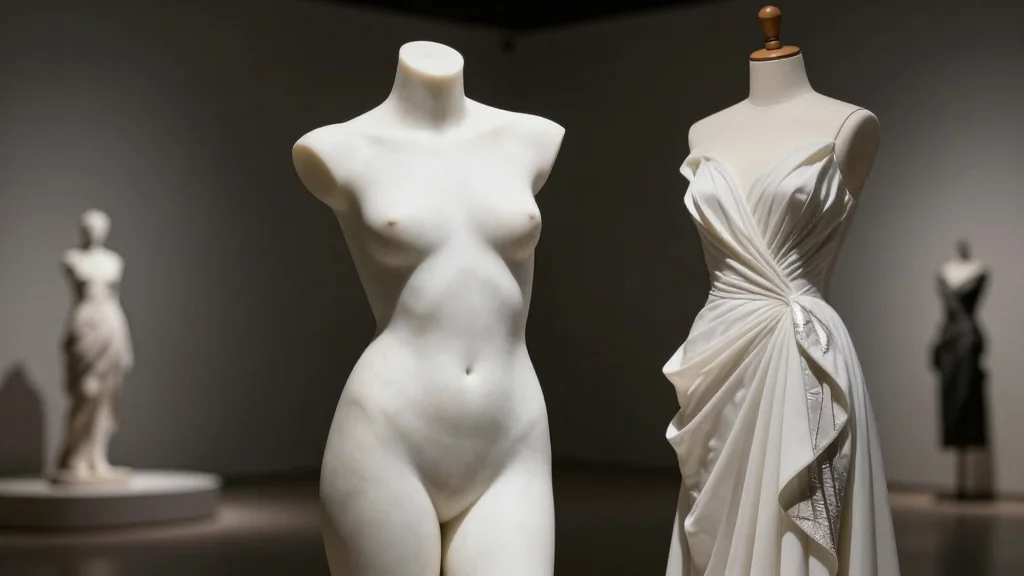
Met’s Costume Institute Launches ‘Costume Art’ Exhibition Linking Fashion and the Body

Companies Mentioned
Why It Matters
By positioning couture alongside ancient and modern artworks, the exhibition challenges traditional hierarchies that separate fashion from fine art. This integration encourages scholars, collectors, and the public to view clothing not merely as commercial product but as a cultural artifact that records social attitudes toward gender, ability, age, and the body. The thematic chapters also foreground under‑represented narratives—such as the disabled and aging bodies—prompting museums to broaden their curatorial scope. The commercial implications are equally significant. High‑profile museum shows have become launchpads for designers, offering exposure to affluent audiences and media coverage that can translate into sales. Conversely, museums benefit from the draw of contemporary fashion, boosting ticket revenue and expanding demographic reach. The “Costume Art” model may become a template for future collaborations, reshaping funding strategies and exhibition planning across both sectors.
Key Takeaways
- •Metropolitan Museum’s Costume Institute opened the “Costume Art” exhibition in spring 2026.
- •Curator Andrew Bolton frames the show as “fashion as an embodied art form.”
- •The exhibition pairs contemporary couture—Dolce & Gabbana, Dior, Maison Margiela—with artifacts spanning 5,000 years.
- •Thematic chapters include “Nude Body,” “Disabled Body,” “Aging Body,” and “Anatomical Body.”
- •Opening weekend saw record attendance, indicating strong public interest in fashion‑art crossovers.
Pulse Analysis
The Met’s decision to foreground fashion within a historical art narrative reflects a broader shift in cultural institutions toward interdisciplinary programming. Museums have long leveraged blockbuster exhibitions to drive foot traffic, but the integration of runway pieces signals a deeper acknowledgment of fashion’s role as a visual language that both mirrors and molds societal values. This move also aligns with the rise of ‘fashion museums’ and the increasing market value of contemporary garments, as seen in recent high‑profile sales at auction houses.
From a market perspective, the exhibition offers designers a prestigious platform that transcends the commercial runway cycle. By situating a piece like Dior’s 2024 “Bar” suit next to an ancient Iranian statuette, the Met creates a narrative that elevates the garment’s cultural significance, potentially enhancing its resale value and the brand’s heritage cachet. For the museum, the partnership provides access to exclusive pieces that would otherwise remain in private collections, enriching its holdings and attracting a younger, fashion‑savvy audience.
Looking ahead, the success of “Costume Art” could catalyze a new genre of museum‑fashion collaborations, where curators and designers co‑author exhibitions that address pressing social themes—body politics, disability, aging—through the dual lenses of art and apparel. This synergy may reshape acquisition policies, prompting museums to allocate budgets for contemporary fashion, while designers might increasingly seek curatorial input to deepen the conceptual underpinnings of their collections. The ultimate test will be whether such collaborations sustain critical rigor or devolve into mere spectacle; the Met’s careful thematic structuring suggests a commitment to the former, setting a high bar for future endeavors.
Met’s Costume Institute Launches ‘Costume Art’ Exhibition Linking Fashion and the Body
Comments
Want to join the conversation?
Loading comments...