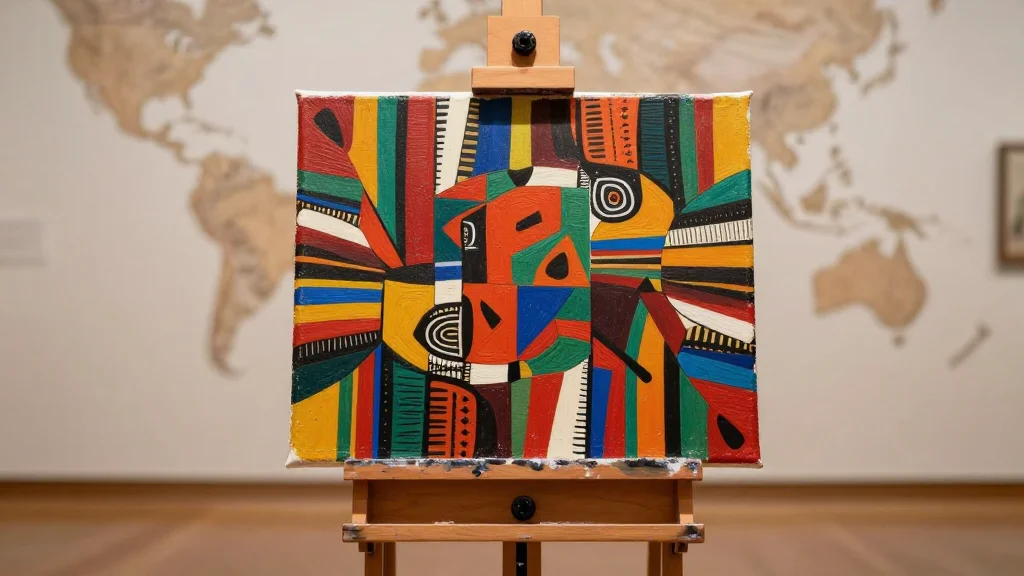
Mohammad Omer Khalil’s Five‑Institution ‘Common Ground’ Survey Unites U.S. Galleries

Companies Mentioned
Why It Matters
The “Common Ground” survey spotlights a growing trend toward multi‑institutional exhibitions that can bridge geographic and cultural divides, offering a model for how under‑represented artists can gain broader visibility without relying on a single flagship museum. By foregrounding Khalil’s collaborative ethos and his ties to both North African and American artistic communities, the project also deepens the discourse around diaspora narratives in contemporary art, encouraging institutions to co‑curate and share resources. Furthermore, the exhibition revives interest in traditional printmaking techniques at a time when digital media dominate. Khalil’s hands‑on methods—smudging, acid etching, and the use of found objects—provide a tactile counterpoint to virtual experiences, potentially inspiring renewed investment in print workshops and educational programs across museums.
Key Takeaways
- •Five institutions host the “Common Ground” exhibition: Manhattan, Brooklyn, Philadelphia, and Dearborn, MI
- •Artist Mohammad Omer Khalil is 90 years old and has taught at Pratt, the New School, Columbia and NYU
- •Shows six decades of prints, paintings, ephemera and oral histories
- •Includes programming at Africa Center, Anthology Film Archives, Pratt Institute and Queens Museum
- •Features collaborations with Emma Amos, Romare Bearden, Norman Lewis, Louise Nevelson and Mavis Pusey
Pulse Analysis
The launch of “Common Ground” signals a decisive shift in how legacy artists are contextualized within the contemporary museum ecosystem. Rather than relying on a single, high‑profile retrospective, Khalil’s team has leveraged a networked model that distributes risk and amplifies reach. This approach mirrors the rise of decentralized curatorial strategies seen in recent years, where institutions pool resources to present cohesive narratives that would be untenable for any one venue alone. The model also aligns with funding realities: shared transportation, joint marketing budgets, and collaborative grant applications can make ambitious surveys financially viable.
From a cultural perspective, the exhibition re‑centers the Sudanese diaspora within American art history, challenging the marginalization that has long kept artists like Khalil on the periphery. By situating his work alongside community‑focused spaces such as the Arab American National Museum, the show underscores the importance of cultural specificity in fostering audience connection. This could encourage other museums to pursue similar partnerships that reflect the ethnic and geographic diversity of their constituencies.
Finally, Khalil’s emphasis on materiality—using acid, smudging, and found objects—offers a compelling counter‑narrative to the digitization of art consumption. As museums grapple with virtual exhibitions and NFTs, “Common Ground” reminds curators that the physicality of printmaking still holds potent experiential value. If the exhibition’s educational components succeed in attracting younger artists to the medium, we may see a modest resurgence in print workshops, reinforcing the medium’s relevance in a digital age.
Mohammad Omer Khalil’s Five‑Institution ‘Common Ground’ Survey Unites U.S. Galleries
Comments
Want to join the conversation?
Loading comments...