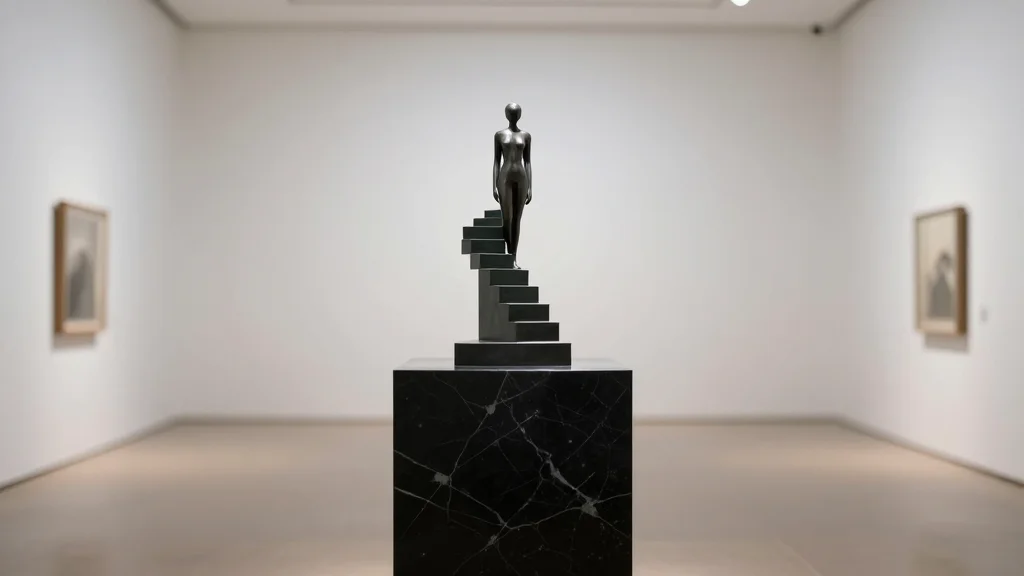
MoMA Opens First North American Marcel Duchamp Retrospective in Over 50 Years

Why It Matters
The Duchamp retrospective reasserts the artist’s relevance at a moment when the art world grapples with AI‑driven creation. By foregrounding his early investigations into the machine, the exhibition offers a historical framework for contemporary debates about authorship, originality, and the ethics of algorithmic art. Moreover, the show’s scale and high‑profile loan from Philadelphia signal institutional commitment to revisiting canonical figures through a modern lens, potentially influencing future museum programming worldwide. For scholars, the exhibition provides unprecedented access to works that have rarely been displayed together, enabling new comparative research on Duchamp’s evolving visual language. For the public, the exhibition demystifies complex ideas about technology and perception, making them accessible through familiar objects like the Mona Lisa parody L.H.O.O.Q. and the kinetic Bride, thereby broadening engagement with modernist art.
Key Takeaways
- •MoMA opens first North American Marcel Duchamp retrospective in over 50 years.
- •Exhibition includes multiple versions of Nude Descending a Staircase and a loan from the Philadelphia Museum of Art.
- •Curatorial focus on Duchamp’s tension between the human mind and mechanical processes.
- •Quotes featured: Duchamp sought to put painting “at the service of the mind,” and described Bride as “basically a motor.”
- •Program includes panels linking Duchamp’s ideas to contemporary AI and digital media debates.
Pulse Analysis
MoMA’s decision to mount a full‑scale Duchamp survey reflects a strategic pivot toward exhibitions that bridge historical avant‑garde practices with present‑day technological concerns. By highlighting Duchamp’s early engagement with mechanical imagery, the museum positions itself as a thought leader in the discourse on AI‑generated art, a field that has seen explosive growth in the past two years. This alignment not only attracts a tech‑savvy audience but also reinforces MoMA’s brand as an institution that anticipates cultural shifts.
Historically, major retrospectives have served as catalysts for market re‑valuation of an artist’s work. The Duchamp show is likely to stimulate renewed interest among collectors, potentially driving up auction prices for his lesser‑known pieces, especially early drawings that have been underrepresented in recent sales. Additionally, the exhibition’s partnership with the Philadelphia Museum of Art underscores a collaborative model that could become standard for future large‑scale shows, sharing resources and expanding geographic reach.
Looking ahead, the exhibition’s ancillary programming—particularly the AI‑focused panels—may inspire museums worldwide to integrate technology‑centric scholarship into their curatorial agendas. As institutions grapple with the ethical implications of algorithmic creation, Duchamp’s legacy offers a precedent for questioning the boundaries of authorship. MoMA’s retrospective thus functions not merely as a historical survey but as a blueprint for how art institutions can engage with the evolving nexus of art, technology, and society.
MoMA Opens First North American Marcel Duchamp Retrospective in Over 50 Years
Comments
Want to join the conversation?
Loading comments...