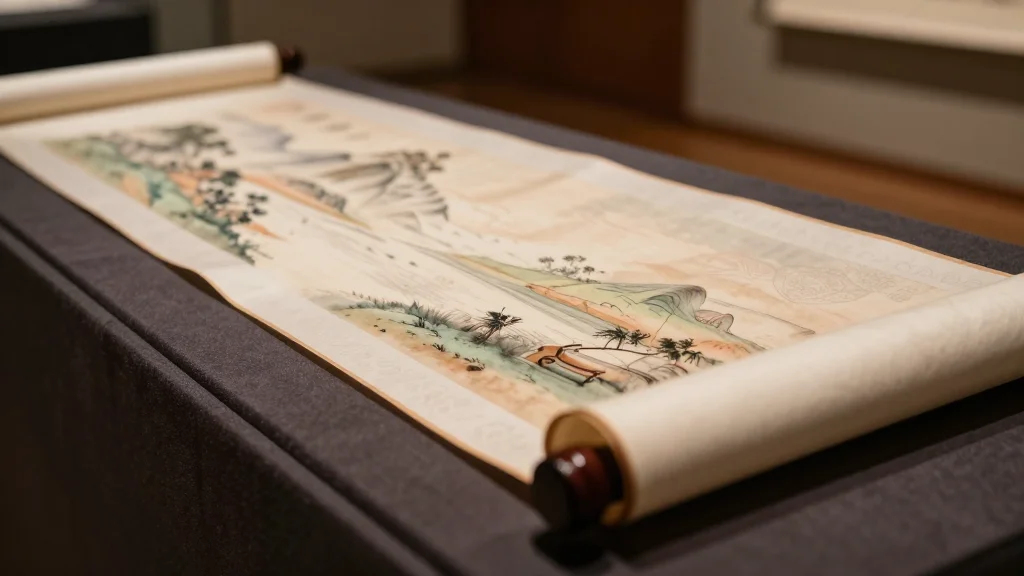
Monumental 37ft-Long Indian Scroll Goes on Public View for the First Time at Yale Center for British Art
Why It Matters
The scroll offers a rare, tangible glimpse into empire‑era cultural trade and demonstrates how advanced conservation can reveal hidden historical connections.
Key Takeaways
- •37‑ft scroll debuted publicly after two‑year restoration
- •Exhibited partially to protect fragile paper and pigments
- •Watermark links scroll to British paper mill James Whatman
- •Depicts Lucknow’s palaces, mosques, warehouses, river landscape
- •Part of “Painters, Ports and Profits” East India Company exhibit
Pulse Analysis
The Yale Center for British Art has opened its doors to a rare piece of Indian visual culture: the Lucknow scroll, a 37‑foot panoramic watercolor created between 1821 and 1826. Presented within the “Painters, Ports and Profits: Artists and the East India Company, 1750‑1850” exhibition, the scroll offers a vivid, river‑side tour of Lucknow’s architecture and commerce during a period of political transition. Narrative scrolls like this were luxury items that traveled between the subcontinent and Britain, serving both devotional and entertainment purposes. By displaying the work in alternating sections, the museum invites repeat visitors to experience different chapters of the visual story while safeguarding the delicate medium.
Bringing the scroll from storage to gallery required a two‑year conservation effort that tackled its complex layered construction. Conservators stabilized a multi‑sheet paper core, added a cotton‑textile backing, and gently flattened the object to counteract centuries of planar distortion. A breakthrough came when ultraviolet analysis revealed a James Whatman watermark, tying the paper to a prominent British mill and narrowing the scroll’s production date. This discovery not only confirms the artifact’s place within early‑19th‑century trade networks but also illustrates how scientific techniques can unlock provenance clues hidden in seemingly inert materials.
The public unveiling of the Lucknow scroll underscores the growing museum focus on cross‑cultural narratives and the material legacy of empire. As scholars reassess the East India Company’s role in shaping artistic exchange, the scroll provides concrete evidence of how Indian artisans catered to elite patrons and foreign audiences alike. Its careful, phased display sets a precedent for exhibiting oversized, fragile works without compromising conservation standards. For collectors, historians, and policymakers, the scroll reinforces the value of interdisciplinary collaboration—combining art history, conservation science, and trade research—to deepen our understanding of global cultural heritage.
Monumental 37ft-long Indian scroll goes on public view for the first time at Yale Center for British Art
Comments
Want to join the conversation?
Loading comments...