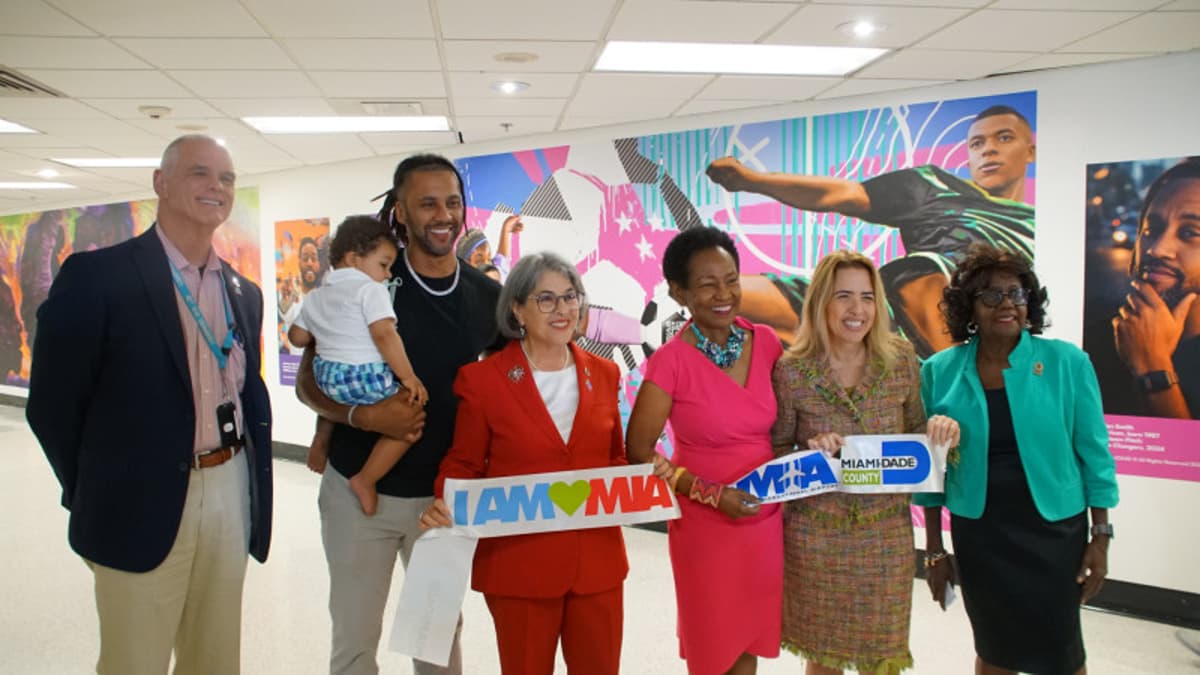
Murals From Miami’s Historic Overtown Land at MIA
Why It Matters
The exhibition positions a major international gateway as a platform for African‑Diaspora heritage, boosting cultural tourism and community visibility on a global stage.
Key Takeaways
- •MIA displays three interactive Overtown murals until Oct 13, 2026.
- •Murals feature AR, QR links to Black Miami historians' interviews.
- •Exhibition coincides with FIFA World Cup and Miami‑Dade 250 celebrations.
- •Partnership with Miami MoCAAD expands access to historic Overtown art.
- •Airport’s $12 billion upgrade highlights commitment to cultural programming.
Pulse Analysis
Miami International Airport is turning its bustling concourse into a cultural showcase with the "Telling Overtown Stories, Saying Their Names" exhibition. By installing three large‑scale, vinyl‑replica murals that honor Overtown’s 130‑year history, the airport leverages its high‑traffic environment to amplify narratives that have long been underrepresented in mainstream tourism. The murals are not static; they incorporate augmented‑reality overlays and QR codes that transport viewers to oral histories, archival photographs, and interviews curated by Black Miami scholars, creating an immersive educational experience that transcends traditional airport art.
The partnership with Miami MoCAAD reflects a strategic alignment between a transportation hub and a museum dedicated to the Global African Diaspora. This collaboration arrives at a pivotal moment, as Miami hosts the FIFA World Cup and commemorates the Miami‑Dade 250 anniversary, drawing millions of international visitors. The exhibition’s timing maximizes exposure, turning transit passengers into cultural participants and reinforcing Miami’s brand as a vibrant, multicultural metropolis. Moreover, the technology‑driven approach—blending AR, QR‑linked content, and interactive games like a penalty‑kick challenge—enhances passenger engagement, potentially extending dwell time and encouraging repeat visits to airport galleries.
Beyond the immediate visitor impact, the project signals a broader shift in how airports view public art as a component of economic development. MIA’s $12 billion capital‑improvement plan includes not only runway expansions and terminal upgrades but also a commitment to cultural programming that enriches the traveler experience. By integrating community heritage into its infrastructure, the airport positions itself as a civic ambassador, fostering local pride while attracting tourism dollars. This model may inspire other major hubs to embed regional stories into their spaces, turning transit points into gateways for cultural exchange and economic vitality.
Murals from Miami’s historic Overtown land at MIA
Comments
Want to join the conversation?
Loading comments...