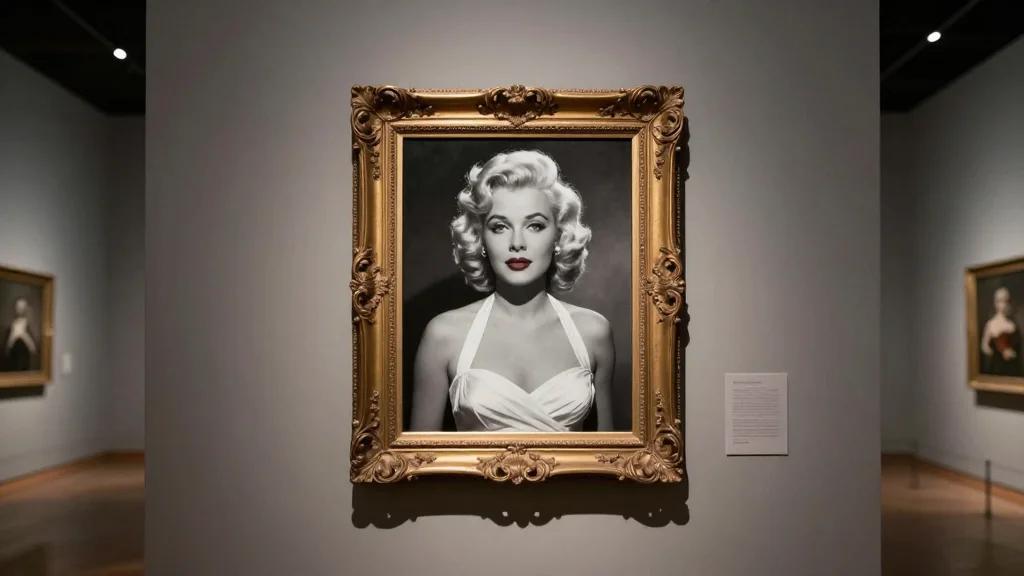
National Portrait Gallery Unveils 'Marilyn Monroe: A Portrait' Show and Book

Why It Matters
The exhibition and its companion book signal a shift in how major cultural institutions treat celebrity imagery, moving it from the periphery of pop‑culture to the center of art‑historical inquiry. By assembling works that span from Warhol’s iconic silkscreens to Boty’s early pop experiments, the project underscores the ways in which Marilyn Monroe functions as a visual shorthand for discussions about gender, fame, and consumerism. This re‑examination arrives at a moment when digital platforms constantly recycle and remix her likeness, making the scholarly context especially relevant for contemporary audiences. Beyond academia, the show offers a template for museums seeking to balance popular appeal with rigorous scholarship. If the National Portrait Gallery’s model proves financially and critically successful, other institutions may launch comparable retrospectives on figures like James Dean, Elvis Presley, or modern internet personalities, thereby reshaping the canon of visual culture to include the economics of celebrity.
Key Takeaways
- •National Portrait Gallery opens 'Marilyn Monroe: a Portrait' exhibition on 15 October 2026.
- •Curated by Rosie Broadley, who also edited the accompanying book published with the Marilyn Monroe Estate.
- •Exhibition features over 30 works, including Andy Warhol, Pauline Boty, Willem de Kooning, Marlene Dumas, James Gill and Rosalyn Drexler.
- •Broadley calls Monroe a ‘remarkably tenacious motif in 20th‑century art, particularly in the UK and the US.’
- •Series of talks and panels will run alongside the exhibition, exploring celebrity, gender and media.
Pulse Analysis
The decision to pair a blockbuster exhibition with a rigorously researched monograph reflects a broader trend among leading museums: leveraging scholarly depth to legitimize popular subjects. In the 1970s, Warhol’s own shows at the Museum of Modern Art were framed as pop‑art milestones, yet they rarely included a dedicated catalogue that interrogated the cultural economics of his celebrity subjects. By contrast, Broadley’s book situates Monroe within a lineage of visual appropriation that predates Warhol, linking her to de Kooning’s abstract expressionist gaze and Boty’s early British pop. This historical anchoring not only enriches the visitor experience but also provides a defensive bulwark against accusations of pandering to mass appeal.
From a market perspective, the exhibition could catalyze renewed demand for mid‑century works featuring Monroe, potentially inflating auction prices for Warhol silkscreens and Boty paintings that have been under‑traded. Collectors have already shown heightened interest in pop‑art pieces that intersect with celebrity culture, as evidenced by recent sales of Warhol’s *Marilyn* series fetching six‑figure sums. The National Portrait Gallery’s endorsement may accelerate this trajectory, prompting private galleries to seek out lesser‑known artists like Drexler whose works have been historically undervalued.
Looking ahead, the show’s success may inspire a wave of institution‑driven retrospectives that treat fame itself as a curatorial theme. As digital media continues to democratize image creation, the line between high art and meme culture blurs, and museums that can navigate this terrain with scholarly rigor will likely dominate the cultural conversation. The Marilyn Monroe exhibition thus serves as both a case study and a catalyst for rethinking how iconic personalities are curated, studied, and monetized in the 21st‑century art world.
National Portrait Gallery unveils 'Marilyn Monroe: a Portrait' show and book
Comments
Want to join the conversation?
Loading comments...