New Museum Reopens in Downtown Manhattan with OMA Expansion and Massive Staircase

Why It Matters
The New Museum’s reopening marks a rare moment when architectural redesign directly influences curatorial practice, offering a template for how contemporary institutions can align physical space with programmatic intent. By addressing circulation—a practical concern—with a bold design statement, the museum demonstrates that visitor experience can be a catalyst for artistic engagement. Moreover, the integration of Tschabalala Self’s public sculpture and the interdisciplinary exhibition *New Humans: Memories of the Future* reflects a growing trend toward socially responsive art that bridges museum walls and the street. This approach not only expands the museum’s audience but also reinforces the idea that cultural institutions can serve as active participants in urban dialogue, shaping how cities experience and interpret contemporary art.
Key Takeaways
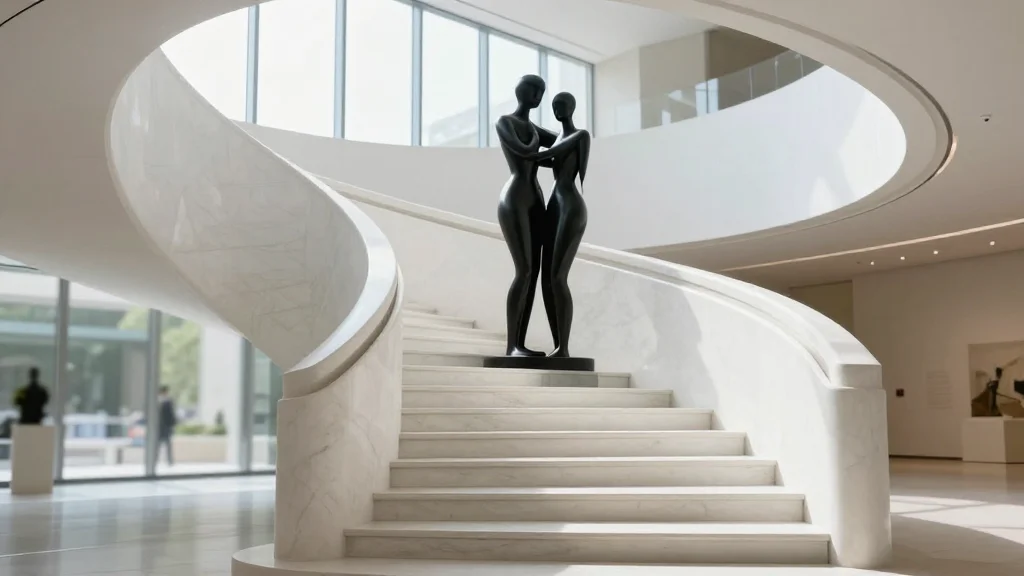
- •OMA’s expansion adds a four‑floor staircase, replacing the museum’s elevator‑heavy circulation.
- •Tschabalala Self’s facade sculpture *Art Lovers* opens March 21, 2026, curated by Massimiliano Gioni and Madeline Weisburg.
- •The anchor exhibition *New Humans: Memories of the Future* features over 150 international creators.
- •The redesign aims to improve visitor flow and support larger, multi‑level installations.
- •The project positions the New Museum as a more competitive cultural destination in New York City.
Pulse Analysis
The New Museum’s architectural overhaul is more than a facelift; it is a strategic maneuver that aligns physical infrastructure with the institution’s evolving curatorial agenda. Historically, museums have struggled with vertical circulation that fragments the narrative flow of exhibitions. By installing a continuous staircase, OMA not only resolves a logistical pain point but also creates a kinetic spine that can host site‑specific interventions, performance pieces, and immersive installations that would be impossible in a fragmented layout. This design choice signals a shift toward experiential programming where the building itself becomes part of the artwork.
From a market perspective, the expansion is likely to boost the museum’s revenue streams. Improved circulation translates to higher visitor throughput, which can increase ticket sales, membership enrollments, and ancillary spending at the museum shop and café. The high‑visibility public sculpture by Tschabalala Self further amplifies the museum’s brand, attracting media attention and foot traffic from passersby who might not otherwise enter the institution. This synergy between architecture, public art, and programming could set a new benchmark for mid‑size museums seeking to compete with larger, better‑funded counterparts.
Looking ahead, the New Museum’s model may inspire other cultural institutions to prioritize spatial fluidity as a catalyst for curatorial innovation. As technology continues to blur the boundaries between art, science, and design, museums that can physically accommodate interdisciplinary work will likely attract the most compelling projects and the most diverse audiences. The success of this expansion will be measured not just by attendance numbers but by how effectively the new space enables artists to experiment and audiences to engage in deeper, more sustained dialogues with contemporary art.
New Museum Reopens in Downtown Manhattan with OMA Expansion and Massive Staircase
Comments
Want to join the conversation?
Loading comments...