New York City Beyond the Monument: Jean Shin S Living Memorial at Green-Wood by Soojung Hyun
Why It Matters
The work challenges conventional, permanent monuments by proposing living, participatory memorials that fuse ecological restoration with cultural remembrance, influencing how cities conceive public art and green spaces.
Key Takeaways
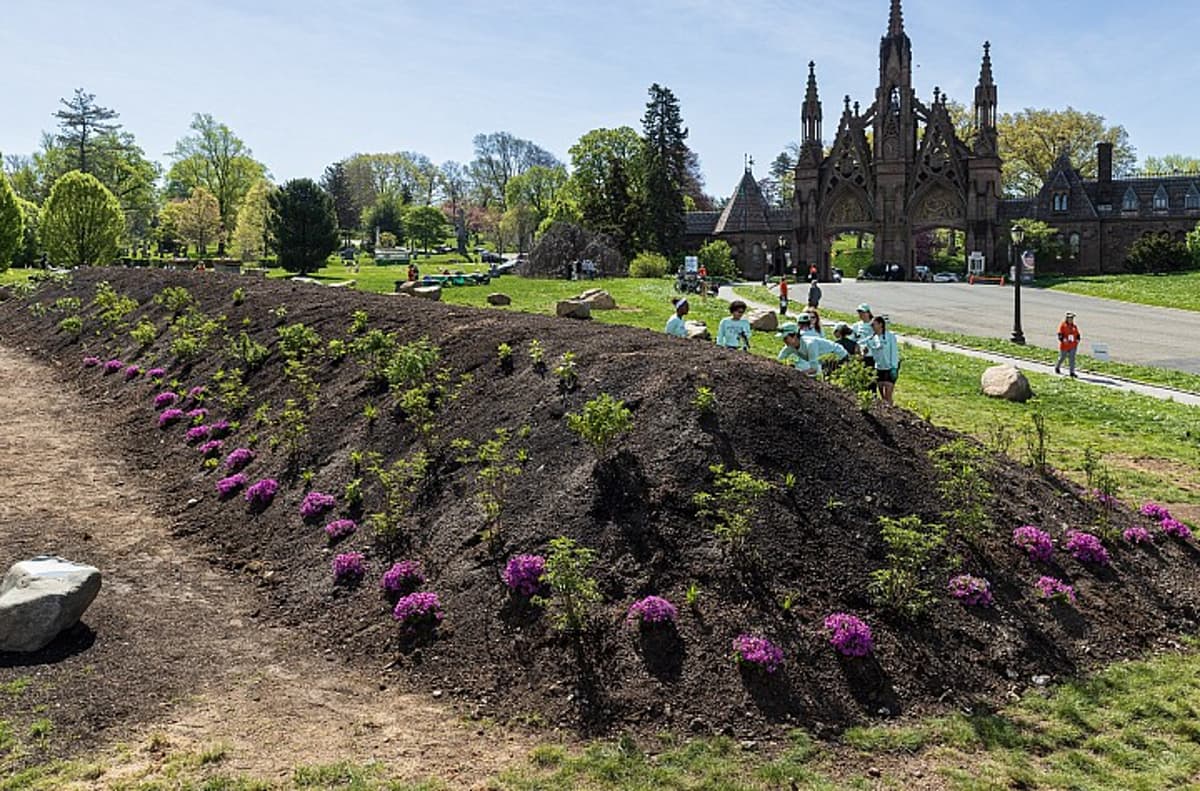
- •Jean Shin buried two oak trees as 'tree elders' at Green‑Wood
- •Installation draws on Korean tumuli, linking diaspora memory to burial rites
- •Visitors plant flowers, turning decay into regenerative soil and habitat
- •Celadon Landscape uses broken Korean shards to symbolize fragmented cultural identity
- •Project reframes monuments as temporal, participatory ecosystems rather than static stone
Pulse Analysis
Green‑Wood Cemetery, founded in 1838, has become an unexpected laboratory for ecological art, and Jean Shin’s "Offering" amplifies that reputation. By treating fallen trees as dignified subjects rather than waste, the piece integrates regenerative earthwork into an urban burial ground, turning a historic site into a living laboratory for soil health and avian habitat. The installation’s Korean‑inspired tumuli connect personal diaspora narratives to universal cycles of life and death, inviting visitors to experience memorialization through tactile participation rather than passive observation.
The participatory ritual at "Offering"—planting flowers directly into the mounds—creates a feedback loop where decomposition fuels new growth, embodying a model of sustainable public art. Shin’s use of raw and subtly carved stones that double as birdbaths further weaves wildlife support into the memorial’s fabric, blurring the line between sculpture and ecosystem. This approach aligns with broader trends in regenerative design, where artists collaborate with ecologists to restore urban soils, mitigate heat islands, and foster biodiversity within cultural institutions.
Beyond its immediate setting, "Offering" signals a shift in how cities might reimagine monuments. Traditional stone memorials convey permanence, yet Shin proposes temporality, care, and community as the new foundations of remembrance. Coupled with "Celadon Landscape," which repurposes broken Korean ceramic shards to symbolize fragmented cultural memory, the dual works underscore that continuity can emerge from decay. For policymakers, curators, and developers, the project offers a blueprint for integrating ecological resilience and cultural storytelling into public spaces, redefining legacy as an evolving, participatory process.
New York City Beyond the Monument: Jean Shin s Living Memorial at Green-Wood by Soojung Hyun
Comments
Want to join the conversation?
Loading comments...