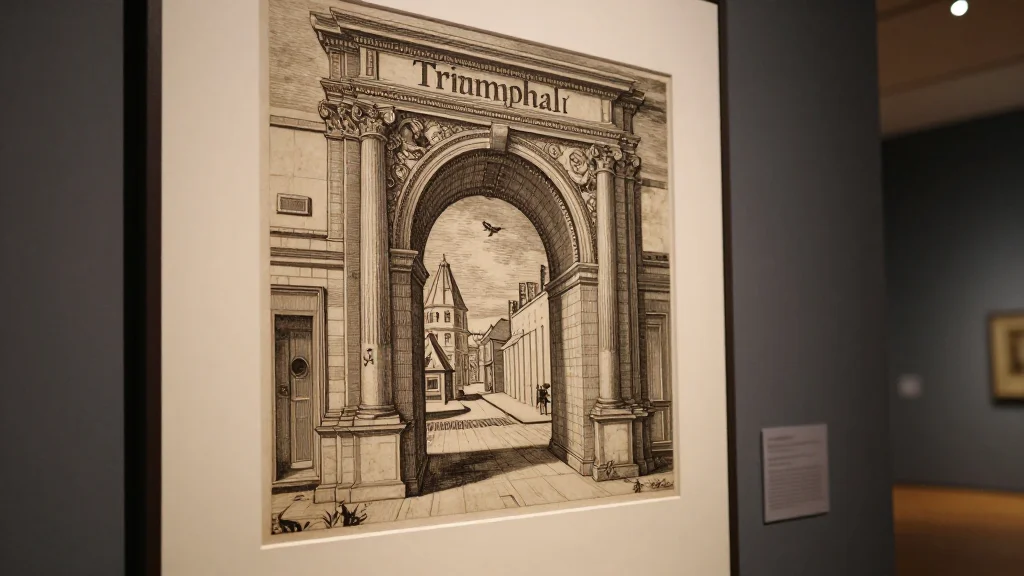
Why It Matters
The Arch is a rare surviving example of early mass‑propaganda printmaking, and its removal underscores the challenges of preserving large, delicate cultural artifacts for public access.
Key Takeaways
- •The 13‑foot Triumphal Arch is one of the largest woodcuts ever made
- •NYPL holds ~50 first‑edition impressions and a complete 1799 third edition set
- •The print returns to storage on Oct 18, ending public display for years
- •Dürer’s work illustrates early mass‑propaganda, linking print tech to political power
- •Restoration in 2009 replaced linen backing, stabilizing the fragile panels
Pulse Analysis
Albrecht Dürer’s Triumphal Arch, commissioned by Holy Roman Emperor Maximilian I in 1512, remains a cornerstone of early modern print culture. At roughly four meters tall, the multi‑paneled woodcut was produced with a full studio of assistants, carving a visual narrative that blended imperial lineage, mythic symbols, and military triumphs. The New York Public Library’s collection, which includes nearly fifty first‑edition impressions and a complete third‑edition set from 1799, has allowed scholars and the public to study a work that once served as portable propaganda, circulating across city halls and palaces long before the age of digital media.
Preserving a piece of that magnitude presents unique conservation challenges. After decades of storage, the Arch underwent a comprehensive 2009 restoration that removed its aging linen backing and installed sturdier supports, extending its lifespan but highlighting its fragility. Library staff plan to move the print back into a climate‑controlled vault on October 18, limiting viewings to appointment‑only sessions and effectively ending its regular exhibition. This decision reflects a broader tension in museums and libraries: balancing public access with the imperative to safeguard irreplaceable artifacts that can deteriorate under constant handling.
Beyond its historical allure, the Triumphal Arch exemplifies how print technology reshaped political communication. By reproducing hundreds of impressions, Maximilian could disseminate his dynastic narrative far more efficiently than stone monuments, foreshadowing the mass‑media revolutions sparked by Gutenberg’s press. For contemporary cultural institutions, the Arch serves as a reminder that the physicality of early prints still holds powerful storytelling potential, making the limited window to view Dürer’s masterpiece a noteworthy event for scholars, collectors, and anyone interested in the origins of visual propaganda.
One Last Chance to See Dürer's Monumental Print in NYC
Comments
Want to join the conversation?
Loading comments...