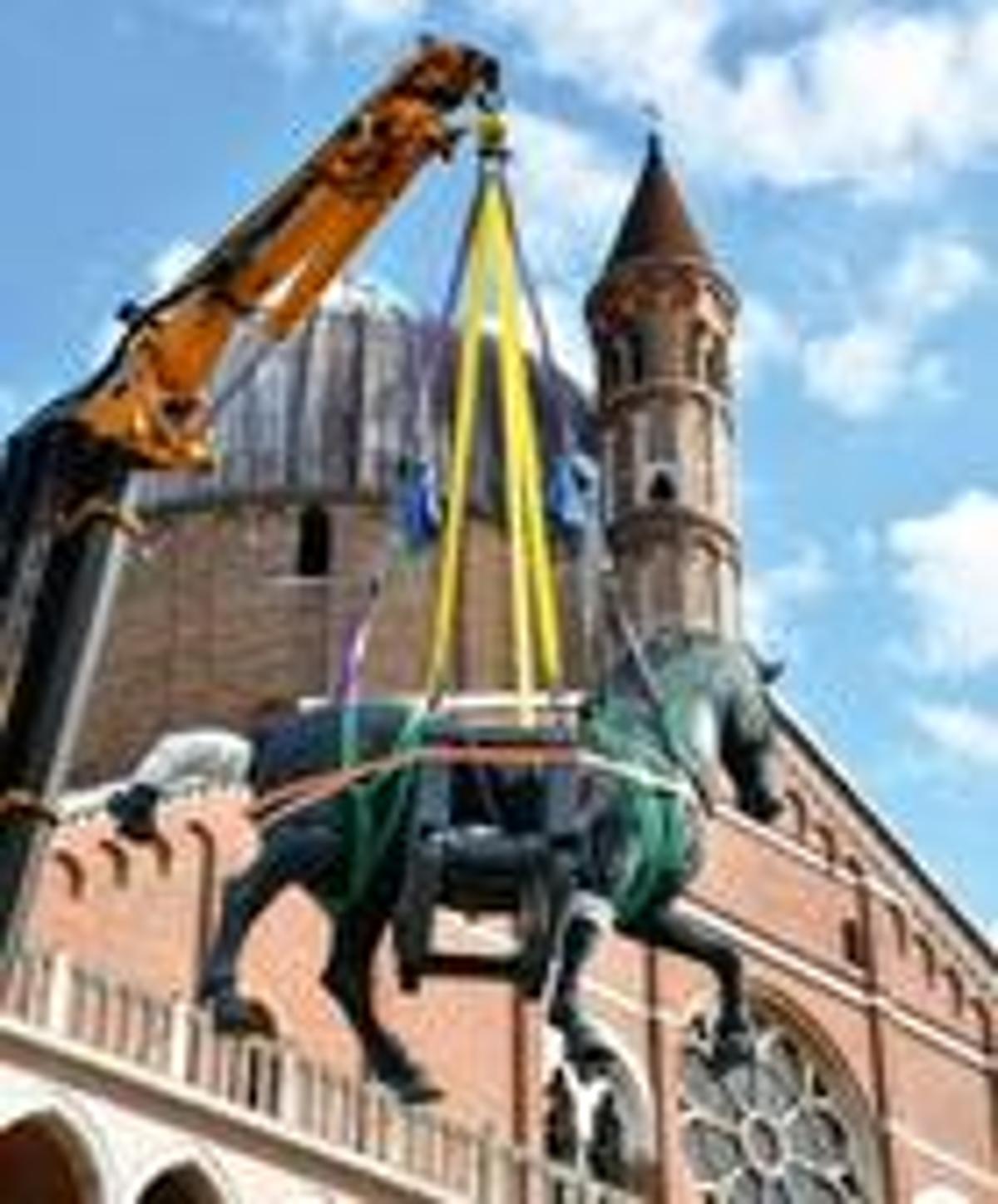
One of Donatello’s Most Important Bronze Statues Is Being Restored: Should It Ever Be Shown Outdoors Again?
Why It Matters
The decision will shape preservation standards for iconic outdoor bronzes, balancing public access with long‑term conservation costs. It also illustrates the financial and technical pressures heritage bodies face amid increasing environmental threats.
Key Takeaways
- •€1 m (≈$1.08 m) restoration funded by US nonprofits.
- •Statue removed due to bronze corrosion, “bronze cancer”.
- •Decision pending: indoor museum display vs outdoor replica.
- •Advanced imaging reveals internal damage, informs conservation plan.
- •Pedestal cracks from traffic, earthquakes demand structural reinforcement.
Pulse Analysis
Donatello’s Gattamelata is more than a Renaissance masterpiece; it is a benchmark for how cities treat large‑scale bronze works exposed to the elements. The statue’s relocation echoes historic moves such as Michelangelo’s David and Rome’s Marcus Aurelius, where original pieces were shifted indoors to shield them from pollution, traffic vibrations, and climate‑induced decay. By examining these precedents, stakeholders can gauge the cultural trade‑offs between preserving artistic integrity and maintaining the public’s visual connection to heritage landmarks.
The Padua restoration employs a blend of mechanical cleaning, chemical stabilization, and laser treatment—techniques that have become standard in high‑profile conservation labs worldwide. Cutting‑edge tools like endoscopes, 3D scanning, and ground‑penetrating radar allow conservators to map corrosion pathways and assess hidden structural weaknesses without invasive dismantling. Funding from American nonprofits, each contributing roughly $594,000, underscores the transatlantic interest in safeguarding European art and demonstrates how private philanthropy can accelerate complex, multi‑year projects that might otherwise stall under public budget constraints.
Beyond the technical realm, the outcome will influence policy for outdoor monuments globally. An indoor museum setting would enable close‑up visitor experiences, revealing Donatello’s subtle gilding and anatomical details, while an outdoor replica could preserve the historic streetscape but demand recurring costly maintenance. The debate highlights a broader shift toward sustainable heritage management, where cities must weigh tourism revenue, conservation budgets, and climate resilience when deciding the fate of their most treasured public artworks.
One of Donatello’s most important bronze statues is being restored: should it ever be shown outdoors again?
Comments
Want to join the conversation?
Loading comments...