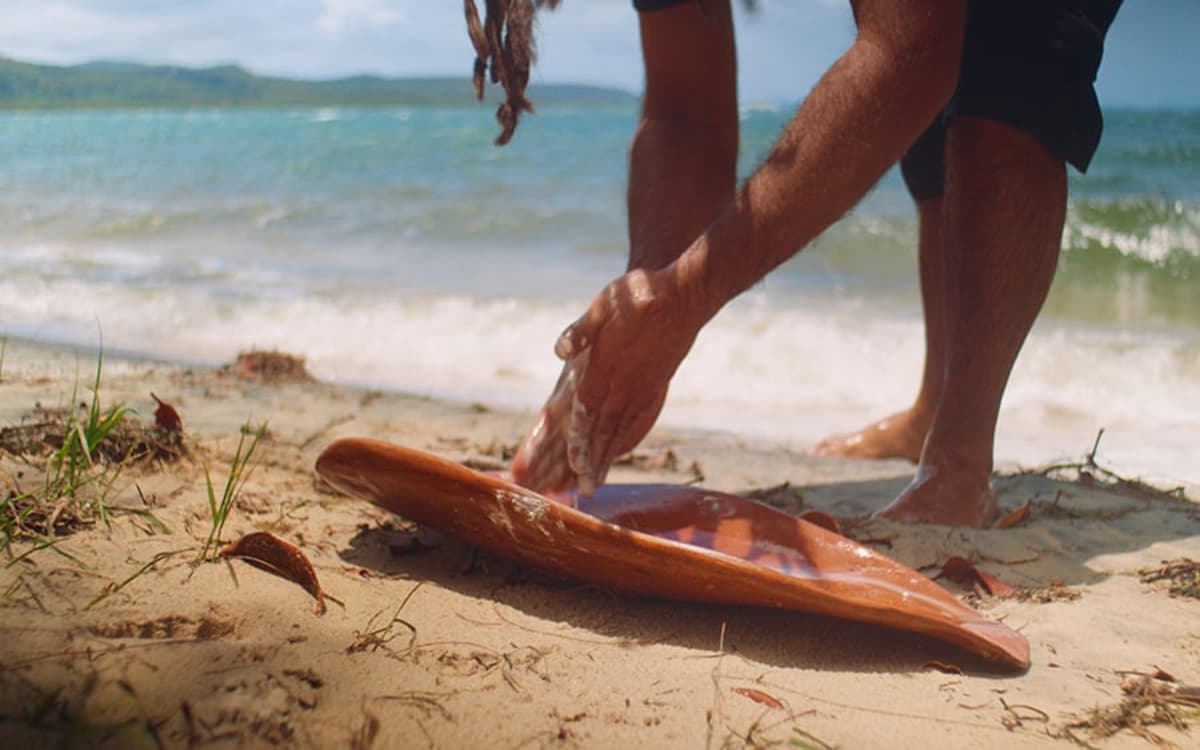
Painted Up: This Vibrant Exhibition Challenges Colonial Perceptions of Aboriginal Art
Why It Matters
The exhibition redefines Aboriginal art as a living, communal practice, challenging colonial stereotypes and deepening public engagement with Indigenous cultural heritage. It also demonstrates how museum spaces can become platforms for cultural exchange and reconciliation.
Key Takeaways
- •Tyson blends traditional ochre with turquoise acrylic, reflecting Saltwater Country
- •Exhibition uses canvas, animal skins, and shadow boxes to showcase living culture
- •Community collaborations emphasize art as collective knowledge, not solitary creation
- •Large mural serves as interactive teaching tool, rejecting linear narratives
- •Redland Gallery’s CREATE EXCHANGE fosters dialogue between Quandamooka artists and public
Pulse Analysis
Aboriginal contemporary art has long wrestled with the legacy of colonial representation, often reduced to familiar dot‑painting tropes. Tyson’s Painted Up disrupts that narrative by treating painting as an extension of body‑marking rituals, where ochre and vivid turquoise convey identity, kinship and Country. By incorporating animal skins, boomerangs and shadow boxes, the exhibition underscores that Indigenous visual culture is inseparable from material practice, reinforcing the idea that art is a living conduit for stories rather than a static object.
The exhibition’s educational thrust lies in its interactive design. A sprawling mural invites visitors to trace stories across its surface, while shadow boxes—originally crafted in 1970s mission contexts—are re‑contextualized as contemporary artefacts that bridge past oppression with present resilience. This approach subverts conventional museum display, prioritising movement, tactile engagement and communal authorship. By foregrounding collaborations with local cultural practitioners, the show demonstrates how collective knowledge can be amplified within institutional settings, offering a model for other galleries seeking to honor Indigenous agency.
Beyond its artistic merits, Painted Up signals a shift in how Australian cultural institutions approach reconciliation. The three‑year CREATE EXCHANGE program, backed by regional sponsors and QAGOMA, positions Redland Art Gallery as a hub for ongoing dialogue rather than a one‑off showcase. Such residency‑style initiatives can catalyse broader market interest in Indigenous artworks, encouraging collectors and curators to value cultural continuity alongside aesthetic innovation. As more galleries adopt this collaborative framework, the Australian art scene stands to benefit from richer, more authentic narratives that respect both tradition and contemporary evolution.
Painted Up: This vibrant exhibition challenges colonial perceptions of Aboriginal art
Comments
Want to join the conversation?
Loading comments...