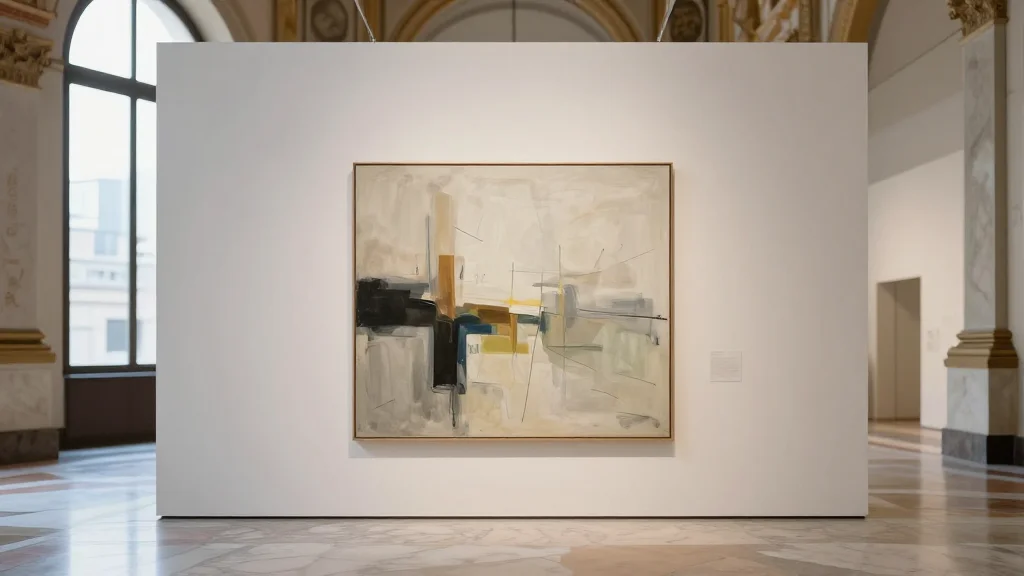
Paris Internationale Launches First International Edition in Milan with 34 Galleries

Companies Mentioned
Why It Matters
Paris Internationale’s expansion to Milan signals a subtle but meaningful shift in Europe’s art fair ecosystem, where intimacy and curatorial rigor are being positioned as competitive advantages against the scale‑driven models of long‑standing fairs. By embedding itself within Milano Art Week and Design Week, the fair leverages cross‑disciplinary audiences, potentially broadening the collector base for participating galleries. If the Milan edition proves successful, it could encourage other niche fairs to test satellite locations, diversifying the geographic distribution of high‑profile art events beyond traditional hubs like Paris, London and Berlin. This could democratize exposure for emerging artists and smaller galleries, fostering a more varied and resilient market.
Key Takeaways
- •Paris Internationale hosts its first edition outside France in Milan, April 18‑21, 2026.
- •34 galleries participate, blending established names with emerging voices.
- •Booths are designed as exhibition projects, emphasizing intimacy over scale.
- •The fair aligns with Milano Art Week and Milano Design Week, tapping a broader creative audience.
- •Organisers hint at a repeat edition in 2027, potentially expanding the model across Europe.
Pulse Analysis
Paris Internationale’s Milan launch reflects a broader industry trend toward experiential, curatorial‑focused fairs that prioritize narrative and visitor engagement over pure transaction volume. Historically, European fairs have been dominated by large, sales‑centric events that attract high‑net‑worth collectors but often sacrifice depth. By contrast, Paris Internationale’s model—small‑scale, exhibition‑like booths and a robust public programme—mirrors the rise of museum‑like fair experiences seen in niche events such as the Armory Show’s “Special Projects” and Frieze’s “Frieze Projects.”
The strategic timing within Milano Art Week and Design Week is a calculated move to capture a multidisciplinary audience, including designers, architects and younger collectors who may be less reached by traditional art‑fair marketing. This cross‑pollination could translate into new patronage pathways for galleries, especially those representing emerging artists whose work benefits from contextual, site‑specific presentations.
Looking forward, the fair’s ability to sustain its model will hinge on measurable outcomes: visitor numbers, press coverage, and, crucially, sales conversion rates for participating galleries. If the intimate format can deliver comparable or higher per‑gallery revenue than larger fairs, it may prompt a re‑evaluation of how art fairs allocate space and resources. Moreover, the success of a restored historic venue like Palazzo Galbani could inspire other fairs to seek architecturally significant sites, further blurring the line between commercial fair and cultural institution. The next edition, slated for 2027, will be a litmus test for whether this curatorial turn can become a lasting fixture in the European art market.
Paris Internationale Launches First International Edition in Milan with 34 Galleries
Comments
Want to join the conversation?
Loading comments...