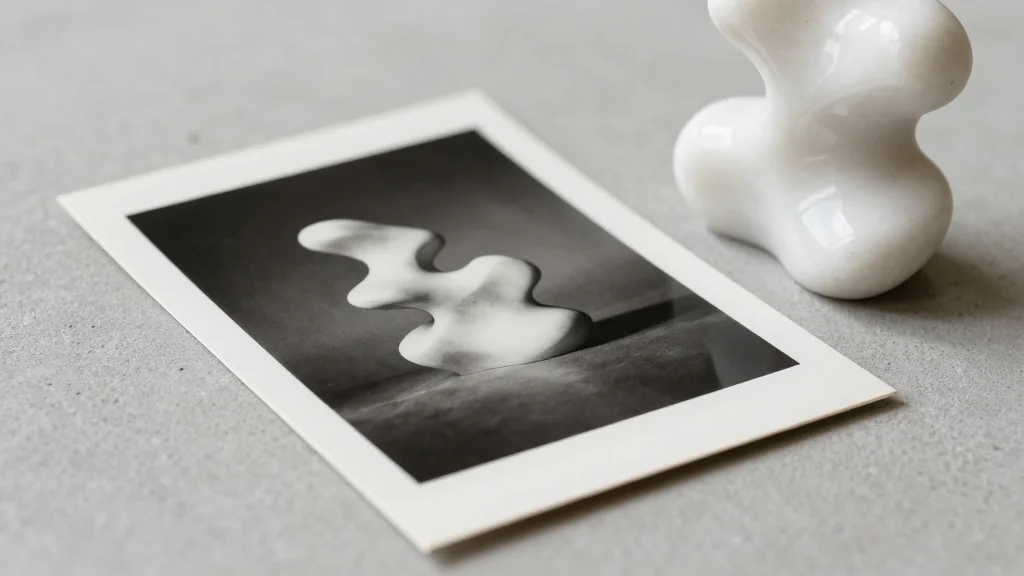
Photographs of Barbara Hepworth and Ben Nicholson’s Shared Studio Go on Show in London
Why It Matters
The photographs provide an unprecedented visual record of two leading British modernists working together, enriching scholarship and public appreciation of their intertwined artistic development.
Key Takeaways
- •23 black‑and‑white Laib photos from 1932‑33 debut at Courtauld
- •Exhibition pairs 14 vintage prints with nine contemporary reinterpretations
- •Images reveal Hepworth’s sculptures interacting with Nicholson’s paintings
- •Laib’s shots were directed by the artists, not just documentary
- •Show coincides with “Hepworth in Colour” major retrospective
Pulse Analysis
Barbara Hepworth and Ben Nicholson defined a pivotal chapter of British modernism, and their shared studio at 7 The Mall became a laboratory for abstraction in the early 1930s. Photographer Paul Laib, already known for capturing the works of John Singer Sargent and John Piper, was invited into this intimate space, where he documented not only finished pieces but the evolving dialogue between sculpture and painting. The resulting glass‑plate negatives capture the tactile interplay of Hepworth’s stone forms with Nicholson’s geometric canvases, offering scholars a visual map of their collaborative process.
The Courtauld’s new exhibition curates fourteen original Laib prints with nine modern reinterpretations, emphasizing the photographs’ artistic agency. Unlike typical cataloguing shots, Laib’s images were staged under the artists’ direction—mirrors placed behind sculptures, paintings turned on their sides—to create compositions that function as standalone works of art. This approach reveals how Hepworth and Nicholson treated the camera as an extension of their studio practice, using photography to experiment with light, shadow, and spatial relationships that would later inform their painted and sculpted output.
By pairing historic negatives with contemporary prints, the show bridges past and present, inviting visitors to reconsider the role of documentation in artistic innovation. The exhibition not only enriches the narrative of the “Hepworth in Colour” retrospective but also provides valuable material for researchers examining the economics, gender dynamics, and creative strategies of interwar modernists. For collectors, curators, and art‑history enthusiasts, the photographs serve as a rare window into the daily rhythm of a seminal artistic partnership, underscoring the enduring relevance of archival discoveries in shaping cultural discourse.
Photographs of Barbara Hepworth and Ben Nicholson’s shared studio go on show in London
Comments
Want to join the conversation?
Loading comments...