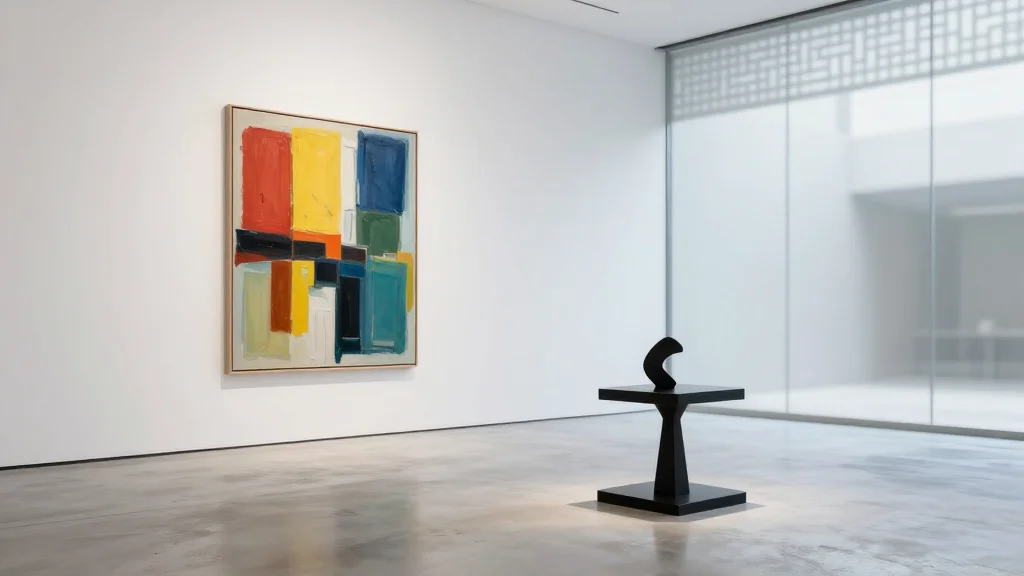
Private Collectors' Collective Launches Daejeon Initiative to Host World‑Renowned Artists

Why It Matters
The Arche II initiative demonstrates how private patronage can reshape cultural geography, offering a template for other mid‑size cities seeking to attract world‑renowned art without relying on government subsidies. By decentralizing high‑profile exhibitions, the model could diversify audience exposure, stimulate regional economies, and encourage a more pluralistic art market in South Korea. Moreover, the collective’s emphasis on emerging artists alongside established masters signals a shift toward long‑term cultural investment rather than short‑term market speculation. If successful, this approach may inspire similar collector alliances worldwide, potentially altering the dynamics of art acquisition and exhibition beyond traditional museum and gallery structures.
Key Takeaways
- •Fourteen Korean collectors formed the Arche II collective in 2017.
- •"Tracing the Unfinished" features 30 works by artists like Le Corbusier and David Hockney.
- •Heredium, a renovated 1922 colonial building, serves as the exhibition venue in Daejeon.
- •The collective models its structure on the historic La Peau de l’Ours group.
- •The initiative aims to decentralize Korea’s art scene and boost Daejeon’s cultural profile.
Pulse Analysis
Arche II’s joint‑collector model taps into a growing desire among high‑net‑worth individuals to exert curatorial influence beyond the traditional gallery system. By pooling capital and expertise, the group mitigates individual risk while amplifying bargaining power at international fairs. This collaborative purchasing strategy mirrors trends in Europe’s collector circles, where syndicates have successfully acquired marquee works that would be out of reach for single buyers.
Historically, South Korea’s art market has been Seoul‑centric, with major institutions and auction houses clustered in the capital. The Daejeon exhibition disrupts this pattern, suggesting that cultural capital can be redistributed through private initiative. If the collective can sustain its annual budget and continue delivering compelling shows, it may attract ancillary businesses—hotels, restaurants, and boutique galleries—creating a virtuous cycle of cultural tourism. However, the model’s dependence on a small group of affluent members raises concerns about governance and succession. Future success will likely hinge on institutionalizing decision‑making processes and expanding membership to include younger collectors, ensuring continuity beyond the founding generation.
In the broader art ecosystem, Arche II’s emphasis on emerging talent could influence market valuations. By acquiring works before they achieve mainstream recognition, the collective positions itself as a tastemaker, potentially driving up secondary market prices for those artists. This proactive stance contrasts with the more reactive, price‑driven strategies of many auction houses, and may encourage a shift toward value creation rooted in curatorial foresight rather than speculative resale.
Private Collectors' Collective Launches Daejeon Initiative to Host World‑Renowned Artists
Comments
Want to join the conversation?
Loading comments...