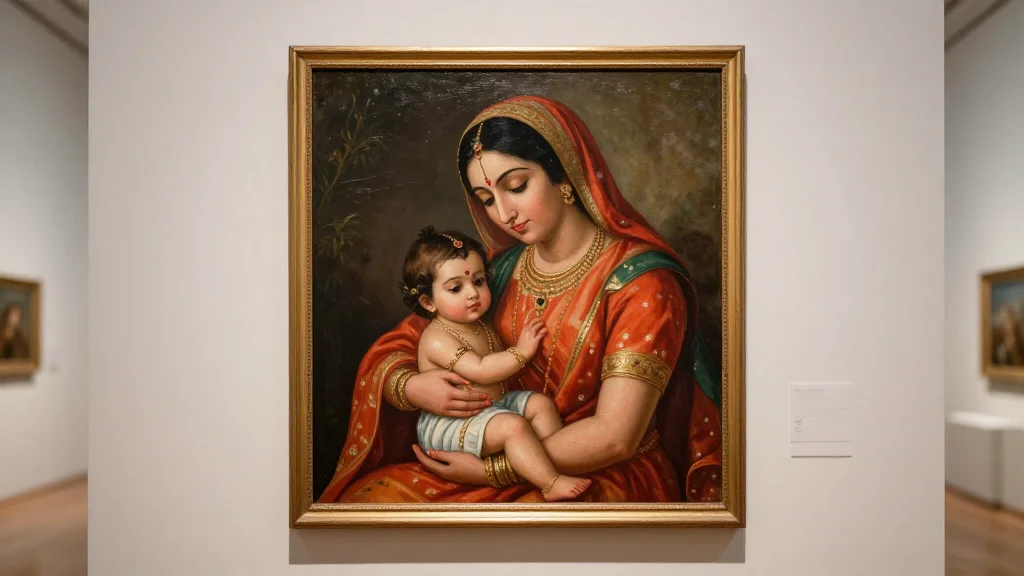
Raja Ravi Varma's 'Yashoda and Krishna' Fetches $17.9 Million, New Indian Art Record

Why It Matters
The $17.9 million sale of Yashoda and Krishna marks a watershed moment for Indian cultural capital, proving that domestic collectors can drive price discovery on par with Western markets. By keeping the work in India, the transaction reinforces national cultural preservation while simultaneously elevating Indian art’s status as a viable asset class for global investors. This dual impact could accelerate museum acquisitions, inspire philanthropic lending of private collections, and encourage more rigorous provenance research, all of which strengthen the infrastructure supporting India’s art ecosystem. Moreover, the record underscores a broader trend of wealth concentration among Indian billionaires who are increasingly turning to high‑value cultural assets. Their willingness to pay premium prices signals confidence in the long‑term appreciation potential of Indian art, potentially attracting foreign capital and prompting auction houses to allocate more prime slots to Indian works. The ripple effect may reshape how art is valued, insured, and traded across the subcontinent, fostering a more sophisticated market that balances cultural stewardship with financial returns.
Key Takeaways
- •Raja Ravi Varma’s Yashoda and Krishna sold for 1.67 bn rupees ($17.9 m), the highest price ever for an Indian artwork.
- •Billionaire Cyrus Poonawalla, founder of the Serum Institute of India, purchased the painting and pledged public access.
- •The sale eclipsed the previous record of $13.8 m set by M.F. Husain’s Untitled (Gram Yatra).
- •Saffronart’s Minal Vazirani called the price a “powerful reminder” of Indian art’s cultural resonance.
- •Industry leaders say the record will push Indian art further into the global high‑end market.
Pulse Analysis
The Varma sale is more than a headline; it reflects a structural realignment in the global art market where emerging economies are asserting cultural and financial clout. Historically, Indian art fetched modest sums compared with European Old Masters, but the last decade has seen a convergence of wealth, national pride, and professionalization of the auction sector. This convergence is evident in the way Saffronart curated the sale, positioning the painting alongside Western benchmarks and leveraging the narrative of cultural stewardship to justify premium valuations.
From a market dynamics perspective, the record price creates a new reference point for valuation models, influencing insurance premiums, loan collateral assessments, and future auction estimates. It also pressures other auction houses to source comparable masterpieces, potentially igniting a competitive scramble for works by contemporaries such as M.F. Husain, Amrita Sher-Gil, and early modernists. However, the non‑exportable status of Varma’s works introduces a unique constraint: while it safeguards national heritage, it limits the pool of potential buyers, which could temper price inflation over the long term.
Looking forward, the key question is whether this high watermark is sustainable. If Indian billionaires continue to allocate capital to cultural assets, we may see a cascade of record‑breaking sales, further institutionalizing Indian art within global portfolios. Conversely, if macroeconomic headwinds curb discretionary spending, the market could experience a correction, testing the resilience of newly established price floors. Stakeholders—collectors, auction houses, and cultural institutions—must therefore balance ambition with prudence, ensuring that the momentum generated by Varma’s sale translates into lasting infrastructure and broader public engagement rather than a fleeting speculative spike.
Raja Ravi Varma's 'Yashoda and Krishna' Fetches $17.9 Million, New Indian Art Record
Comments
Want to join the conversation?
Loading comments...