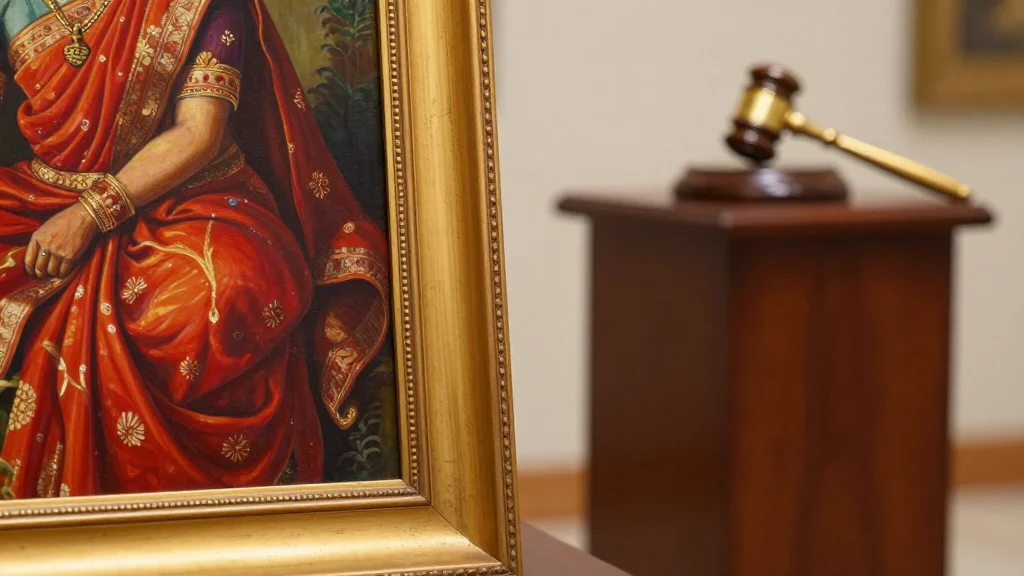
Raja Ravi Varma’s ‘Yashoda and Krishna’ Fetches $17.9 Million, Setting Indian Art Record

Companies Mentioned

Why It Matters
The sale of ‘Yashoda and Krishna’ reshapes perceptions of Indian art’s monetary potential, positioning it alongside global blue‑chip works. By breaking the ₹167 crore barrier, the transaction validates Indian modernists as viable investment assets, encouraging both domestic and foreign capital to flow into the sector. Beyond economics, the deal underscores the tension between private ownership and public cultural rights. As billionaire collectors acquire national treasures, their commitment to public display becomes a litmus test for preserving heritage while satisfying market dynamics. The outcome will influence policy discussions around export controls, tax incentives, and the role of philanthropy in the art world.
Key Takeaways
- •Raja Ravi Varma’s ‘Yashoda and Krishna’ sold for ₹167.2 crore ($17.9 million) at Saffronart’s Mumbai auction on April 1.
- •Buyer: Cyrus S. Poonawalla, founder of the Serum Institute of India.
- •The price more than doubles the pre‑sale estimate of ₹80‑120 crore and beats the previous record of ₹118 crore set by M.F. Husain.
- •Minal Vazirani (Saffronart) and Ashish Anand (DAG) highlighted the sale as a market‑defining moment.
- •The painting is classified as an “art treasure” under Indian law, restricting export and emphasizing public access responsibilities.
Pulse Analysis
The Varma sale is a watershed for the Indian art market, but its significance extends beyond a headline number. Historically, Indian modern art struggled for recognition on the global stage, often eclipsed by European and American narratives. This record demonstrates that a confluence of factors—rising domestic wealth, increased scholarly attention, and strategic auction house programming—has finally aligned to elevate Indian works to blue‑chip status.
From an investment perspective, the transaction validates the view of art as an alternative asset class capable of delivering outsized returns, especially in a low‑interest environment. However, the price surge also introduces volatility; as more collectors chase marquee pieces, the market could become susceptible to speculative bubbles. The legal framework that bars export adds a layer of scarcity, potentially inflating prices further but also limiting liquidity for investors.
Culturally, the buyer’s pledge to make the painting publicly viewable could set a new standard for stewardship among high‑net‑worth collectors. If Poonawalla follows through with museum collaborations, it may encourage a virtuous cycle where private acquisitions feed public education, reinforcing the painting’s status as a national treasure. Conversely, failure to deliver on that promise could fuel criticism that wealth is monopolizing heritage. The next few years will reveal whether this record is an isolated peak or the opening move of a sustained upward trajectory for Indian art on the world stage.
Raja Ravi Varma’s ‘Yashoda and Krishna’ fetches $17.9 million, setting Indian art record
Comments
Want to join the conversation?
Loading comments...