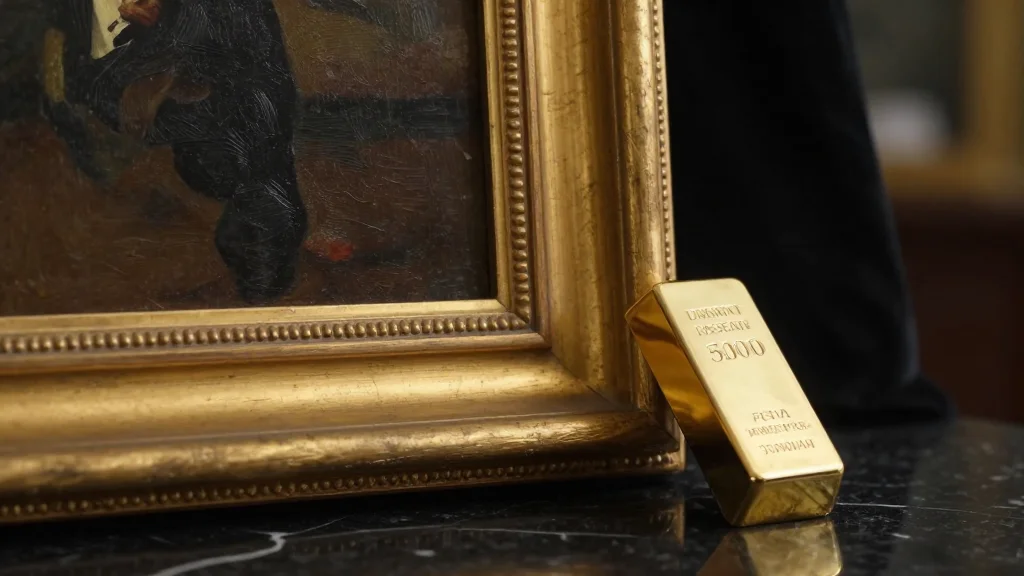
Raja Ravi Varma's 'Yashoda and Krishna' Sells for $20.1 Million, Shattering Indian Art Record

Why It Matters
The record-breaking sale of Varma's "Yashoda and Krishna" illustrates the maturation of the Indian art market, moving it from niche interest to a mainstream asset class capable of attracting multi‑digit million‑dollar bids. This shift has several implications: it validates Indian modern art as a viable investment, encourages greater participation from domestic ultra‑wealthy collectors, and may prompt museums to compete for works that were previously confined to private hands. Moreover, the visibility of such a high price can inspire emerging Indian artists, reinforcing the notion that their cultural narratives have global market relevance. At the same time, the transaction highlights structural challenges. The scarcity of authenticated Varma originals means that provenance verification and market transparency will become increasingly critical. As prices climb, the risk of forgeries and inflated valuations grows, potentially deterring new entrants. Stakeholders—including auction houses, galleries, and cultural ministries—will need to develop robust frameworks to ensure that the market's expansion benefits both collectors and the broader public cultural sphere.
Key Takeaways
- •Raja Ravi Varma's "Yashoda and Krishna" sold for ₹167.20 crore ($20.1 million)
- •Buyer: Cyrus S. Poonawalla, founder of the Serum Institute of India
- •Auction house: Saffronart, Mumbai
- •Sale sets a new record for modern Indian artwork
- •Reflects accelerating demand for South Asian art among global collectors
Pulse Analysis
The Varma sale is more than a headline; it signals a structural shift in how Indian cultural capital is priced and perceived. Historically, Indian modern art struggled to achieve parity with Western counterparts, often fetching modest sums at regional auctions. Over the past decade, however, a confluence of factors—rising domestic wealth, increased global interest in non‑Western narratives, and the professionalization of Indian auction houses—has reshaped the market. Poonawalla's purchase underscores the emergence of a domestic billionaire class that views art not just as a status symbol but as a strategic asset class, akin to real estate or equities.
From a market dynamics perspective, the record price creates a new benchmark that will influence future appraisals. Auction houses will likely reference the Varma sale when marketing comparable works, potentially inflating expectations and driving up reserve prices. This could benefit sellers but also raise barriers for institutions with limited budgets. Moreover, the sale may catalyze a wave of private collectors bringing hidden masterpieces to market, increasing supply and possibly stabilizing prices after an initial surge.
Looking forward, the key question is sustainability. If subsequent auctions continue to break records, we may witness the solidification of an Indian art index, attracting institutional investors and further legitimizing the sector. Conversely, if the Varma sale proves to be an outlier driven by a single buyer's personal affinity, the market could experience a correction. Stakeholders should monitor buyer diversity, provenance standards, and the balance between private acquisition and public exhibition to gauge the long‑term health of the Indian art ecosystem.
Raja Ravi Varma's 'Yashoda and Krishna' sells for $20.1 million, shattering Indian art record
Comments
Want to join the conversation?
Loading comments...