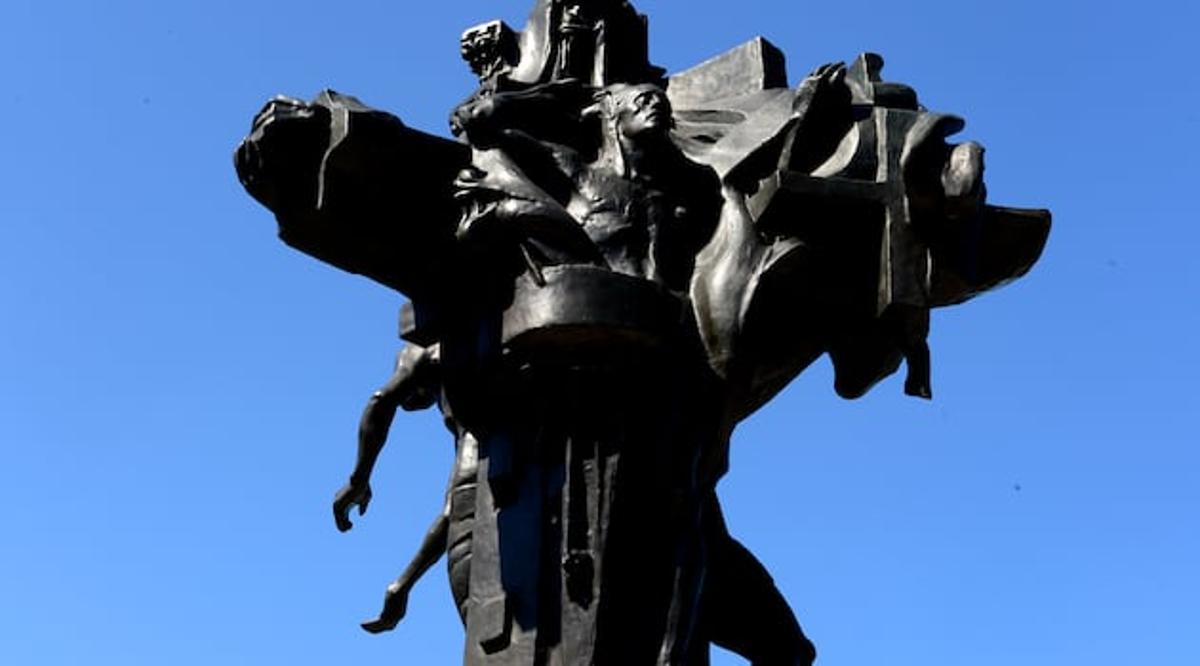
Rite & Reason: ‘I Find It Too Very Ugly’: The Statue so Divisive It Was Hidden in a Dún Laoghaire Garden
Why It Matters
The statue illustrates how public art can become a flashpoint for religious, cultural and urban‑planning tensions, shaping community identity over generations.
Key Takeaways
- •Statue stands 5.5 m tall, weighs 3.5 tonnes of bronze.
- •Commissioned in 1931 by a multi‑denominational fund‑raising committee.
- •Hidden during WWII to prevent German requisition of the metal.
- •Rejected by Archbishop McQuaid, stored in a private garden for decades.
- •Re‑erected in Moran Park in 2014 after library displaced it.
Pulse Analysis
The Monument of Christ the King is more than a religious sculpture; it is a case study in how civic leaders use public art to project moral authority. In the early 1930s, Dún Laoghaire’s town council rallied donors from all faiths to fund a bronze figure that would dominate the harbour skyline, signaling that even secular authorities could endorse a shared spiritual narrative. This strategy mirrored broader European trends where municipalities leveraged monumental art to reinforce cultural cohesion during interwar uncertainty.
However, the statue’s journey reveals the fragility of such ambitions. During the German occupation of France, the bronze was concealed to avoid confiscation, and upon its arrival in Ireland, Archbishop John Charles McQuaid publicly condemned its avant‑garde aesthetic as “ugly.” The work was relegated to a private garden, illustrating how ecclesiastical power could override civic intent. Its eventual 1978 unveiling, attended by dignitaries, marked a reluctant compromise between artistic vision and religious sensibility, a tension still evident in contemporary debates over public monuments.
The 2014 relocation to Moran Park, prompted by the construction of the Lexicon Library, underscores the evolving relationship between heritage and urban development. By elevating the statue on a new plinth, planners preserved its visual prominence while integrating it into a modern cultural precinct. This adaptive reuse demonstrates how cities can reconcile historic artifacts with present‑day infrastructure, ensuring that contested symbols remain part of the public discourse rather than disappearing behind bureaucratic decisions.
Rite & reason: ‘I find it too very ugly’: the statue so divisive it was hidden in a Dún Laoghaire garden
Comments
Want to join the conversation?
Loading comments...