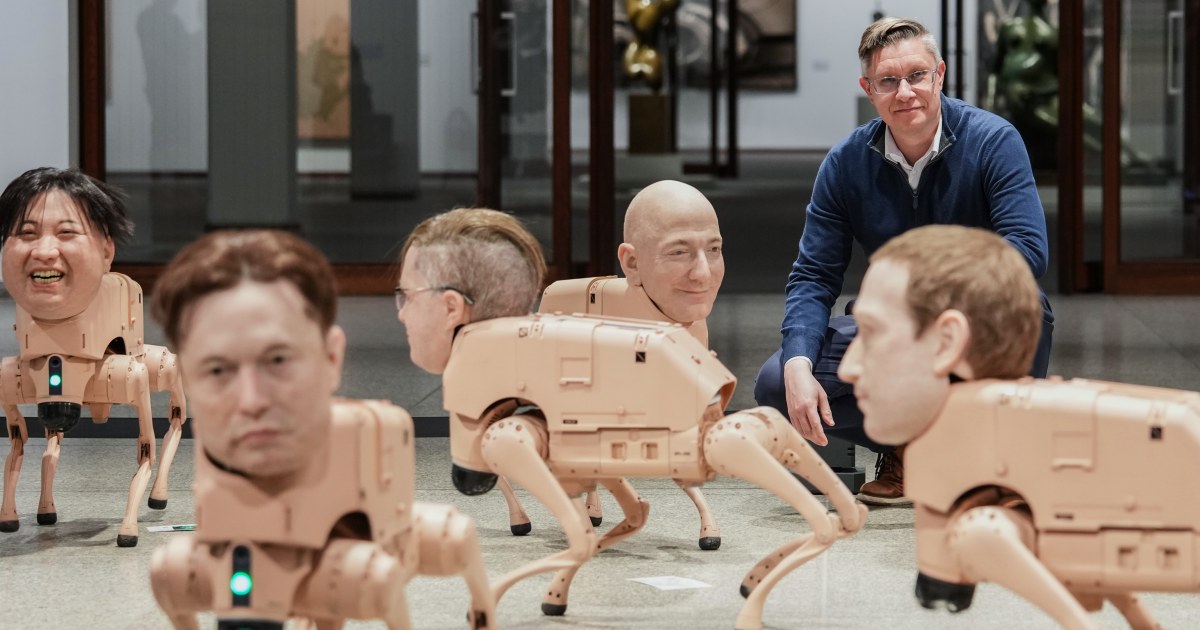
Robot Dogs with Musk and Zuckerberg Heads Roam Around Berlin Museum
Companies Mentioned
Why It Matters
The installation spotlights the growing influence of algorithmic curation by tech giants, raising questions about media bias and cultural control. It also illustrates how NFTs and AI can merge physical art experiences with digital ownership, signaling new revenue models for artists.
Key Takeaways
- •Beeple's "Regular Animals" features robot dogs with billionaire silicone heads
- •Dogs print AI‑styled images reflecting each figure’s artistic perspective
- •Installation critiques algorithmic power of tech moguls over public perception
- •Beeple ranks third most expensive living artist after Hockney and Koons
- •NFTs attached to prints let visitors claim free digital artwork
Pulse Analysis
Beeple, born Mike Winkelmann, has become a cornerstone of the digital‑art market, famously posting a new image every day for over a decade. His 2021 auction of "Everydays: The First 5000 Days" fetched more than $69 million, cementing his status as the third‑most expensive living artist behind David Hockney and Jeff Koons. This market success reflects a broader shift toward blockchain‑verified works, where scarcity and provenance are guaranteed by NFTs, reshaping how collectors assess value.
The "Regular Animals" installation pushes that evolution into the museum space. Robot dogs equipped with cameras roam Berlin’s Neue Nationalgalerie, printing snapshots that AI re‑styles to match the aesthetic of the head they wear—Cubist for Picasso, pop‑art for Warhol, and so on. By pairing hyper‑realistic silicone replicas of tech moguls with algorithm‑driven visual output, Beeple critiques the outsized role of billionaire‑run platforms in shaping what audiences see, turning the museum into a mirror for algorithmic bias.
Beyond the spectacle, the project signals a new hybrid model for art consumption. Visitors receive printed “dog‑poo” images alongside QR‑linked NFTs, blurring the line between physical memorabilia and digital ownership. Museums, traditionally custodians of static works, are now testing interactive, blockchain‑enabled experiences that can generate ongoing revenue streams and data insights. As AI and NFTs converge, artists and institutions alike must navigate questions of authenticity, monetization, and the ethical implications of algorithmic influence on culture.
Robot dogs with Musk and Zuckerberg heads roam around Berlin museum
Comments
Want to join the conversation?
Loading comments...