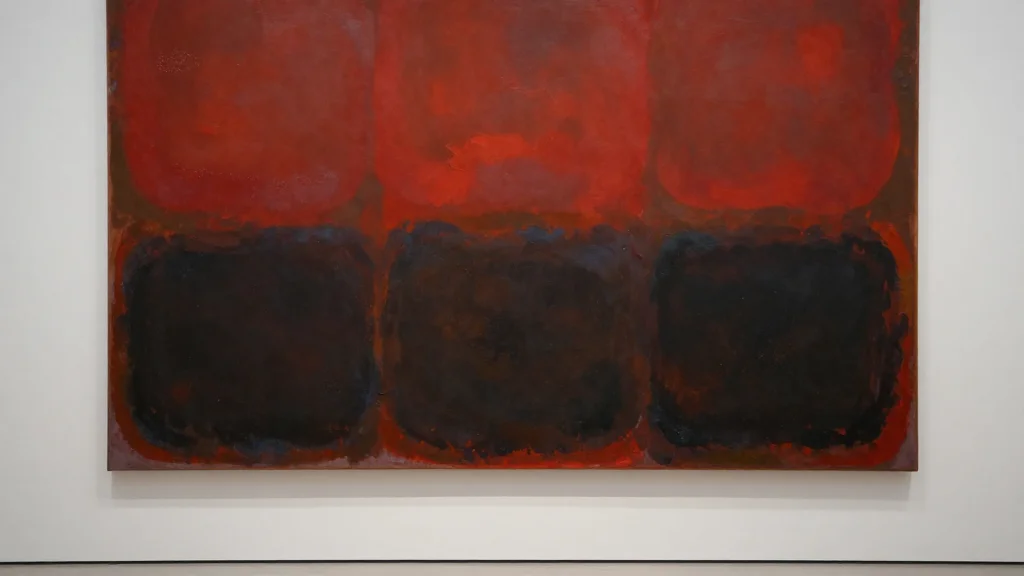
Rothko Paintings Fetch $85.8 Million, Sparking Mid‑Century Boom in New York

Companies Mentioned

Why It Matters
The Rothko surge reshapes how investors, museums, and private collectors view mid‑century abstract expressionism. High‑profile auction results create benchmark prices that influence insurance valuations, loan‑collateral considerations, and the willingness of institutions to allocate acquisition budgets toward works that were once considered niche. Moreover, the heightened visibility of Rothko reinforces the narrative that American post‑war art is a cornerstone of global cultural capital, prompting a re‑examination of market dynamics that have traditionally favored European modernism. For galleries, the trend offers a dual opportunity: to capitalize on elevated demand for marquee works while also navigating the risk of price volatility. Dealers that can secure provenance‑rich pieces stand to command premium commissions, whereas those without access may need to pivot toward emerging mid‑century artists whose prices remain more modest. The ripple effect extends to art‑finance firms, insurers, and auction houses that must recalibrate risk models and marketing strategies in response to the new pricing reality.
Key Takeaways
- •Rothko's "Brown and Blacks in Reds" sold for $85.8 million at Sotheby’s, just below the $86.9 million record
- •Four Rothko works auctioned in one week across Christie’s, Sotheby’s and TEFAF
- •Dealer Emmanuel Di Donna highlighted color as the driver of price, noting brighter hues command higher values
- •Christie’s will auction a Gund collection Rothko with an $80 million estimate later this month
- •The surge may lift prices for other Abstract Expressionists and reshape museum acquisition strategies
Pulse Analysis
The recent Rothko sales are less a flash‑in‑the‑pan hype and more an indicator of a maturing market for post‑war American art. Historically, the sector has been driven by a handful of blue‑chip works that set occasional records, but the clustering of multiple high‑value sales within a single week suggests that collectors are now treating Rothko as a portfolio anchor, akin to blue‑chip equities. This shift is reinforced by the parallel rise of institutional exhibitions that keep the artist top‑of‑mind for both seasoned buyers and a new generation of collectors entering the market.
From a competitive standpoint, auction houses are leveraging the Rothko narrative to differentiate their offerings, staging simultaneous sales to create a sense of scarcity and urgency. Christie’s and Sotheby’s are effectively engaging in a price‑war, each hoping to out‑bid the other on provenance‑rich pieces. Dealers, meanwhile, are positioning secondary‑market works as complementary to the headline‑grabbing auction items, using curated booth displays at fairs like TEFAF to attract high‑net‑worth buyers who may later participate in private sales.
Looking forward, the sustainability of the Rothko boom will hinge on two variables: the pipeline of high‑quality, provenance‑strong works entering the market, and the broader macro‑economic environment that influences discretionary spending on luxury assets. If the supply of comparable masterpieces remains limited, we can expect a continued upward trajectory in price floors, potentially redefining the valuation hierarchy of mid‑century modern art. Conversely, any macro‑economic slowdown could temper enthusiasm, prompting a correction that would test the resilience of the new price benchmarks. Stakeholders should monitor upcoming auctions, museum acquisition announcements, and secondary‑market activity to gauge whether the Rothko moment evolves into a lasting market paradigm.
Rothko Paintings Fetch $85.8 Million, Sparking Mid‑Century Boom in New York
Comments
Want to join the conversation?
Loading comments...