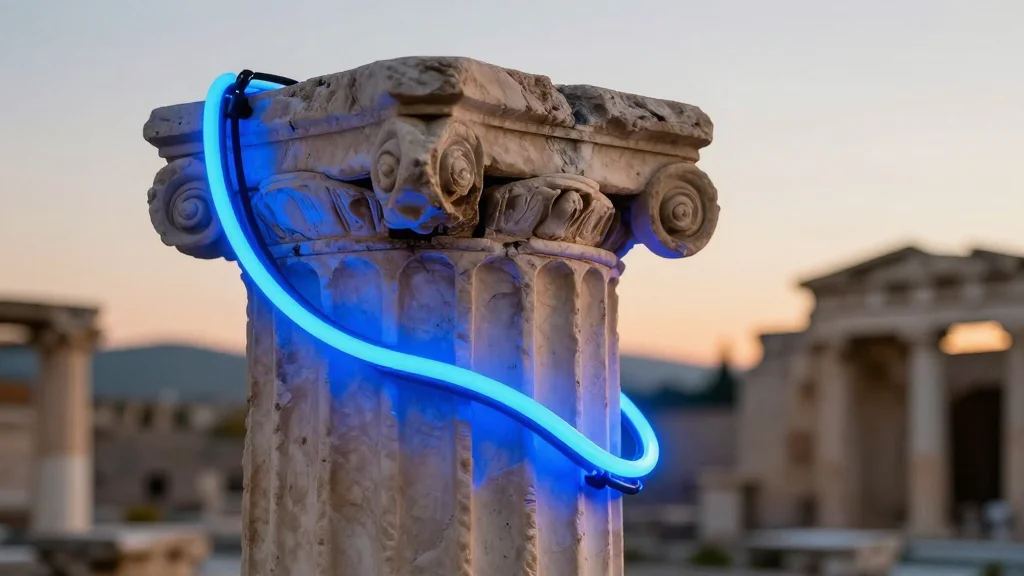
Siteless Athens Arts Institution NEON Closing After 14 Years
Companies Mentioned
Why It Matters
NEON’s closure marks the end of a pioneering non‑brick‑and‑mortar model that reshaped how contemporary art engages the public in Greece, highlighting both the potential and fragility of site‑specific cultural initiatives.
Key Takeaways
- •NEON founded 2012, operated without permanent building.
- •Produced 44 exhibitions featuring Abramović, Douka, and Danh Vo.
- •Closing announced 2026 after 14 years, citing mission fulfillment.
- •Final project: Michael Rakowitz’s “Ancient Cultures” trilogy at Acropolis Museum.
Pulse Analysis
NEON’s fourteen‑year run demonstrated that a cultural institution can thrive without a fixed address. By leveraging historic venues—from the Benaki Museum to ancient archaeological sites—the organization turned Greece’s rich heritage into a dynamic backdrop for contemporary art. This sit‑less approach attracted high‑profile creators such as Marina Abramović and Danh Vo, while also giving emerging Greek talent a platform, thereby expanding the country’s cultural capital on the global stage.
The impact on Athens’ art ecosystem has been measurable. NEON’s programming generated over forty‑four exhibitions, drawing thousands of visitors and fostering collaborations between private collectors, public museums, and civic bodies. Its model encouraged audiences to encounter art outside traditional white‑cube settings, sparking dialogue about heritage, identity, and modernity. The final Rakowitz trilogy, juxtaposing ancient artifacts with contemporary interventions, epitomizes the institution’s mission to bridge past and present, reinforcing Athens’ reputation as a living laboratory for artistic experimentation.
Looking ahead, NEON’s dissolution offers lessons for future cultural ventures. The organization proved that flexible, site‑specific programming can achieve deep community engagement, yet it also underscored the financial and logistical challenges of sustaining such a model without a permanent revenue base. Stakeholders may now explore hybrid structures—combining permanent spaces with pop‑up projects—to retain the creative freedom NEON championed while ensuring fiscal resilience. The networks and knowledge NEON built are likely to seed new collaborations, ensuring its legacy endures within Greece’s evolving cultural landscape.
Siteless Athens Arts Institution NEON Closing After 14 Years
Comments
Want to join the conversation?
Loading comments...