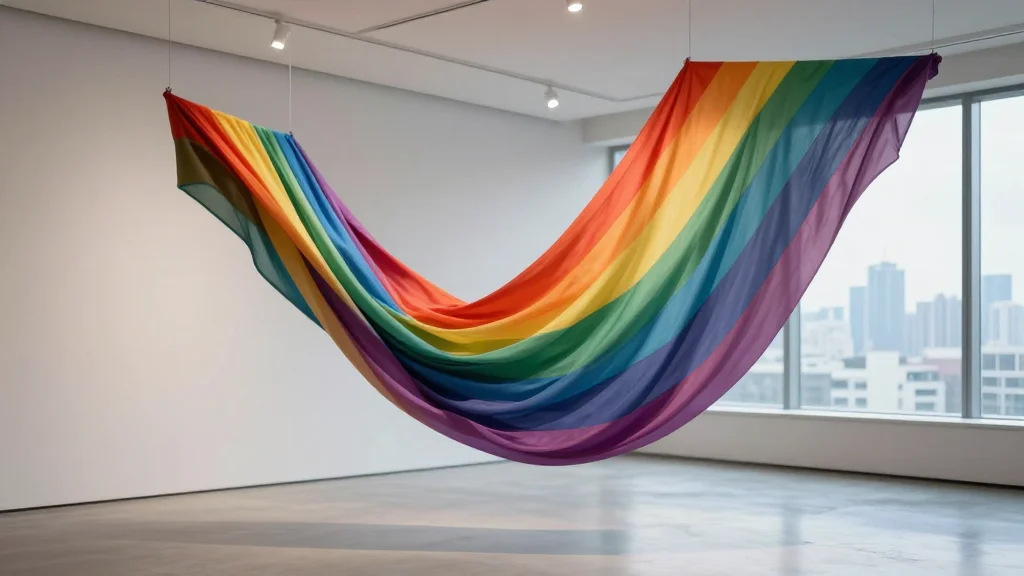
South Korea Launches First Major LGBTQ Art Exhibition, 'Spectrosynthesis Seoul'

Why It Matters
The launch of "Spectrosynthesis Seoul" marks a watershed for LGBTQ representation in a market where queer visibility has historically been limited. By giving 74 artists a high‑profile platform, the exhibition challenges entrenched social norms and signals to other Asian institutions that queer narratives can attract audiences and critical attention. Moreover, the show’s engagement with recent political events—martial law, farmer protests, and anti‑LGBTQ violence—demonstrates how art can serve as a conduit for civic discourse, potentially influencing public opinion and future legislative debates. Economically, the exhibition could reshape collecting patterns. As galleries and museums worldwide seek to diversify their programming, the visibility of Korean queer artists may drive new market demand, encouraging patrons to invest in works that blend aesthetic innovation with social commentary. This could lead to a virtuous cycle where increased funding fuels further artistic experimentation, reinforcing the cultural shift toward inclusion.
Key Takeaways
- •Spectrosynthesis Seoul opened March 20 at Art Sonje Centre, featuring 74 LGBTQ artists.
- •Founder Patrick Sun highlighted the exhibition’s role in amplifying brave young Korean queer voices.
- •Curator Sun‑jung Kim noted a generational shift toward openness about identity.
- •Works address recent political unrest, including the 2024 martial law and farmer protests.
- •The show may travel to other Asian cities, expanding market exposure for queer artists.
Pulse Analysis
The emergence of "Spectrosynthesis Seoul" reflects a broader pivot in Asian cultural institutions toward embracing contested identities. Historically, museums in the region have been cautious, often self‑censoring content that could provoke backlash. By foregrounding LGBTQ themes, Art Sonje Centre is betting that the growing appetite among younger, globally connected audiences outweighs the risk of conservative pushback. This gamble aligns with a global trend where art venues leverage social relevance to attract foot traffic and media attention, a strategy that can translate into higher ticket sales and donor interest.
From a market perspective, the exhibition could act as a catalyst for a new valuation tier for queer Korean artists. As collectors increasingly prioritize socially engaged work, provenance linked to a high‑profile, first‑of‑its‑kind show adds a premium. If the planned touring circuit materializes, secondary markets in Hong Kong, Taipei, and Bangkok may see a surge in demand, prompting auction houses to feature more LGBTQ‑themed Korean pieces. However, the durability of this interest will depend on sustained institutional support and the ability of artists to navigate South Korea’s limited legal protections.
Looking ahead, the exhibition’s success may inspire policy dialogues within cultural ministries, potentially prompting the Korean government to reconsider funding allocations for LGBTQ initiatives. While the exhibition alone cannot overturn entrenched legal barriers, its visibility creates a public forum that could pressure legislators to address discrimination. In the longer term, the integration of queer narratives into mainstream art programming may become a benchmark for cultural progress across East Asia, reshaping both artistic production and societal attitudes.
South Korea Launches First Major LGBTQ Art Exhibition, 'Spectrosynthesis Seoul'
Comments
Want to join the conversation?
Loading comments...