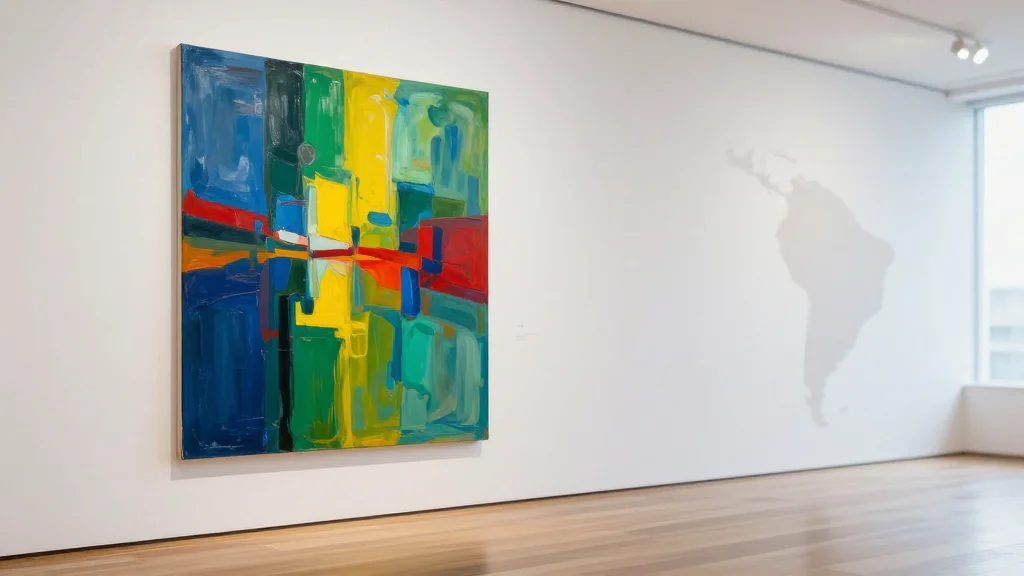
SP-Arte 2026 Signals Latin America’s Growing Clout in the Global Art Market

Companies Mentioned
Why It Matters
The surge in sales and the strong showing at SP‑Arte illustrate that Latin America is moving from a peripheral market to a central player in the global art ecosystem. By proving that regional galleries can thrive despite economic and political headwinds, the fair challenges the long‑standing bias toward Western art and encourages collectors to diversify their portfolios. This shift could reshape auction house strategies, museum acquisition policies, and the geographic distribution of art fairs worldwide. Moreover, the emphasis on local identity and under‑represented artists aligns with a broader industry push for diversity and inclusion. As buyers increasingly value cultural authenticity, Latin American creators stand to gain greater visibility and market validation, potentially leading to higher price points and more sustainable careers for artists across the continent.
Key Takeaways
- •SP‑Arte 2026 hosted over 180 galleries and design studios in São Paulo (April 8‑12).
- •Brazilian galleries reported a 21% year‑on‑year sales increase in 2025, per Art Basel/UBS report.
- •Fernanda Feitosa highlighted Latin America’s resilience amid crises.
- •Juan Luis Balarezo noted lower cost structures give Latin American galleries a competitive edge.
- •The fair’s focus on Brazilian identity is seen as a market differentiator.
Pulse Analysis
SP‑Arte’s 2026 edition arrives at a moment when the global art market is actively reassessing its geographic biases. Historically, major fairs in London, New York and Paris have set price benchmarks, often marginalizing work from the Global South. The data from the Art Basel/UBS report, combined with on‑the‑ground observations at SP‑Arte, suggest a tipping point: Latin American galleries are not only surviving but expanding their market share.
Two dynamics are at play. First, the region’s smaller gallery footprints translate into lower overhead, allowing dealers to offer competitive commissions and invest more in artist development. Second, the narrative of resilience—articulated by Feitosa and Gonzalez Ramos—resonates with collectors seeking stories of cultural endurance. This narrative, paired with a growing appetite for diverse voices, creates a virtuous cycle that could elevate Latin American art from niche to mainstream.
Looking forward, the challenge will be scaling this momentum without diluting the local character that makes SP‑Arte compelling. If future editions can attract more institutional buyers while maintaining a strong Brazilian core, the fair could become a blueprint for other emerging markets seeking to assert themselves on the world stage.
SP-Arte 2026 Signals Latin America’s Growing Clout in the Global Art Market
Comments
Want to join the conversation?
Loading comments...