Companies Mentioned
Why It Matters
The show bridges avant‑garde painting technique with climate discourse, signaling how contemporary art can amplify environmental urgency while reshaping gallery conventions.
Key Takeaways
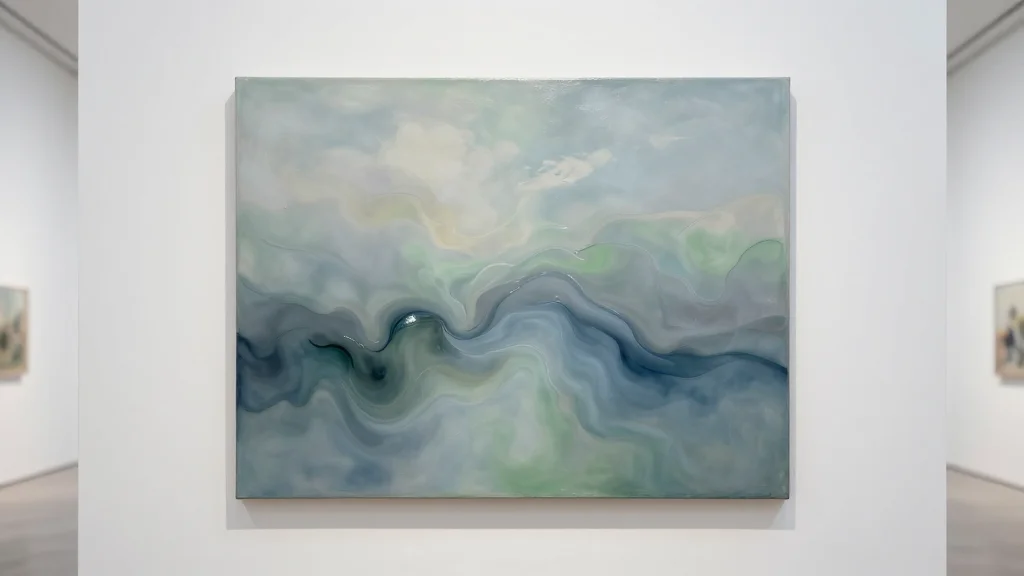
- •Sandström uses diluted acrylics that flow and pool on flat canvases
- •Exhibition layout moves opposite reading direction, echoing Asian scroll traditions
- •Paintings blend abstract forms with Swedish landscape references and climate urgency
- •Double‑sided canvases reveal hidden bleed‑through, creating misty, out‑of‑focus effects
- •No human figures; works act as torches pointing outward toward ecological crisis
Pulse Analysis
"Squall" arrives at Perrotin London at a moment when the art market is increasingly rewarding works that fuse aesthetic innovation with social relevance. Sandström’s technique—spreading thin acrylic washes over cotton and allowing gravity to dictate flow—produces surfaces that resemble analogue photographs in their unpredictability. This controlled surrender to chance not only creates a visual language of atmospheric tension but also aligns with a broader trend of artists embracing process‑driven methods to differentiate their practice in a crowded global scene.
The exhibition’s spatial choreography further deepens its impact. By arranging the paintings to travel right‑to‑left, Sandström subverts Western reading habits and nods to early Chinese scrolls and Japanese screens, inviting viewers to experience the work as a continuous, meditative journey. The subtle references to Fra Angelico’s narrative friezes and the geometry of classical Chinese gardens embed the show within a lineage of cross‑cultural dialogue, positioning contemporary abstraction as a bridge between historic reverence and modern sensibility.
Beyond formal concerns, "Squall" is a quiet yet potent commentary on climate change. Sandström’s Arctic travels twenty years ago inform the bleak, horizon‑less vistas that dominate the canvases, while the absence of human figures forces attention onto the landscape itself. In an era where galleries and collectors are scrutinizing the ecological footprint of art, the exhibition demonstrates how visual practice can serve as both a reflective mirror and a call to action, reinforcing the growing market appetite for environmentally engaged art.
Squall: Sigrid Sandström at Perrotin, London
Comments
Want to join the conversation?
Loading comments...