Why It Matters
Kagan’s light‑shadow sculptures push contemporary sculpture’s boundaries, offering collectors a novel blend of engineering and visual art that can drive demand for experiential works.
Key Takeaways
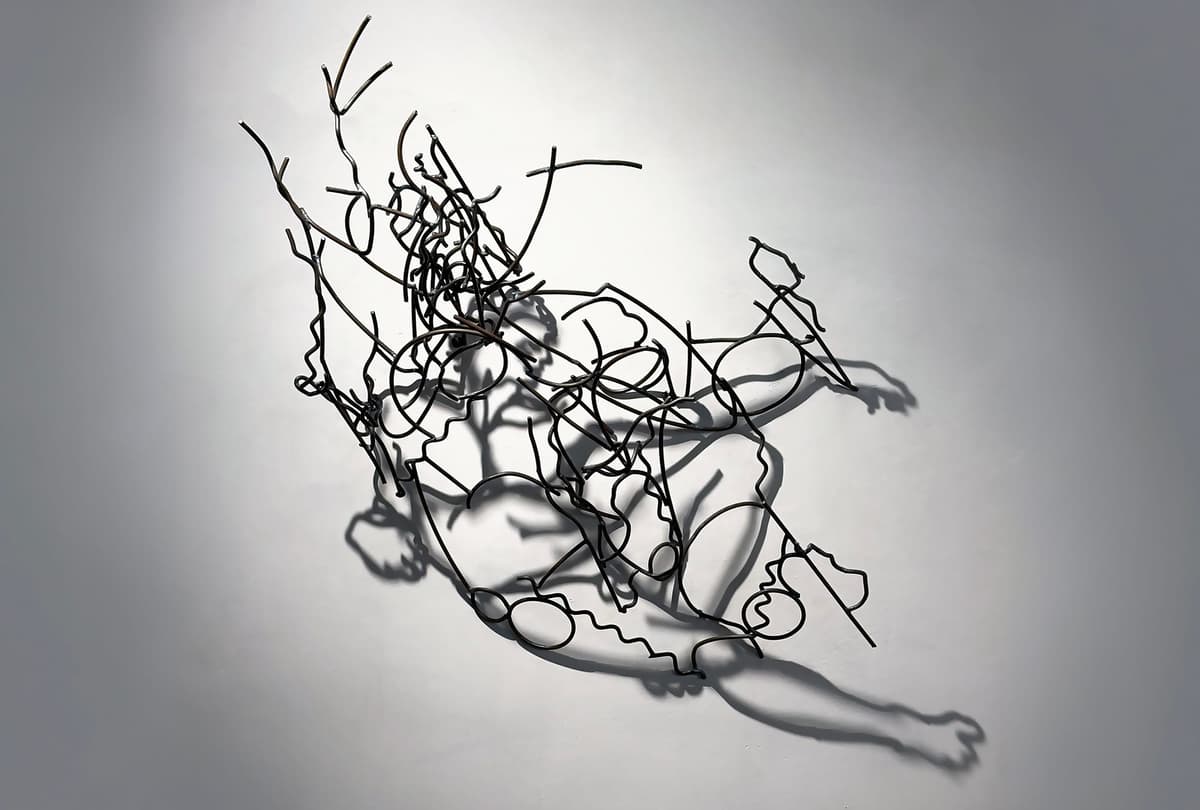
- •Steel frameworks project precise shadow images under controlled lighting
- •Engineer background informs Kagan’s meticulous construction methods
- •Exhibition runs May 9–June 20 at Louis K. Meisel Gallery
- •Works featured in major museums, boosting artist’s market profile
Pulse Analysis
Larry Kagan’s “Men” exhibition showcases a hybrid of engineering precision and artistic imagination. By pre‑designing a silhouette and then constructing a three‑dimensional steel lattice that reproduces that image when illuminated, Kagan revives the age‑old chiaroscuro principle in a three‑dimensional medium. The technique relies on exact angles, calibrated light sources, and laser‑cut steel pieces that interlock like a skeletal framework. This marriage of material rigor and optical illusion places his work alongside pioneers such as Dan Flavin and James Turrell, while remaining distinctly kinetic. The resulting shadows often depict human figures or everyday objects, reinforcing the exhibition’s title.
The exhibition arrives at a moment when collectors are gravitating toward experiential pieces that engage viewers beyond static display. Galleries such as Louis K. Meisel have capitalized on this shift, offering works that demand precise installation and controlled lighting, thereby increasing production complexity and, consequently, price points. Kagan’s pieces, already held by institutions like The Jewish Museum and the Flint Institute of Arts, gain additional provenance through a high‑visibility New York showing, which can translate into heightened auction interest and secondary‑market liquidity. Private collectors have reported that the kinetic nature of Kagan’s sculptures enhances the aesthetic value of contemporary interior spaces.
Beyond market dynamics, Kagan’s work challenges museums and curators to rethink exhibition design. The necessity of exact lighting angles turns a gallery wall into an active stage, encouraging audiences to move and observe from multiple viewpoints. This interactive quality aligns with broader trends in digital‑age museums that prioritize immersive experiences. As emerging sculptors experiment with programmable LEDs and 3‑D‑printed frameworks, Kagan’s steel‑shadow methodology may serve as a blueprint for future hybrid installations that blur the line between object and projection. Institutions that successfully integrate such light‑responsive works report longer visitor dwell times and higher engagement metrics.
Steel And Shadows Converge in “Larry Kagan: Men”
Comments
Want to join the conversation?
Loading comments...