Superflex's Climate Installation Opens at Palazzo Strozzi, Florence

Why It Matters
Superflex’s installation demonstrates how contemporary art can serve as a catalyst for climate dialogue, especially when situated within iconic heritage sites that attract global attention. By visualising a future where marine life inhabits urban architecture, the work challenges conventional anthropocentric planning and encourages policymakers, architects, and the public to consider adaptive, multi‑species design solutions. The project also reinforces Florence’s emerging role as a laboratory for integrating historic preservation with forward‑looking environmental narratives. Moreover, the timing with the 1966 flood anniversary provides a poignant historical anchor, reminding audiences that climate‑related disasters are not abstract future scenarios but lived experiences that have already reshaped cities. This contextual layering amplifies the installation’s emotional resonance and may inspire similar interventions worldwide, where art, history, and climate activism intersect.
Key Takeaways
- •SUPERFLEX opens 'There Are Other Fish In The Sea' at Palazzo Strozzi from April 14 to August 2, 2026.
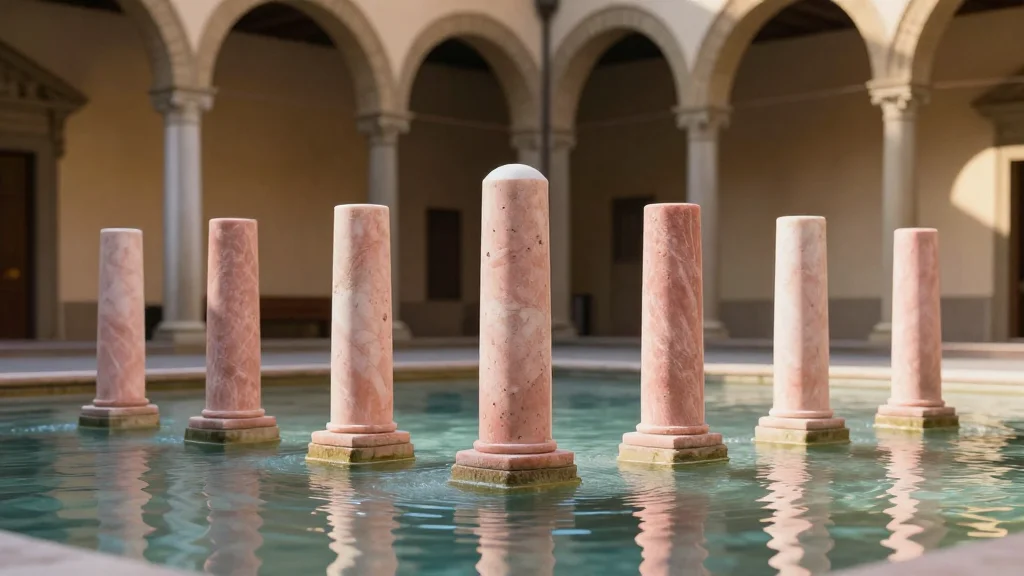
- •Installation features eight pink travertine columns in a shallow pool, embodying 'interspecies architecture'.
- •Project coincides with the 60th anniversary of Florence's 1966 flood, linking past disaster to future climate scenarios.
- •Supported by Fondazione Palazzo Strozzi and Fondazione Hillary Merkus Recordati as part of the Future Art programme.
- •Works aims to shift design thinking from human‑centric to multi‑species urban planning.
Pulse Analysis
Superflex’s Palazzo Strozzi installation arrives at a moment when cultural institutions are increasingly leveraging their platforms to address climate urgency. Historically, museums and heritage sites have been perceived as custodians of the past, but projects like this signal a pivot toward using that authority to foreground future challenges. By embedding speculative marine habitats within a Renaissance courtyard, the collective forces a visual and conceptual collision that is hard to ignore. This approach aligns with a broader shift in the art market where climate‑themed works are gaining both critical and commercial traction, as collectors and foundations seek pieces that speak to societal concerns.
From a strategic perspective, the partnership with the Fondazione Palazzo Strozzi and the Fondazione Hillary Merkus Recordati illustrates a model of cross‑sector collaboration that could become a template for future art‑climate initiatives. The involvement of scientific insights into biodiversity and surface complexity adds credibility and depth, moving the work beyond aesthetic provocation to a form of public pedagogy. While the installation is temporary, its impact may be measured in terms of visitor engagement metrics, media coverage, and any subsequent policy discussions it sparks within Florence’s urban planning circles.
Looking ahead, the key question is whether such interventions can translate into tangible design changes. If architects and city officials begin to incorporate interspecies considerations into building codes or waterfront redevelopment plans, the installation would have achieved a rare feat: moving from symbolic critique to actionable influence. For now, Superflex has secured a high‑visibility stage, and the art world will be watching to see if this moment catalyses a broader rethinking of how historic spaces can be repurposed to imagine—and perhaps shape—a more resilient, multi‑species future.
Superflex's Climate Installation Opens at Palazzo Strozzi, Florence
Comments
Want to join the conversation?
Loading comments...