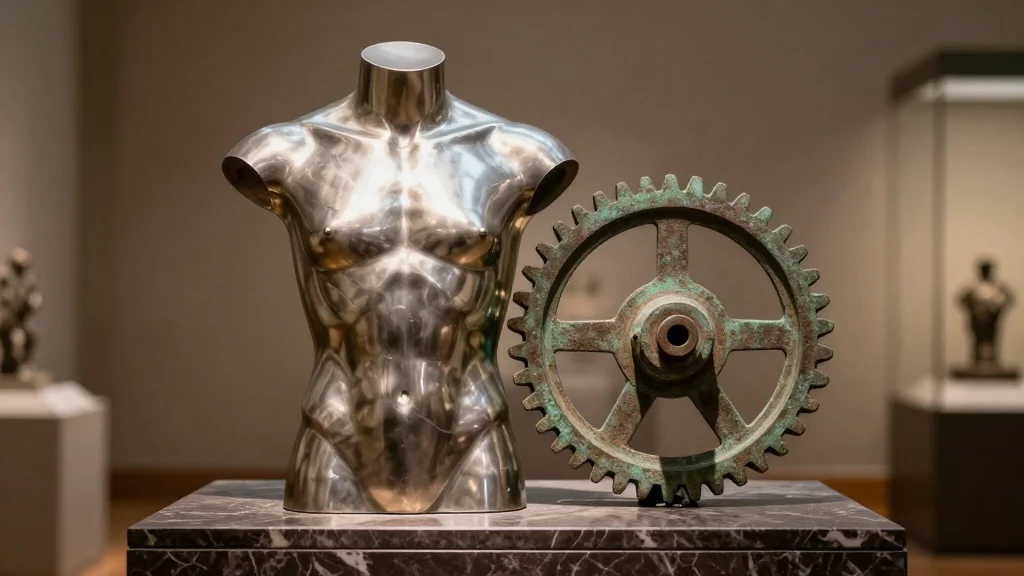
The New Museum’s ‘New Humans’ Reckons With Human-Machine Relations in the Workplace
Why It Matters
The show underscores how AI‑driven gig work is redefining employment, prompting urgent debate about worker rights and societal value in an increasingly automated economy.
Key Takeaways
- •Exhibition links ancient myths to modern AI labor
- •Mechanical Ballets reference 1920s industrial art critiques
- •Steyerl’s video exposes MTurk refugees’ AI training work
- •Art reflects growing precarity of gig‑economy workers
- •Raises questions on humanity’s role amid automation
Pulse Analysis
The New Museum’s “New Humans” exhibition situates today’s AI‑driven labor crisis within a deep cultural lineage. By invoking the Mesopotamian tale of the Igigi and the later Bauhaus fascination with mechanized bodies, curators illustrate how the fear of losing humanity to machines is not new. Historical references to Oskar Schlemmer’s geometric ballets and George Grosz’s hybrid sculptures serve as visual precursors to contemporary anxieties, framing the current gig economy as another chapter in the long‑standing narrative of labor commodification.
At the heart of the show, Hito Steyerl’s *Mechanical Kurds* brings the abstract debate into stark reality. Filmed in Iraq’s Domiz refugee camp, the piece follows Kurdish workers who label images for Amazon’s Mechanical Turk, a platform that fuels AI development worldwide. Their testimonies reveal a paradox: micro‑tasks provide modest income yet extract cognitive labor that powers sophisticated algorithms, often without transparent compensation or long‑term security. This exposure spotlights the hidden human infrastructure behind AI, prompting policymakers and tech firms to reconsider the ethics of crowdsourced data labeling.
Beyond the specific case of MTurk, the exhibition raises broader questions about the future of work in an era of rapid automation. As artists like Kristin Walsh and Pierre Huyghe depict futile or absurd labor, they echo David Graeber’s critique of “bullshit jobs” and suggest that many roles may become functionally obsolete. The convergence of myth, history, and present‑day technology in “New Humans” challenges viewers to confront whether society will re‑humanize displaced workers or continue to sacrifice them on the altar of efficiency. The dialogue sparked by the exhibition is crucial for shaping labor policy, corporate responsibility, and cultural narratives as automation reshapes the global workforce.
The New Museum’s ‘New Humans’ Reckons With Human-Machine Relations in the Workplace
Comments
Want to join the conversation?
Loading comments...