Thinking Small and Dreaming Big in Isabel Nolan’s Imaginary World
Why It Matters
Dreamshook bridges historical humanism with contemporary concerns about knowledge authority, signaling how art can reframe cultural narratives for today’s audiences.
Key Takeaways
- •Nolan uses textiles to translate big ideas into intimate experiences.
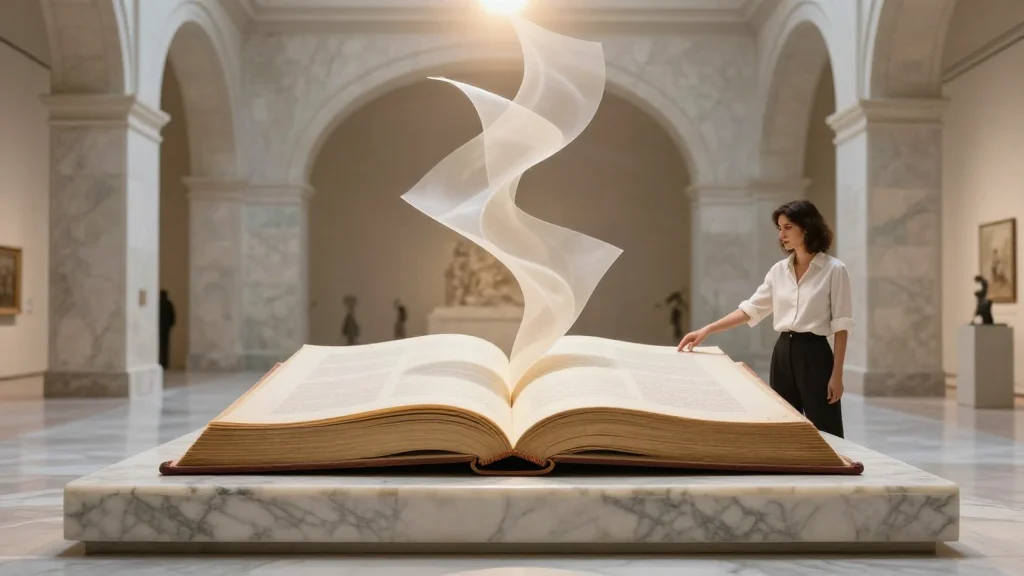
- •Dreamshook merges waking dreams with Aldus Manutius’s portable book concept.
- •Renaissance Italian art shapes her visual language and humanist focus.
- •She highlights modern expertise erosion by referencing historical moral possibilities.
- •Nolan aims to broaden history with more inclusive, diverse perspectives.
Pulse Analysis
Isabel Nolan’s Dreamshook pavilion arrives at a moment when the art world is re‑examining the relevance of historical narratives. By invoking Aldus Manutius—a 15th‑century Venetian publisher who democratized knowledge through portable books—Nolan draws a parallel to today’s digital information flood. The installation’s tactile textiles and semi‑circular tapestries act as physical anchors, allowing visitors to feel the tension between the fleeting nature of dreams and the permanence of printed ideas. This juxtaposition underscores a broader cultural anxiety: as expertise is increasingly challenged, the need for accessible, trustworthy knowledge becomes more urgent.
The artist’s fascination with the late Medieval and early Renaissance periods is more than aesthetic nostalgia. Those centuries marked a seismic shift toward humanism, where scholars began to question divine authority and prioritize empirical observation. Nolan channels that spirit by re‑imagining Manutius’s mission as a metaphor for contemporary curiosity. Her use of small, intimate forms mirrors the way modern audiences consume information—through snippets, memes, and brief visual cues—yet she insists on a bodily, contemplative experience that encourages deeper reflection beyond surface‑level consumption.
Beyond visual spectacle, Dreamshook serves as a critique of the current cultural inheritance. Nolan acknowledges the dominance of “dead white men” in the canon while advocating for a more inclusive retelling of history that incorporates marginalized voices. By blending dream logic with scholarly ambition, the pavilion invites viewers to consider how stories are preserved, who gets to tell them, and what moral possibilities emerge when knowledge is decoupled from singular authority. In doing so, Nolan positions contemporary art as a conduit for re‑imagining collective memory and fostering a more democratic discourse.
Thinking small and dreaming big in Isabel Nolan’s imaginary world
Comments
Want to join the conversation?
Loading comments...