Transparency Without Resolution: Zhou Zizheng's Inconceivable at Harvard CAMLab Cave by Luman Jiang
Companies Mentioned
Why It Matters
The exhibition spotlights the limits of machine vision and challenges architectural theories of transparency, prompting designers and technologists to reconsider how materiality shapes perception and knowledge.
Key Takeaways
- •3D scanner fails to capture both Tang glass and Coca‑Cola bottle
- •Installation blurs historical and consumer objects through shared transparency
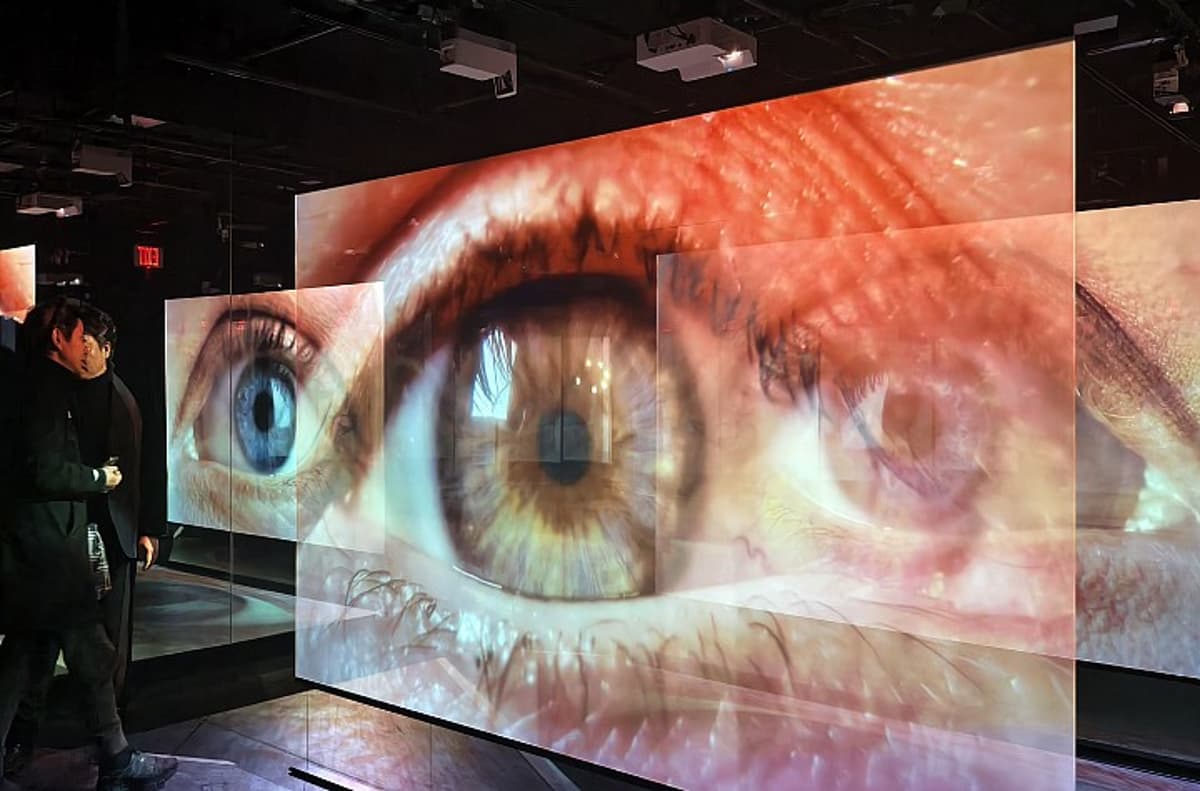
- •Video screens create layered space, dissolving foreground‑background distinction
- •Work challenges architectural notions of literal vs. phenomenal transparency
Pulse Analysis
Zhou Zizheng’s *Inconceivable* arrives at a moment when machine vision is touted as a universal solution for capturing reality. By feeding a standard 3D scanner both a priceless Tang dynasty glass bottle and a mass‑produced Coca‑Cola container, the artist reveals a fundamental blind spot: transparent materials that transmit rather than reflect light generate unusable data. This failure is not merely technical; it collapses the cultural and economic narratives attached to each object, suggesting that the promise of digital clarity can erase the very distinctions that give artifacts meaning.
The installation’s visual strategy deepens the critique. Four transparent screens in an Infinity Room project a four‑channel video that overlays the scanner’s errant topographies onto the surrounding space, erasing the line between object and environment. Simultaneously, the adjacent *Gaze of Transparency* strips both a Tang amphora and everyday glassware of function, allowing them to act solely as light‑modulating forms. By equalizing ancient and contemporary glass, Zhou forces viewers to confront how materiality, rather than provenance, structures perception, echoing Buddhist ideas of seeing without locating the act of seeing.
Beyond the gallery, *Inconceivable* raises questions for fields ranging from architecture to artificial intelligence. Traditional theories of literal and phenomenal transparency assume that seeing is a linear passage through material; Zhou’s work demonstrates that transparency can be ontological, a state where form continuously emerges and dissolves. For designers and AI developers, this suggests a need to embed material awareness into visual algorithms, acknowledging that not all surfaces are meant to be resolved. As immersive technologies proliferate, the exhibition serves as a reminder that the conditions of seeing—light, material, context—are as crucial as the data they produce.
Transparency Without Resolution: Zhou Zizheng's Inconceivable at Harvard CAMLab Cave by Luman Jiang
Comments
Want to join the conversation?
Loading comments...