Companies Mentioned
Why It Matters
Returning the artifacts curtails illicit trafficking, restores cultural heritage, and reinforces a two‑decade‑long diplomatic framework that protects billions in art market value. The move also promises economic and tourism benefits for Italy while signaling stricter enforcement for smugglers worldwide.
Key Takeaways
- •337 antiquities returned by U.S. to Italy this month
- •FBI, DHS, Manhattan DA, and Christie’s aided recovery
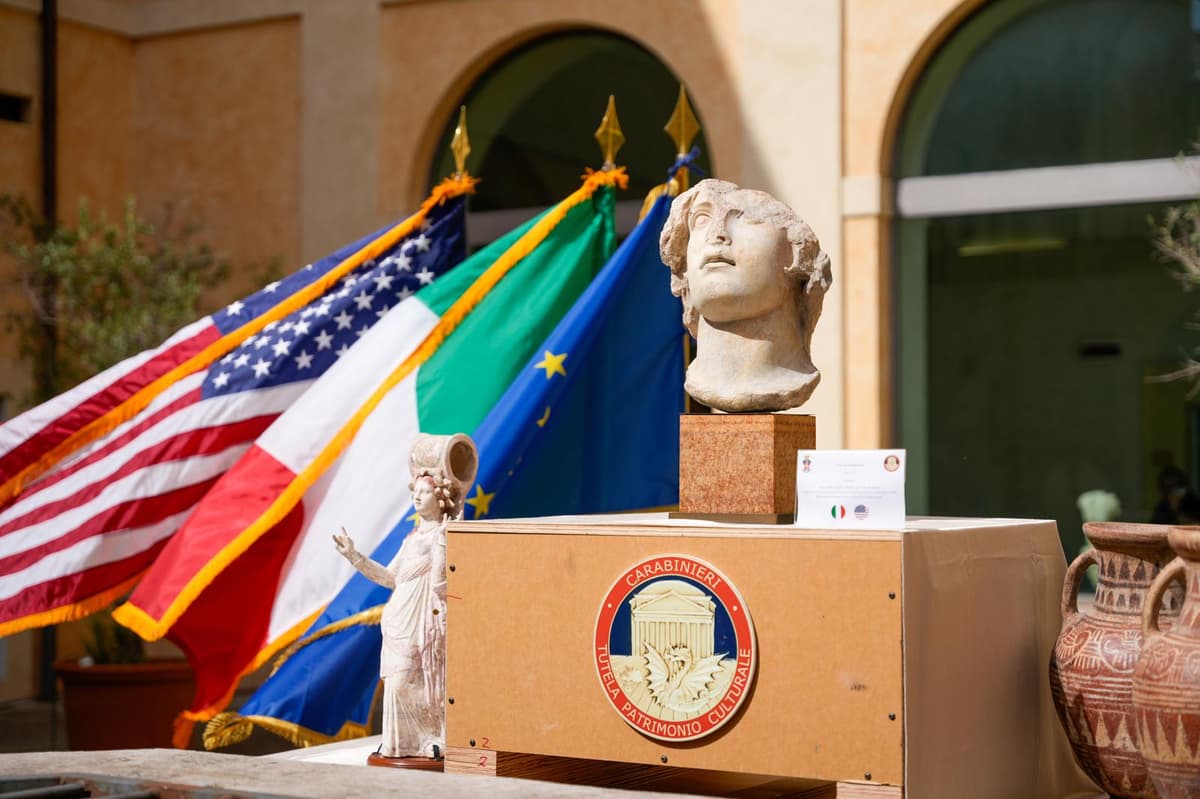
- •Items span Etruscan to Egyptian, including Alexander the Great marble head
- •Partnership marks 25 years of U.S.-Italy cultural property agreement
- •Repatriated artifacts could generate $65 million economic boost
Pulse Analysis
The latest batch of 337 artifacts underscores how law‑enforcement collaboration can dismantle the black market for ancient objects. Since the 2001 Memorandum of Understanding, U.S. agencies have partnered with Italy’s Carabinieri to trace stolen works from clandestine digs to auction houses, leveraging forensic provenance and international legal tools. This systematic approach not only recovers cultural treasures but also deters future looting by raising the risk profile for traffickers.
The returned collection is notable for its breadth: Etruscan ceramics, Greek terracottas, Roman coins, and a first‑century marble portrait of Alexander the Great. The FBI and Homeland Security coordinated with the Manhattan District Attorney’s Office, which secured 221 items, while Christie’s assisted in identifying and repatriating the remaining pieces. Such multi‑agency involvement illustrates the growing sophistication of cultural‑heritage investigations, where financial crime units, customs officials and art‑market experts converge to trace provenance and secure restitution.
Beyond the cultural significance, the repatriation carries measurable economic impact. Italy estimates the recovered objects represent roughly $65 million in value, a figure that can boost museum attendance, scholarly research and heritage tourism. However, concerns about authenticity—raised by some archaeologists—highlight the need for rigorous scientific testing. As the partnership enters its fifth renewal, both nations are poised to expand training, share intelligence, and refine legal frameworks, ensuring that the protection of antiquities remains a priority in an increasingly globalized art market.
U.S. Returns Hundreds of Looted Antiquities to Italy
Comments
Want to join the conversation?
Loading comments...