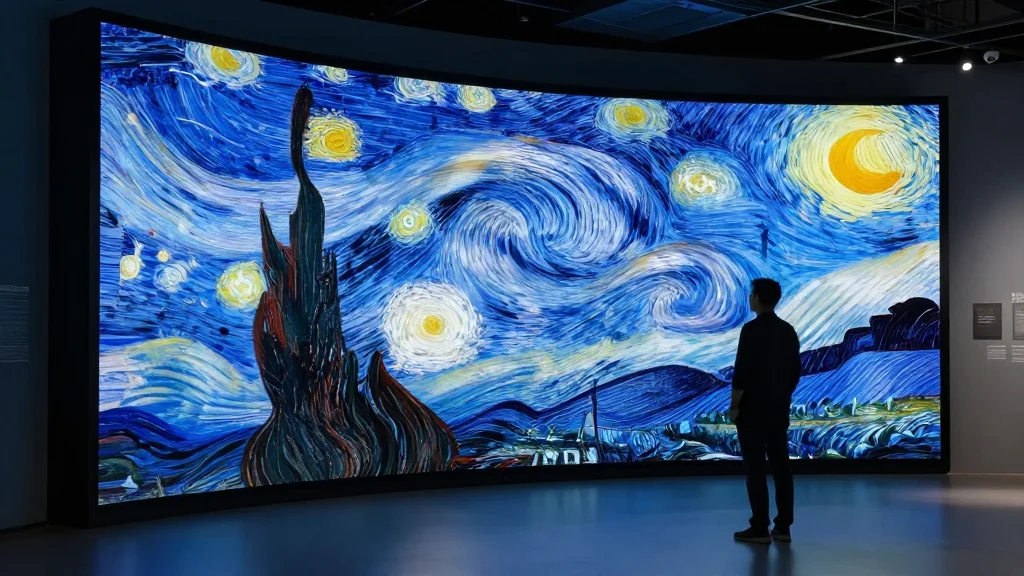
Van Gogh Immersive ‘Love, Vincent Garden’ Opens in Seoul, Expands Global Tour

Why It Matters
The launch of ‘Love, Vincent Garden’ signals a pivotal shift in how cultural institutions monetize and disseminate art. By turning Van Gogh’s paintings into immersive, multi‑sensory experiences, the exhibition reaches audiences who might never step into a conventional museum, expanding the artist’s cultural footprint. At the same time, the rapid proliferation of such shows raises questions about the balance between entertainment and education, and whether the digital format can sustain scholarly engagement with art history. For the broader art market, the success of immersive exhibitions creates a new revenue model that could influence funding allocations, partnership structures, and the future design of museum spaces. As more institutions adopt similar formats, the industry may see a redefinition of what constitutes a museum visit, with implications for ticket pricing, sponsorship, and the preservation of original artworks.
Key Takeaways
- •‘Love, Vincent Garden’ opened in Seoul in 2024 as part of the Van Gogh Immersive Experience.
- •The exhibition has visited over 56 venues across Asia, including Seoul, Tokyo, Beijing and Shanghai.
- •Seoul secured a semi‑permanent venue, indicating strong local demand for immersive digital art.
- •Scholars note the rapid growth of IDEs has occurred with limited academic commentary.
- •Organizers plan to expand the show to Europe and North America in the coming year.
Pulse Analysis
The Van Gogh Immersive Experience exemplifies a broader commercial pivot within the cultural sector toward high‑impact, technology‑driven programming. Historically, museums relied on static displays and scholarly catalogues to attract visitors; today, the metric of success is foot traffic and ticket revenue generated by immersive spectacles. This shift mirrors trends in the entertainment industry, where experiential offerings—concerts, theme parks, virtual reality—command premium pricing and media attention.
From a competitive standpoint, the proliferation of IDEs creates a crowded marketplace where differentiation hinges on narrative depth and technical execution. Shows that merely project paintings risk becoming interchangeable, while those that weave storytelling, interactive elements, and contextual education can command higher ticket prices and longer runs. The Seoul semi‑permanent venue suggests that a hybrid model—combining the draw of a blockbuster with sustained local programming—may be the most viable path forward.
Looking ahead, the challenge for curators will be to integrate scholarly insight without diluting the immersive appeal. Partnerships with academic institutions could yield companion programs—lecture series, digital archives, or augmented‑reality guides—that enrich visitor experience while preserving intellectual rigor. If successful, this blended approach could redefine museum economics, positioning immersive exhibitions not as a novelty but as a sustainable pillar of cultural consumption.
Van Gogh Immersive ‘Love, Vincent Garden’ Opens in Seoul, Expands Global Tour
Comments
Want to join the conversation?
Loading comments...