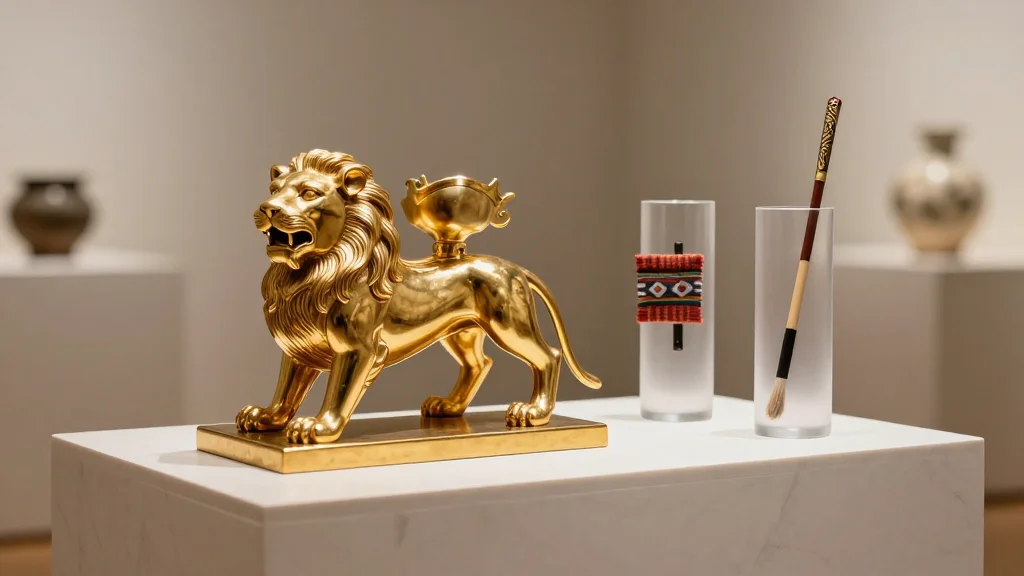
Videobrasil Founder Solange Oliveira Farkas Heads 2026 Venice Biennale Golden Lion Jury

Why It Matters
The selection of Solange Oliveira Farkas as jury president signals a strategic pivot for the Venice Biennale toward greater geographic and curatorial diversity. By elevating a Latin American leader with a track record of championing emerging voices, the Biennale may reshape the criteria for artistic excellence, encouraging more artists from the Global South to seek participation. Additionally, the jury’s composition—spanning Europe, Asia, and the Americas—offers a broader lens through which national pavilions will be evaluated, potentially altering the balance of power among traditional European art centers. The awards carry substantial market impact; a Golden Lion can boost an artist’s auction results, museum acquisitions, and gallery representation. As the Biennale navigates funding challenges linked to geopolitical tensions, the jury’s decisions will also affect the institution’s credibility and its ability to attract future sponsorship. The outcomes will therefore reverberate beyond the exhibition halls, influencing curatorial practices, funding models, and the global art market’s perception of merit.
Key Takeaways
- •Solange Oliveira Farkas, founder of Videobrasil, appointed president of the 2026 Golden Lion jury
- •Jury includes Zoe Butt, Elvira Dyangani Ose, Marta Kuzma, and Giovanna Zapperi
- •Panel will award Golden Lions for Best National Participation and Best Participant in the International Exhibition
- •Diverse curatorial backgrounds signal a shift toward more inclusive award criteria
- •Decisions will be announced at the Biennale’s closing ceremony in October 2026
Pulse Analysis
The Venice Biennale’s decision to place a Brazilian curatorial heavyweight at the helm of its most prestigious awards reflects a broader recalibration within the global art ecosystem. For decades, the Biennale has been critiqued for its Eurocentric bias, a perception reinforced by the dominance of Western curators on its juries. By installing Solange Oliveira Farkas—whose career bridges Brazilian avant‑garde practice and international exhibition making—the institution acknowledges the growing market and critical interest in Latin American art. This move is likely to encourage more artists from the region to tailor their work for the Biennale’s platform, knowing that the evaluative lens now includes a deep familiarity with their cultural context.
Equally important is the jury’s composition, which blends curatorial expertise from Southeast Asia, North America, and Europe. Zoe Butt’s focus on Southeast Asian art, for instance, could elevate artists from Indonesia, Thailand, and the Philippines, who have historically been under‑represented at major European venues. Meanwhile, the presence of Marta Kuzma, who has curated war‑related projects in Ukraine, may bring heightened sensitivity to works addressing conflict and displacement—topics that have surged in relevance following recent geopolitical upheavals.
From a market perspective, the Golden Lion remains a powerful catalyst for price appreciation and institutional interest. Winners often experience a rapid escalation in auction results, as collectors interpret the award as a seal of critical endorsement. The jury’s diverse makeup may therefore democratize the market’s attention, dispersing it beyond the traditional strongholds of London, New York, and Paris. As the Biennale confronts funding uncertainties tied to the Russian pavilion controversy, the jury’s decisions will also serve as a barometer for the institution’s ability to maintain artistic credibility while navigating political pressures. In sum, the 2026 jury not only decides awards but also signals a strategic reorientation toward a more globally representative art world.
Videobrasil Founder Solange Oliveira Farkas Heads 2026 Venice Biennale Golden Lion Jury
Comments
Want to join the conversation?
Loading comments...