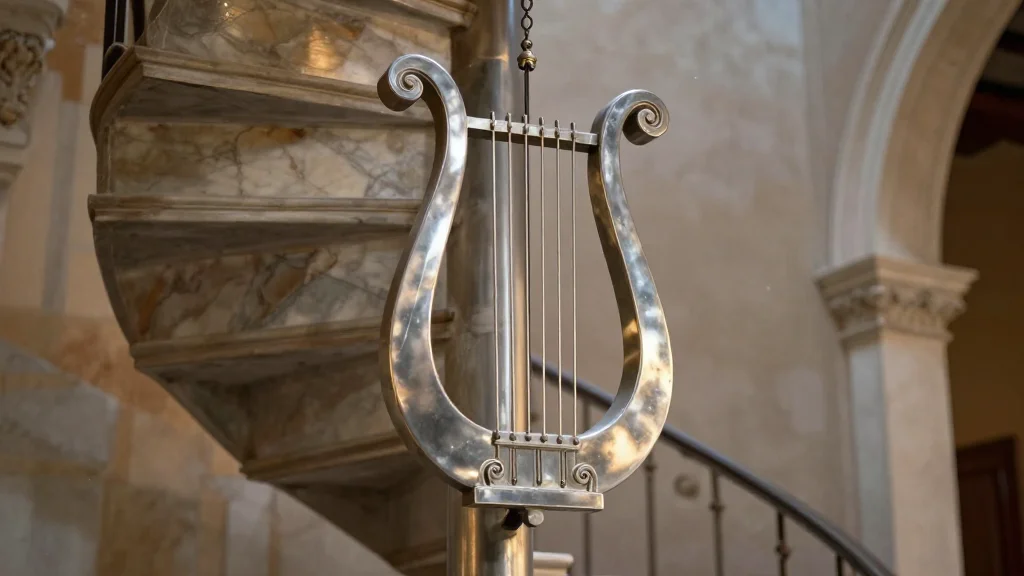
Wallace Chan's Cosmic Titanium Installation at Venice's Palazzo Contarini

Why It Matters
Wallace Chan’s “Mythos” bridges the gap between fine jewelry craftsmanship and monumental public art, demonstrating how material innovation can revitalize historic sites. By situating cutting‑edge titanium sculptures within a 15th‑century tower once used for celestial observation, the work reframes Venice’s cultural heritage for a digital age, prompting audiences to reconsider the role of myth and technology in contemporary visual culture. The installation also highlights the growing trend of artists leveraging advanced engineering materials to comment on AI and humanity’s place in the cosmos, signaling a shift toward interdisciplinary practices that blend art, science and design. Furthermore, Chan’s high‑profile presence at the Biennale amplifies the visibility of Asian artists in Western‑dominated art institutions, encouraging greater cross‑cultural exchange. The project’s dual venues—Palazzo Contarini and the Pietà Chapel—illustrate how site‑specific installations can activate multiple layers of historical narrative, offering a template for future collaborations between heritage sites and contemporary creators.
Key Takeaways
- •Wallace Chan opened the solo exhibition “Mythos” at Palazzo Contarini del Bovolo on May 7, 2026, during the Venice Biennale.
- •The installation features three floating titanium sculptures inspired by Tintoretto’s “The Three Graces and Mercury.”
- •Curator James Putnam highlighted the tower’s astronomical past, noting Wilhelm Tempel’s comet discovery there.
- •Chan’s companion show “Vessels of Other Worlds” is housed in the nearby Pietà Chapel, expanding the thematic scope.
- •Chan will present ten‑meter‑tall titanium works at Shanghai’s Long Museum in July 2026.
Pulse Analysis
Wallace Chan’s foray into large‑scale installation marks a pivotal moment for artists who have traditionally operated within the confines of jewelry. By scaling his signature titanium techniques to a historic Venetian tower, Chan not only redefines the material’s aesthetic possibilities but also positions it as a narrative device for exploring AI‑driven futures. This move reflects a broader industry trend where luxury‑craftsmanship expertise is being repurposed for public art, offering new revenue streams and heightened brand visibility for artists.
The choice of Palazzo Contarini del Bovolo—a site once used for celestial observation—creates a resonant dialogue between past scientific inquiry and present technological anxieties. As AI reshapes creative production, Chan’s work suggests that mythic storytelling, anchored in tangible, high‑tech materials, can serve as a counterbalance to the intangible nature of digital algorithms. Curators and institutions may increasingly seek such interdisciplinary projects that marry heritage, material science and speculative narrative, signaling a shift in how cultural programming is conceived for global audiences.
Looking ahead, Chan’s upcoming Shanghai exhibition will test whether the titanium‑centric language translates across different cultural contexts. If successful, it could inspire a new wave of artists to adopt aerospace‑grade materials, further blurring the lines between art, engineering and emerging tech, and potentially redefining the market for high‑value, material‑intensive artworks.
Wallace Chan's Cosmic Titanium Installation at Venice's Palazzo Contarini
Comments
Want to join the conversation?
Loading comments...