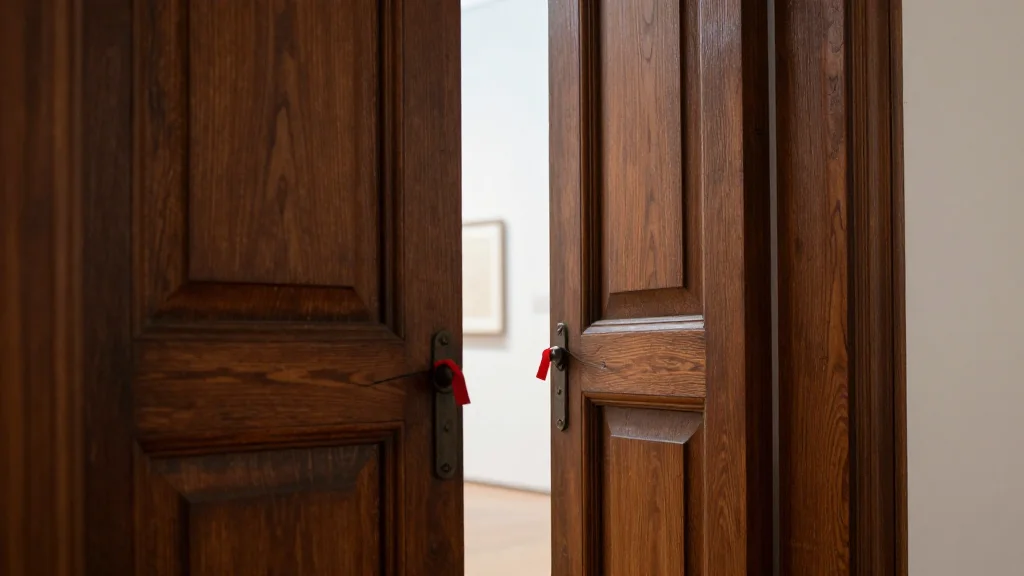
‘We Refuse_d’ Exhibition Opens at M HKA, Probing Refusal as Method and Memory

Why It Matters
‘We refuse_d’ arrives at a moment when global museums are under pressure to confront colonial legacies and to amplify voices from regions historically under‑represented. By foregrounding refusal as a strategy rather than a momentary protest, the exhibition offers a model for how institutions can engage with contested histories without reducing them to static narratives. It also signals a growing curatorial trend that treats political concepts—such as displacement or erasure—as fluid, practice‑based conditions that can be examined through diverse artistic media. The show’s emphasis on memory and visibility resonates beyond the Arab world, speaking to broader debates about how museums handle contested histories, refugee experiences, and the politics of inclusion. Its travelling format ensures that the conversation will extend beyond Antwerp, challenging other institutions to consider how they can host works that question their own structures.
Key Takeaways
- •M HKA opens ‘We refuse_d’, curated by Nadia Radwan and Vasif Kortun.
- •Exhibition reframes refusal as a lived method, linking Arab art and institutional critique.
- •Curators quote: “From the outset, it was important not to stabilise refusal into a fixed category.”
- •Shows how refusal operates under conditions of displacement and erasure.
- •Runs until September 15, then will travel to additional European venues.
Pulse Analysis
The launch of ‘We refuse_d’ marks a decisive moment in curatorial practice, where the concept of refusal is no longer treated as a binary gesture but as an evolving methodology. This shift mirrors a broader move in contemporary art institutions toward process‑oriented exhibitions that prioritize the conditions of production over a tidy narrative. By refusing to codify refusal, Radwan and Kortun align with a lineage of critical theory that sees dissent as a continuous negotiation rather than a final statement.
Historically, the Salon des Refusés of 1863 provided a platform for artists excluded from the official Paris Salon, establishing a precedent for institutional counter‑programs. ‘We refuse_d’ revives that legacy, but with a transnational lens that incorporates the geopolitics of the Arab world. The exhibition’s relocation from Doha to Antwerp underscores the tension between local specificity and global circulation—a tension that many traveling shows face. If the exhibition succeeds in preserving its critical edge, it could set a template for future collaborations that respect the autonomy of source contexts while leveraging the reach of European museums.
Looking ahead, the exhibition’s impact will be measured by how subsequent venues negotiate the same paradox: hosting a work that critiques institutional power without being co‑opted. The curators’ insistence on openness may inspire other institutions to adopt flexible, artist‑driven frameworks, potentially reshaping how museums address contested histories and contemporary political realities.
‘We refuse_d’ exhibition opens at M HKA, probing refusal as method and memory
Comments
Want to join the conversation?
Loading comments...