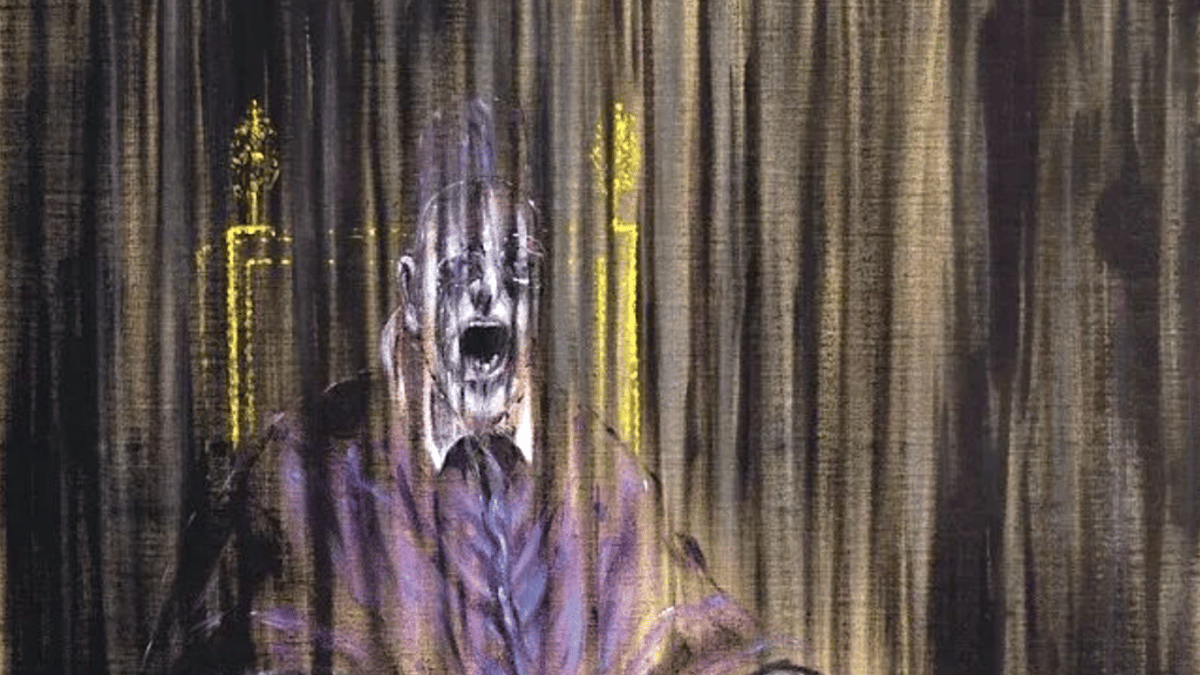
When Francis Bacon Shocked the Art World: Viewers Were Horrified by His Paintings, But Couldn’t Look Away
Why It Matters
Bacon’s reinterpretation reshaped modern figurative art, proving that confronting discomfort can generate lasting cultural and market value. The piece’s enduring allure drives high‑profile exhibitions and fuels demand among collectors and institutions.
Key Takeaways
- •Bacon's 1953 'Study after Velázquez' reinterprets Pope Innocent X
- •He worked from a faded copy, never seeing Velázquez's original
- •The painting fuses classic portraiture with 20th‑century mass‑media motifs
- •Viewers describe visceral horror yet remain unable to look away
- •James Payne's video links Bacon's trauma to Berlin‑Paris avant‑garde
Pulse Analysis
Francis Bacon emerged from a turbulent childhood and the bohemian ferment of 1920s Berlin and Paris, where avant‑garde cinema like *Metropolis* and *Battleship Potemkin* reshaped visual storytelling. These influences, combined with his outsider status, forged a sensibility that prized raw emotion over academic polish. By sidestepping formal art schools, Bacon cultivated a personal language that merged European modernism with the gritty immediacy of emerging mass media, positioning him as a bridge between early 20th‑century experimentation and contemporary visual culture.
The 1953 *Study after Velázquez’s Portrait of Pope Innocent X* epitomizes Bacon’s method. Rather than viewing Velázquez’s original, he relied on a washed‑out reproduction, a choice that liberated him to fracture the papal visage, overlaying it with smeared, almost cinematic brushwork. This deconstruction injects a sense of claustrophobic motion, echoing the frantic editing of silent‑film montage. The result is a painting that provokes a visceral, almost physiological response—viewers report a blend of horror and fascination that lingers long after the first glance.
Today, Bacon’s work commands premium prices at auction and anchors major museum retrospectives, underscoring the commercial power of art that confronts discomfort. Digital platforms like YouTube amplify scholarly access, as seen in Payne’s video, expanding audience engagement beyond traditional galleries. For collectors, institutions, and cultural strategists, Bacon’s legacy illustrates how provocative imagery can translate into sustained market relevance and educational value in the digital age.
When Francis Bacon Shocked the Art World: Viewers Were Horrified by His Paintings, But Couldn’t Look Away
Comments
Want to join the conversation?
Loading comments...