
Why It Matters
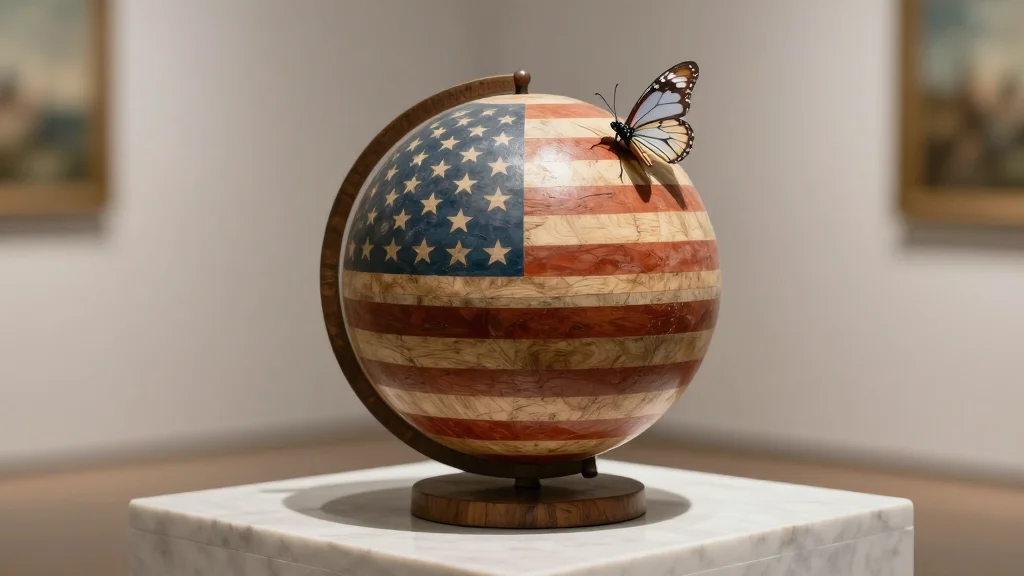
The 2026 Whitney Biennial reframes contemporary American art by foregrounding the entanglements of US geopolitical power with personal and ecological narratives. In a climate where cultural institutions are scrutinized for political neutrality, the biennial’s explicit engagement with empire challenges museums to confront their own histories and funding structures tied to the same networks. By integrating voices from former colonies and US territories, the show also expands the definition of "American" art, potentially reshaping acquisition strategies, grant allocations and market valuations for artists operating outside traditional Euro‑American centers. The emphasis on interspecies kinship adds an ecological dimension that aligns with growing collector interest in sustainability and climate‑focused art. The biennial’s timing—amid an active US‑Israel military operation—underscores how art can serve as a real‑time commentary on current events, offering a platform for dissent and reflection that may influence public discourse and policy perception.
Key Takeaways
- •Whitney Biennial 2026 opens with 56 artists across five thematic strands.
- •Curators Marcela Guerrero and Drew Sawyer cite Daniel Immerwahr’s "pointillist empire" concept.
- •Works include artists from Afghanistan, Chile, Iraq, Okinawa, Palestine, the Philippines and Vietnam.
- •Themes explore US imperial legacy, American identity, surveillance, urban infrastructure and interspecies kinship.
- •Opening coincides with US‑Israel coordinated attack on Iran, heightening political relevance.
Pulse Analysis
The Whitney’s decision to structure the 2026 Biennial around five interlocking themes marks a strategic pivot from the loosely curated surveys of previous years toward a more thesis‑driven model. This mirrors a broader trend in major institutions—MoMA, Tate, and the Guggenheim have all recently adopted curatorial statements that tie exhibitions to global power dynamics and climate urgency. By anchoring the show in Immerwahr’s scholarship, the Whitney not only legitimizes its political stance but also taps into academic discourse that can attract scholarly audiences and grant funding.
From a market perspective, the biennial’s inclusive roster could accelerate the valuation of artists from historically under‑represented regions. Collectors are increasingly seeking works that articulate post‑colonial narratives, and the Whitney’s endorsement may serve as a catalyst for auction houses to feature such artists more prominently. However, the overt political framing also risks alienating a segment of the museum’s donor base that prefers apolitical programming. The curators’ willingness to risk that friction suggests confidence that contemporary audiences, especially younger collectors, prioritize relevance over neutrality.
Looking ahead, the biennial’s traveling component will test the portability of its themes. If regional venues in the US Midwest or the Pacific Northwest can replicate the dialogue, the Whitney could set a template for decentralized, thematically cohesive touring exhibitions. Conversely, a muted reception outside New York could expose the limits of a geopolitically charged curatorial agenda. Either outcome will inform how major art institutions balance critical engagement with broad public appeal in an increasingly polarized cultural climate.
Whitney Biennial 2026 Launches with Five Empire‑Focused Themes
Comments
Want to join the conversation?
Loading comments...