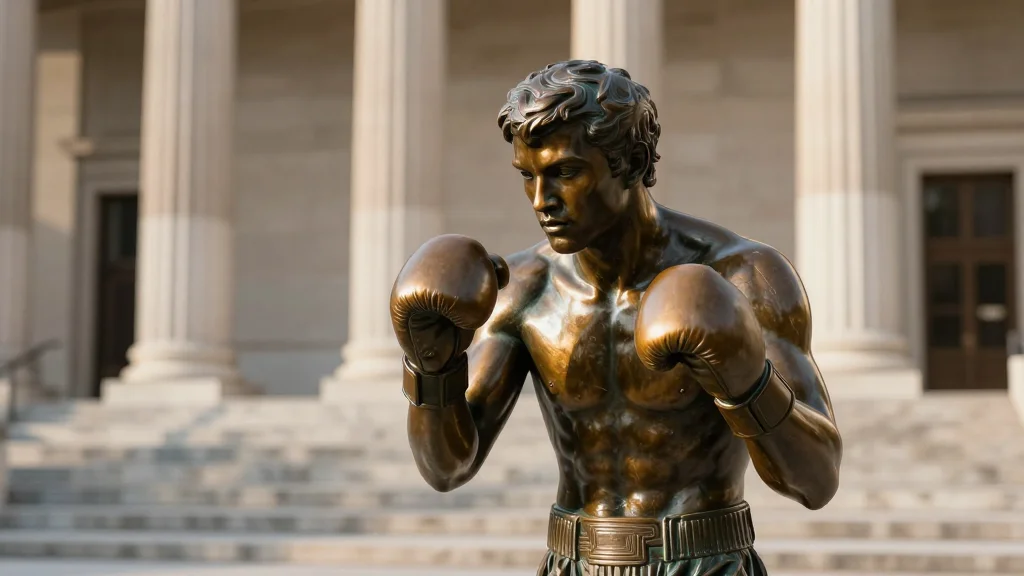
Why Does the “Rocky” Statue Draw Crowds? This Show Investigates.
Why It Matters
The statue’s popularity fuels Philadelphia’s tourism economy and demonstrates how pop‑culture icons can be leveraged as profitable civic assets. Its exhibition showcases the financial and branding benefits of turning film heritage into museum attractions.
Key Takeaways
- •Rocky steps rank among Philadelphia’s top tourist attractions
- •Statue originated as prop for Rocky III, now cultural icon
- •Museum’s “Rising Up” exhibit runs Apr 25–Aug 2, celebrating 50th anniversary
- •Visitor numbers surge each March, boosting local economy
- •Monument shows how film can shape urban identity
Pulse Analysis
The bronze Rocky statue outside Philadelphia’s Museum of Art has transcended its original purpose as a movie prop to become a pilgrimage site for fans and tourists alike. Since the film’s debut in 1976, the “Rocky steps” have been featured in countless media clips, social‑media posts, and fitness challenges, turning a simple stair climb into a rite of passage. The statue’s presence draws an estimated 300,000 visitors annually, positioning it alongside the Liberty Bell and Independence Hall as a must‑see landmark that reinforces the city’s gritty, underdog narrative.
Philadelphia Museum of Art capitalized on this momentum by launching “Rising Up: Rocky and the Making of Monuments,” the first exhibition devoted solely to the statue’s legacy. Opening April 25 and running through August 2, the show blends original film memorabilia, behind‑the‑scenes footage, and interactive installations that let visitors trace Rocky’s climb step by step. Early ticket sales indicate a 20 % increase over comparable museum shows, translating into an estimated $4 million boost to local hospitality and retail sectors, underscoring how pop‑culture heritage can drive measurable economic benefits.
The Rocky monument exemplifies a broader trend where film‑derived icons become urban landmarks, influencing city branding and civic pride. Cities from Los Angeles to Dublin have leveraged cinematic symbols to attract visitors, prompting museums and tourism boards to treat pop‑culture artifacts as cultural capital. As the statue approaches its 50th anniversary, its endurance suggests that narrative‑driven public art can sustain relevance across generations, offering a template for other municipalities seeking to fuse entertainment history with economic development strategies.
Why Does the “Rocky” Statue Draw Crowds? This Show Investigates.
Comments
Want to join the conversation?
Loading comments...