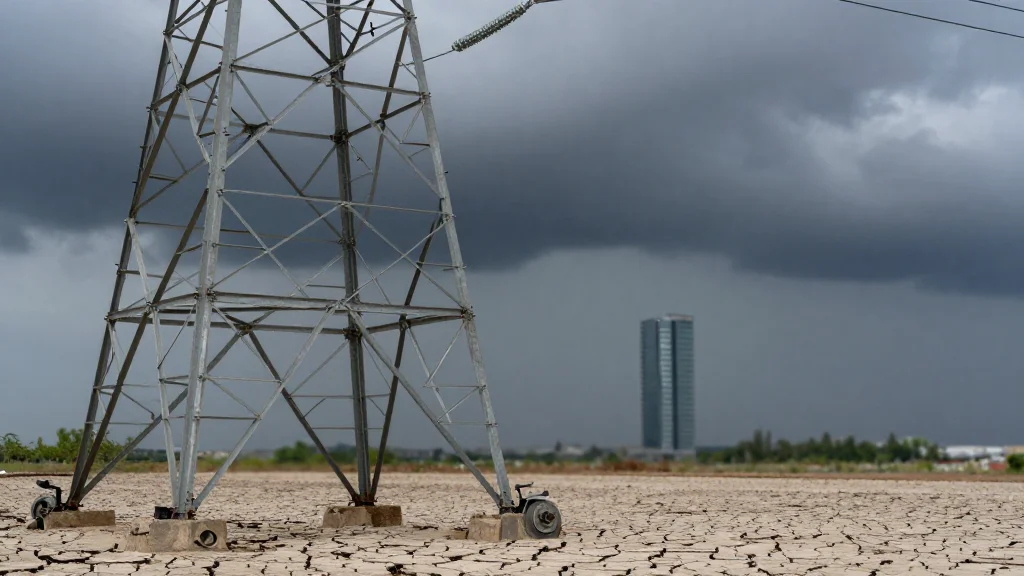
IMF Warns India Faces ‘Triple‑whammy’ of Energy, Finance and Monsoon Risks, Rattling Asian Equities

Companies Mentioned
Why It Matters
The IMF’s triple‑whammy warning underscores a convergence of macro‑economic risks that could reshape capital allocation in Asia. A slowdown in India, the world’s third‑largest economy, would affect global supply chains, commodity demand, and investor sentiment toward emerging‑market equities. Moreover, heightened energy import bills and tighter financing could force corporations to delay expansion, dampening earnings growth and pressuring stock valuations. For portfolio managers, the warning signals a need to diversify away from energy‑intensive sectors and to increase scrutiny of companies with high exposure to monsoon‑dependent agriculture. It also raises the stakes for policymakers to accelerate the transition to renewable energy and to build fiscal buffers that can absorb external shocks without triggering market turbulence.
Key Takeaways
- •IMF director Krishna Srinivasan warns of a "triple‑whammy" risk for India: energy shocks, tighter finance, weak monsoon.
- •India’s energy intensity is about 5% of GDP, roughly twice the EU average.
- •IMF projects Asian growth slowing from 5% to 4.4% in 2024, with potential 2% GDP loss if energy prices stay high.
- •Capital outflows and rising sovereign yields have already pressured Indian equity markets.
- •Tariff cuts from 50% to 10% aim to ease import costs but may not offset structural energy dependence.
Pulse Analysis
The IMF’s triple‑whammy scenario is a stark reminder that macro‑economic resilience in Asia is increasingly contingent on energy security and climate variability. Historically, India’s growth engine has thrived on cheap energy imports; however, the current geopolitical environment—exacerbated by the West Asia conflict—has turned that advantage into a liability. A sustained rise in oil and gas prices would erode profit margins for heavy‑industry firms and raise input costs for consumer goods, compressing corporate earnings and triggering a sector‑wide re‑rating.
From a market‑structure perspective, the warning could accelerate a shift toward defensive stocks and increase demand for assets that hedge against commodity price volatility, such as renewable‑energy equities and infrastructure bonds. Investors may also seek exposure to companies with strong balance sheets that can weather tighter financing conditions. In the short term, we expect heightened volatility in the Nifty 50 and BSE Sensex indices, with a potential 3‑5% correction if the monsoon outlook deteriorates.
Looking ahead, the policy response will be decisive. If the Indian government can fast‑track renewable‑energy projects and secure longer‑term power purchase agreements, it could blunt the energy shock component of the triple‑whammy. Simultaneously, a calibrated monetary easing—balanced against inflationary pressures—could stabilize financial conditions. Absent such measures, the IMF’s scenario may become a self‑fulfilling prophecy, prompting a broader reassessment of risk premia across Asian equities.
IMF warns India faces ‘triple‑whammy’ of energy, finance and monsoon risks, rattling Asian equities
Comments
Want to join the conversation?
Loading comments...