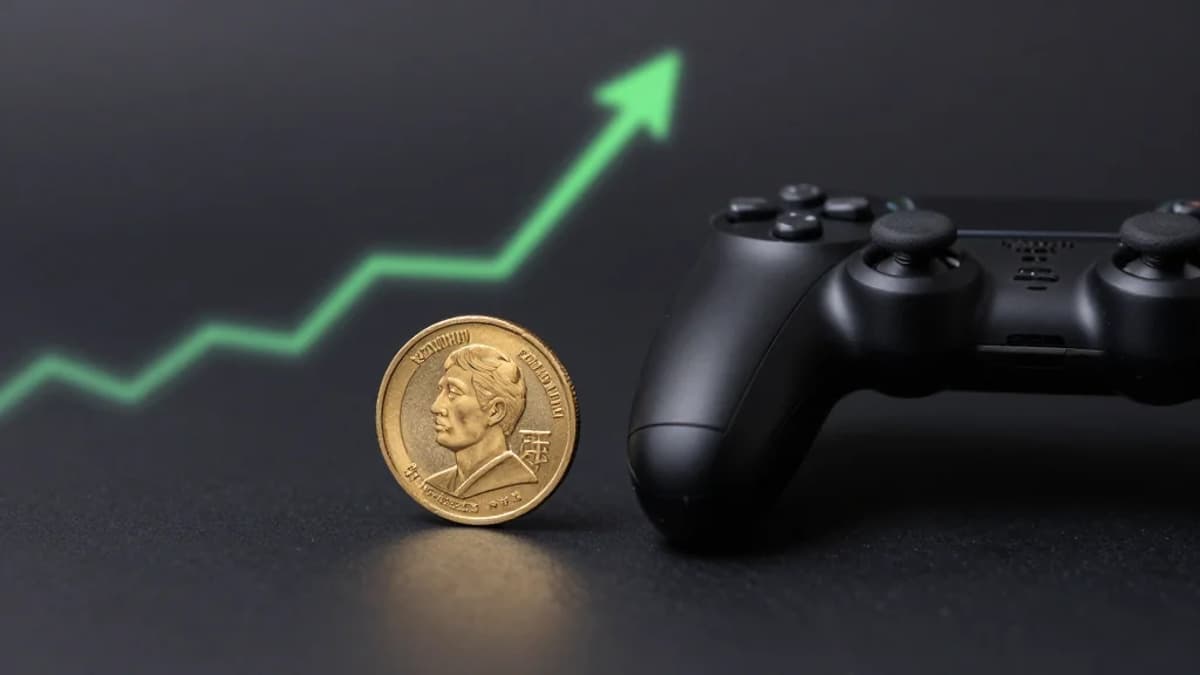
The upgraded guidance signals Sony’s resilience despite hardware headwinds, reassuring investors and shaping competitive dynamics in gaming and consumer electronics.
Sony’s latest earnings release underscores how currency dynamics can offset product‑cycle challenges. A weaker yen boosted the yen‑denominated profit outlook, allowing the conglomerate to lift its full‑year net profit target by roughly 8%. At the same time, the company grappled with a 16% drop in PS5 shipments, a natural consequence of a maturing console generation and aggressive discounting. The broader semiconductor crunch, driven by soaring AI‑related demand for high‑bandwidth memory, is inflating component costs and compressing margins not only for gaming hardware but also for Sony’s imaging sensors, TVs and smartphones.
The gaming segment remains a double‑edged sword. While the PS5’s sales slump threatens short‑term hardware revenue, upcoming software releases—most notably Grand Theft Auto VI—could inject a significant boost, mirroring the pandemic‑era surge. Analysts caution that the memory‑chip shortage may force Sony to postpone a PlayStation 6 debut to 2028, potentially ceding ground to rivals like Nintendo, whose Switch 2 shares are already under pressure. This timing risk highlights the strategic importance of diversifying beyond console sales, especially as competitors explore subscription‑based gaming ecosystems.
Beyond gaming, Sony is leaning on its higher‑margin entertainment assets. The music division, buoyed by concert ticketing and merchandise, is projected to be a primary earnings driver, while the recent joint venture with TCL aims to streamline its home‑entertainment portfolio. Although U.S. tariff estimates remain at 50 billion yen, the company’s broader shift toward imaging technologies and content creation offers a buffer against hardware volatility, reinforcing investor confidence in its long‑term growth trajectory.
Japanese giant Sony hiked its full-year forecasts on Thursday, as a weaker yen compensates for its ageing PlayStation games console and a memory chip crunch.
Sony now expects net profit of 1.13 trillion yen ($7.2 billion) in the 2025‑26 fiscal year, up from its previous projection of 1.05 trillion yen, and a six‑percent rise on last year.
It also projected a 20.6 percent rise in operating profit and revenues of 12.3 trillion yen, up 2.2 percent, as well as an improved operating margin of 12.5 percent, a statement said.
For its third quarter, Sony's net profit rose 11 percent and revenues were up one percent. Operating income of 515 billion yen beat analysts' expectations.
Sony's PlayStation 5 (PS5), launched in 2020, is beginning to get old, and sales volumes of the games console fell 16 percent in the last quarter. The company offered steep discounts on the device last year in an attempt to boost demand.
However, the Japanese group, like its competitors worldwide, is suffering from a growing shortage of memory chips. That is driving up the prices of the chips and eroding profit margins of all sorts of electronic goods.
Shares in Nintendo, maker of the rival Switch 2, dived 11 percent on Wednesday over concerns about software sales and the impact of the memory chip supply crunch.
Sony shares initially surged almost six percent on Thursday but were flat in late trade in a falling overall market.
The artificial‑intelligence boom has pushed up prices and shipments of conventional NAND and DRAM memory chips, while demand for high‑bandwidth memory (HBM) chips used in AI servers has soared.
"It will definitely get more difficult to offer reduced prices (of the PS5) this year than in 2025," gaming‑industry consultant Serkan Toto told AFP.
Sony made no comment on the chip issue in its earnings release, which analysts say could also hit its hardware products such as cameras, TVs and smartphones, as well as its image‑sensor segment.
Last month, Sony said it was spinning off its home‑entertainment business — which includes TVs — into a joint venture with Chinese giant TCL.
It might also force Sony to delay the launch of a potential PlayStation 6 to the second quarter of 2028, Yasuo Nakane from Mizuho said in a recent note.
The hotly anticipated upcoming release of Grand Theft Auto VI is also important for the PlayStation's continued sales. GTA's creators Rockstar Games delayed the launch again last year, this time until November.
"In 2026, GTA VI will do to PS5 what COVID did a few years ago to Sony: provide a massive boost, enough to carry the platform to 2028," Toto said. "Nobody doubts that GTA VI will be the biggest game launch (and perhaps of an entertainment product) of all time."
Sony is also banking on growth in the music division thanks to increased sales related to concerts and merchandise, while results are expected to stagnate in film and consumer electronics. It began reducing its exposure to this low‑margin sector several years ago to focus on entertainment and imaging technologies, its main growth drivers.
Sony's forecast for the estimated impact of tariffs this year imposed on Japanese imports by the U.S. administration remained at 50 billion yen.
Comments
Want to join the conversation?
Loading comments...