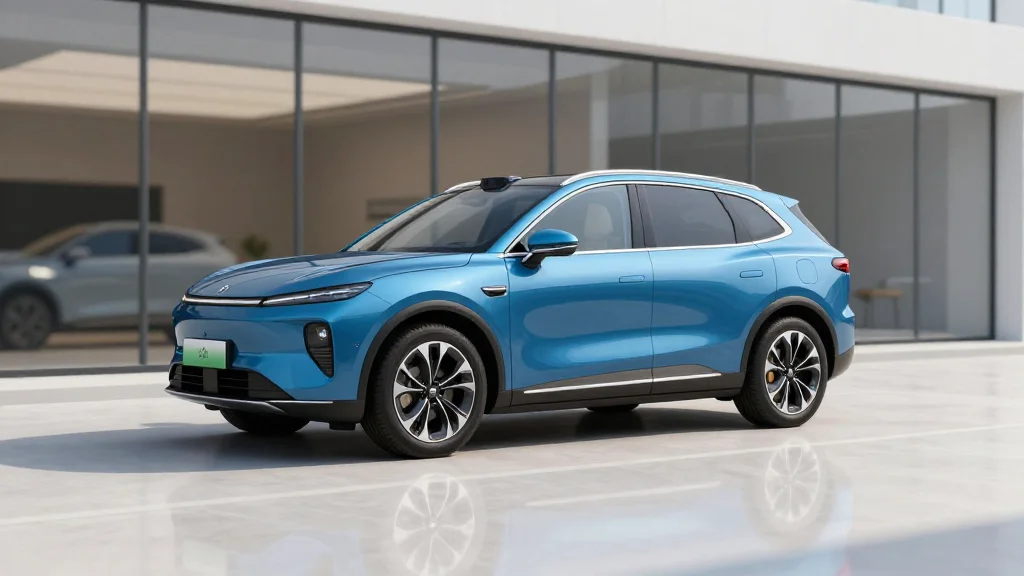
At Auto China, Geely Leans Heavily On The Software Defined Vehicle
Companies Mentioned
Why It Matters
The showcase signals Geely’s shift from pure electrification to a software‑centric, AI‑driven architecture that can serve both high‑performance off‑road EVs and ultra‑efficient hybrids, giving it a strategic edge as global markets adopt electrification unevenly.
Key Takeaways
- •New off‑road EV platform delivers 1,000 hp, software torque control.
- •i‑HEV hybrid achieves 48.41% thermal efficiency, 2.22 L/100 km record.
- •Galaxy Light concept introduces “Ripple Aesthetics” and adaptive cabin lighting.
- •Geely Q1 2026 sales hit 709,358 units, leading Chinese market.
- •Unified AI architecture links concept, off‑road, and hybrid technologies.
Pulse Analysis
At Auto China 2026, Geely positioned itself at the forefront of the AI‑defined vehicle movement, a trend where software layers dictate vehicle dynamics across powertrains. While rivals dazzled with stunt‑filled displays, Geely’s booth resembled a working lab, emphasizing engineering depth over spectacle. This approach reflects a broader industry pivot: manufacturers are now leveraging artificial intelligence not just for driver assistance, but to orchestrate torque, energy flow, and even cabin ambience in real time, blurring the line between hardware and code.
The centerpiece of Geely’s technical reveal was a dedicated off‑road electric architecture built from the ground up for electrification. A three‑motor configuration—front drive unit plus dual independent rear motors—produces more than 1,000 horsepower, with torque allocated wheel‑by‑wheel via a software‑controlled system that eliminates a traditional rear differential. Coupled with a body‑on‑frame chassis, double‑wishbone suspension and a low, protected battery pack, the platform promises rugged durability without sacrificing interior space or range. Parallel to this, the company’s i‑HEV hybrid, based on the GEEA 3.0 electronic architecture, boasts a 48.41% engine thermal efficiency and a Guinness‑record 2.22 L/100 km fuel consumption, delivering seamless electric‑like response while retaining the long‑range flexibility of a combustion engine.
Commercially, the announcements reinforce Geely’s market momentum. First‑quarter 2026 sales topped 709,000 units, and the Galaxy series has already crossed two million cumulative units, underscoring strong consumer acceptance of its new‑energy portfolio. By unifying concept design, off‑road capability, and hybrid efficiency under a common AI and electronic backbone, Geely creates a scalable ecosystem that can adapt to regional electrification rates. This integrated strategy not only differentiates the brand from competitors focused on single‑track solutions but also positions it to capture growth in both premium EV segments and markets where hybrids remain the pragmatic bridge to full electrification.
At Auto China, Geely Leans Heavily On The Software Defined Vehicle
Comments
Want to join the conversation?
Loading comments...