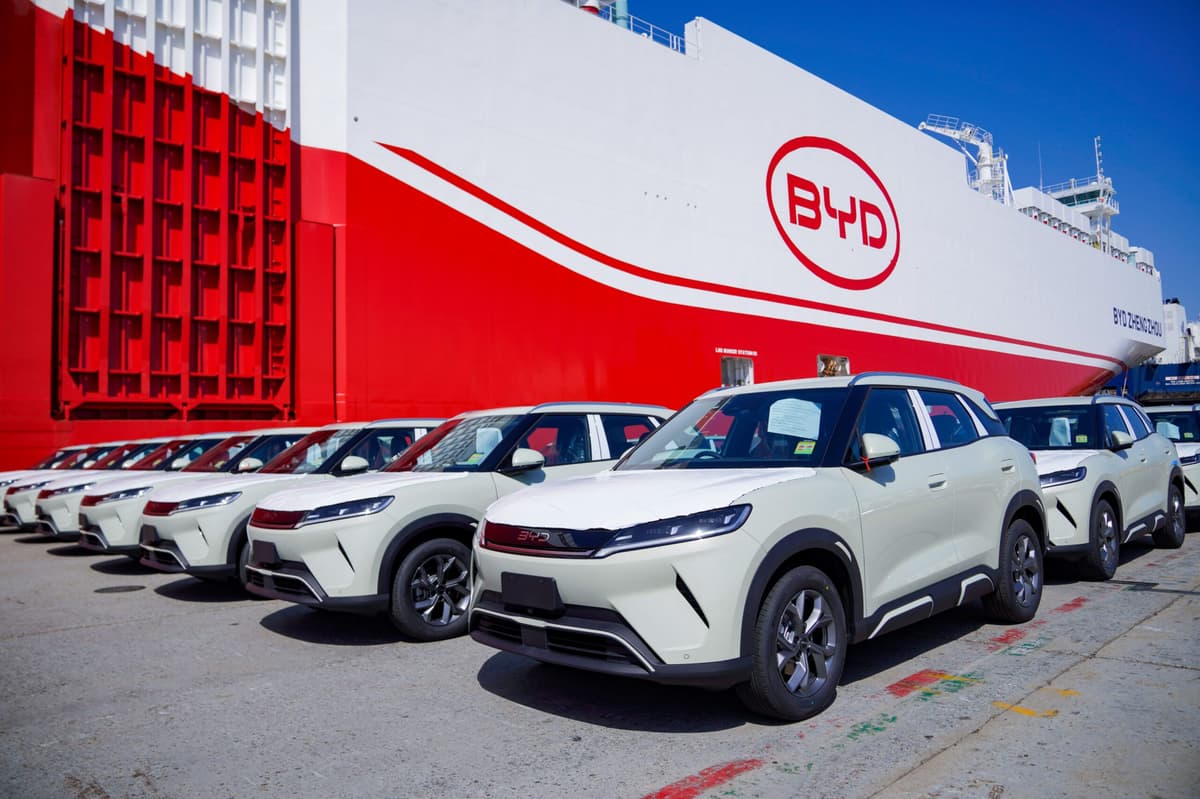
BYD Sends Its Own Ship with Almost 5,000 NEVs to Meet Surging Demand in Australia Market
Companies Mentioned
Why It Matters
BYD’s self‑managed logistics accelerates EV adoption in Australia and pressures rivals, showcasing a vertically integrated supply chain that can scale rapidly to meet market demand.
Key Takeaways
- •BYD ships ~5,000 NEVs on its own RORO vessel.
- •Shipment includes over 2,000 BYD Sealion 7 and Atto 2 SUVs.
- •BYD’s fleet of eight owned ships enables rapid global distribution.
- •BYD surpassed Tesla as Australia’s top EV brand in 2026.
- •100,000th Australian NEV delivered, targeting >50,000 sales in 2026.
Pulse Analysis
BYD’s decision to use its own BYD Zhengzhou carrier marks a strategic shift in how Chinese automakers handle overseas distribution. By owning a fleet of eight roll‑on/roll‑off vessels, BYD sidesteps traditional shipping bottlenecks and can align delivery schedules directly with dealer inventories. This vertical integration not only reduces lead times but also provides a clear competitive edge in markets where speed to market is crucial for capturing early adopters.
Australia’s EV market has surged amid rising fuel prices and heightened cost‑of‑living concerns. Consumers are gravitating toward affordable models like the Atto 2 and family‑friendly Sealion 7, while premium offerings such as the Denza B5 and D9 broaden the brand’s appeal. BYD’s recent milestone of 100,000 NEVs sold and its overtaking of Tesla underscore a rapid shift in brand perception, positioning BYD as the de‑facto market leader and prompting local dealers to expand showroom space and service capabilities.
The broader implications extend beyond Australia. BYD’s logistics model demonstrates how manufacturers can achieve global scale without relying on third‑party carriers, a blueprint that could reshape supply chains across the EV sector. As governments worldwide tighten emissions targets, the ability to deliver large volumes of clean vehicles swiftly becomes a decisive factor. BYD’s aggressive rollout signals intensified competition, likely spurring legacy automakers to reassess their own distribution strategies and invest in similar vertically integrated solutions.
BYD sends its own ship with almost 5,000 NEVs to meet surging demand in Australia market
Comments
Want to join the conversation?
Loading comments...