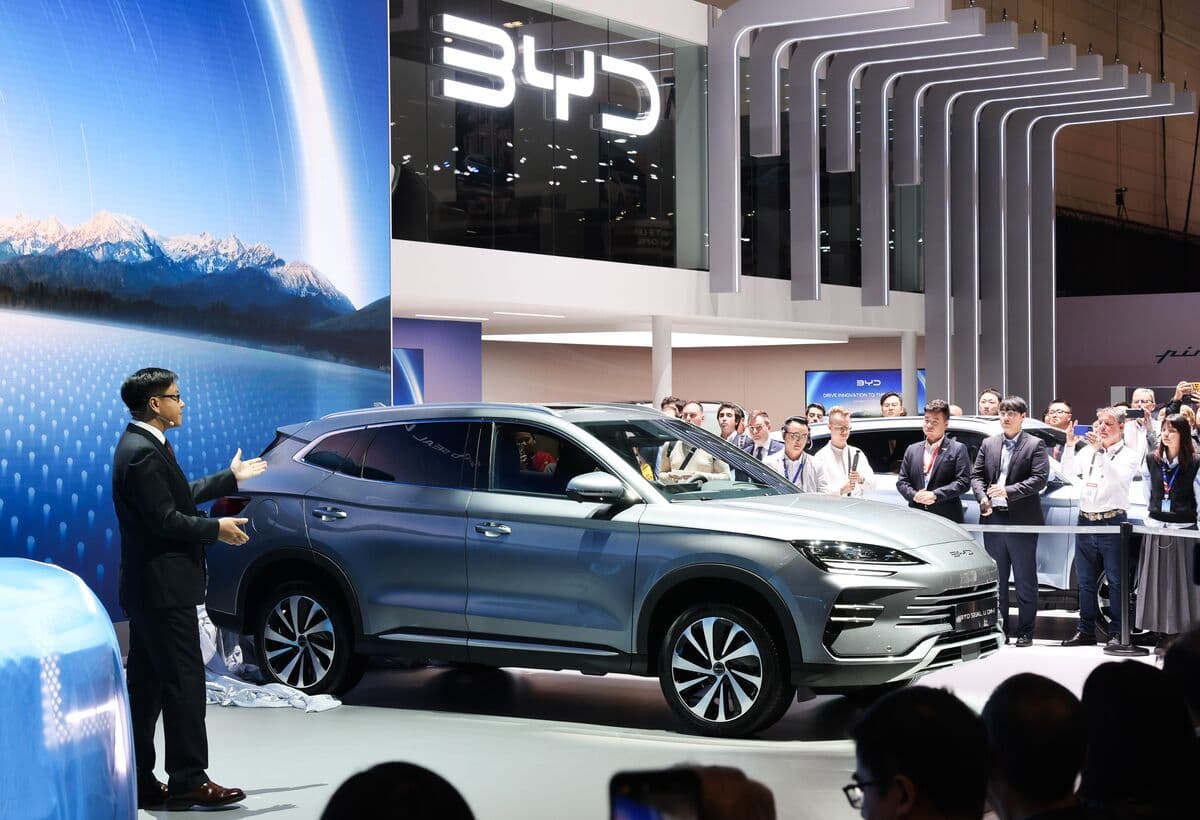
China’s Carmakers Grab 30% of Europe’s Plug-In Hybrid Sales
Companies Mentioned
Why It Matters
The surge signals Chinese brands breaking into a mature European market, pressuring legacy OEMs and accelerating the continent’s transition to low‑emission mobility. It also reshapes competitive dynamics for pricing, product strategy, and supply‑chain considerations.
Key Takeaways
- •Chinese PHEVs grew >400% YoY in Europe March 2026.
- •BYD leads, contributing most of the 30% market share.
- •Affordability drives European consumer shift to Chinese plug‑in hybrids.
- •Legacy European OEMs face heightened competition in hybrid segment.
- •Dataforce predicts Chinese share could exceed 35% by year‑end.
Pulse Analysis
The March surge in Europe’s plug‑in hybrid (PHEV) segment underscores a rapid recalibration of consumer preferences toward cost‑effective electrified mobility. Dataforce’s latest figures show Chinese‑branded PHEVs, led by BYD, delivering a more than four‑fold increase year‑over‑year and capturing roughly 30 percent of total sales in the category. Competitive pricing, coupled with BYD’s DM‑i technology that blends a modest gasoline engine with a high‑capacity battery, has enabled these models to undercut traditional European offerings while still meeting stringent emissions standards. Priced about 15‑20 % below German and French hybrids, they attract fleet buyers seeking lower ownership costs.
This momentum places established European manufacturers under heightened pressure to reassess pricing strategies and product roadmaps. Legacy OEMs such as Volkswagen, Renault and Stellantis have invested heavily in fully electric platforms, yet the hybrid niche remains a lucrative bridge for buyers reluctant to abandon internal‑combustion engines entirely. The rise also dovetails with EU CO₂‑reduction rules that favor low‑emission hybrids, and the influx of affordable Chinese hybrids could compress margins, accelerate the rollout of in‑house hybrid systems, and force a strategic pivot toward value‑oriented line‑ups to retain market share.
Looking ahead, analysts at Dataforce project Chinese PHEV penetration could climb beyond 35 percent by year‑end if current pricing dynamics persist and European subsidies for low‑emission vehicles remain favorable. The trend also signals a broader shift: Chinese automakers are no longer confined to domestic or emerging markets but are actively contesting mature regions with sophisticated regulatory environments. Easing trade frictions could let Chinese firms open EU assembly lines, cutting logistics costs further. For investors and policymakers, the key takeaway is the need to monitor supply‑chain dependencies, tariff policies, and the evolving competitive landscape as China’s automotive clout expands.
China’s Carmakers Grab 30% of Europe’s Plug-In Hybrid Sales
Comments
Want to join the conversation?
Loading comments...