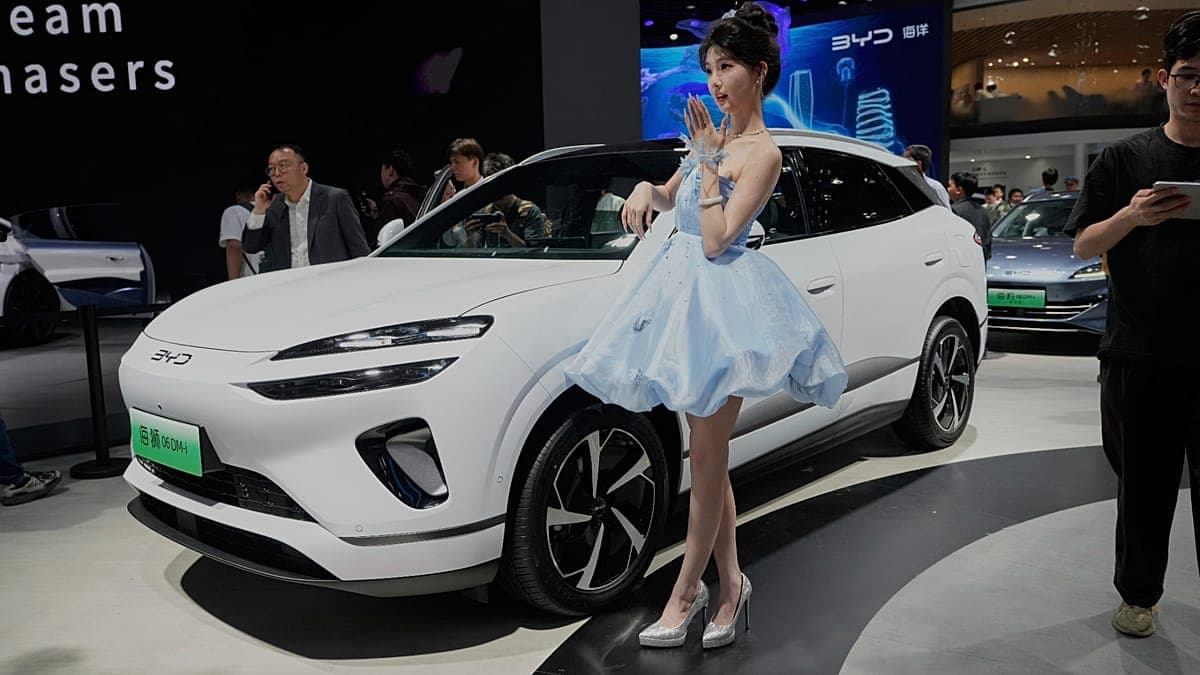
Chinese Carmakers Double EU Market Share as EVs Drive Sales Growth
Companies Mentioned
Why It Matters
The acceleration of Chinese EV sales erodes the dominance of traditional European makers and pressures pricing and innovation cycles. Investors and policymakers must watch the shift as it could redefine supply chains and market share across the continent.
Key Takeaways
- •Chinese EV registrations rose 152% to 71,850 units Jan‑Apr 2026.
- •EU market share for Chinese brands doubled to 6% in early 2026.
- •Battery‑electric cars reached 20.6% share in April, up 37.7% YoY.
- •Petrol registrations fell 16.3%, diesel down 17.1% in April.
- •Volkswagen remained leader with 26.7% market share, over 1 million units.
Pulse Analysis
The European automobile market posted a solid 4.2% increase in new‑car registrations during the first four months of 2026, reaching roughly 3.8 million units, according to ACEA data. The uptick is anchored in a broader shift toward electrified powertrains, with battery‑electric models climbing from 15.3% to 19.7% of total registrations year‑over‑year and hitting a 20.6% share in April alone. Generous government subsidies, stricter emissions standards, and expanding charging infrastructure have accelerated consumer adoption, making electric vehicles the fastest‑growing segment across Italy, Spain, Germany and France.
Chinese automakers are the most visible beneficiaries of this electrification wave. BYD’s EU deliveries more than doubled, adding 71,850 units, while Chery surged 267% and Leapmotor exploded with a 558% increase through its Stellantis joint venture. Collectively, Chinese brands lifted their EU market share from 3.2% to 6% in the January‑April window, and to 7.3% when the broader European Economic Area is considered. The aggressive pricing, localized production strategies, and a portfolio focused on affordable EVs have enabled these manufacturers to capture price‑sensitive buyers and challenge legacy players.
The rapid Chinese incursion forces European giants to reassess their product roadmaps and cost structures. Volkswagen, still the market leader with a 26.7% share, recorded a modest 2.9% volume gain, while Stellantis and Renault faced mixed results, highlighting the pressure on traditional brands to accelerate their EV rollouts. Declining registrations for petrol and diesel models—down over 16%—signal a shrinking tailpipe market, prompting a strategic pivot toward battery technology and software services. Stakeholders should monitor policy shifts, supply‑chain resilience, and potential collaborations as the continent’s automotive equilibrium continues to evolve.
Chinese carmakers double EU market share as EVs drive sales growth
Comments
Want to join the conversation?
Loading comments...