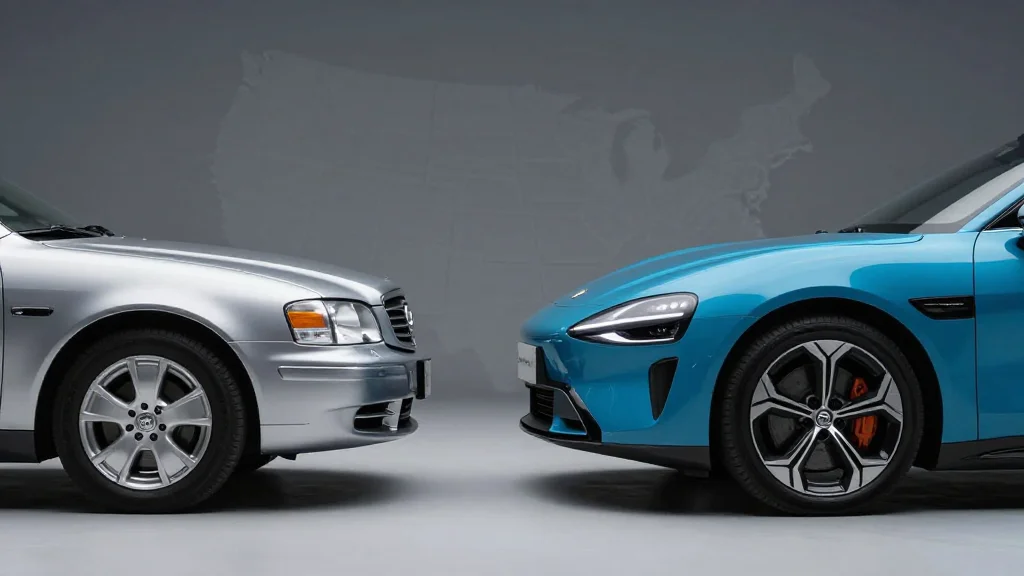
Ford Rejects Claim of US-Focused Talks With Geely
Companies Mentioned
Why It Matters
The statement underscores the U.S. auto industry’s defensive posture against Chinese competition and signals that policy barriers remain a decisive factor in cross‑border automotive collaborations.
Key Takeaways
- •Ford rejects any US‑focused technology talks with Geely.
- •Discussions limited to using Ford’s underutilized plant in Spain.
- •US tariffs and tech bans keep Chinese EVs out of domestic market.
- •CEO Farley calls Chinese entry “devastating” for U.S. manufacturing.
Pulse Analysis
The Ford‑Geely saga reflects a broader geopolitical tug‑of‑war playing out on the automotive floor. While the two companies have explored a European joint venture that could leverage Ford’s idle Spanish facility, any extension into the United States has hit a wall. Ford’s public denial aligns with a cautious strategy that protects its brand equity while still probing cost‑effective production options abroad. For Geely, the European foothold offers a gateway to the continent’s EV incentives, but the U.S. remains a distant, heavily regulated market.
U.S. policymakers have erected a series of barriers that make Chinese electric‑vehicle imports financially unattractive. Tariffs exceeding 25 percent, coupled with restrictions on critical battery‑management software, effectively price Chinese models out of the domestic market. These measures protect legacy manufacturers but also limit consumer choice and slow the diffusion of low‑cost, high‑tech EVs that Chinese firms excel at producing. The tension is further amplified by trade‑policy inertia; while the Biden administration signals a tough stance, it has yet to articulate a clear pathway for regulated entry, leaving Chinese automakers in a strategic limbo.
For Ford and its peers, the key challenge is balancing collaboration opportunities with national‑security concerns. A partnership that taps Chinese engineering talent could accelerate cost reductions, yet the political risk of perceived technology transfer remains high. Executives like Jim Farley argue that a coordinated policy framework—whether through joint‑venture safeguards or domestic production incentives—is essential before any meaningful U.S. market entry can be contemplated. The next few months will likely determine whether the industry leans toward isolationist protection or a calibrated, collaborative approach to Chinese innovation.
Ford Rejects Claim of US-Focused Talks With Geely
Comments
Want to join the conversation?
Loading comments...