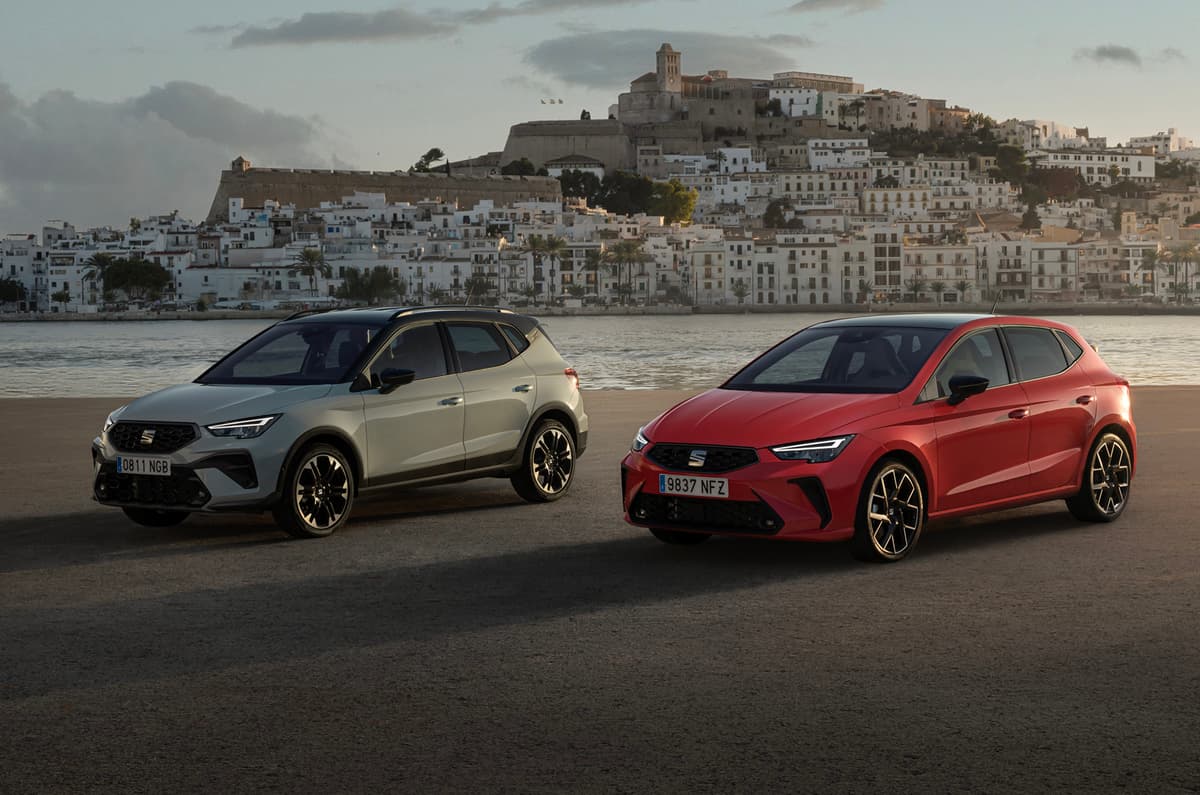
New Seat Cars on Horizon as Brand Diverges From Cupra
Why It Matters
Seat’s decision to keep its lineup distinct from Cupra protects its value‑oriented market share and signals a cautious approach to electrification that could affect European pricing dynamics and investor confidence.
Key Takeaways
- •Seat plans mild‑hybrid Ibiza and Arona for 2025.
- •No rebadged Cupra EVs; brands will stay distinct.
- •Seat aims to keep affordable ICE models for emerging markets.
- •CEO says future electric Seat depends on platform cost reductions.
Pulse Analysis
Seat’s recent facelift of the Ibiza and Arona, coupled with upcoming mild‑hybrid powertrains, marks the first substantive product investment since the fourth‑generation Leon in 2020. The moves come as the brand’s SUV siblings, the Ateca and Tarraco, have been retired, leaving a three‑model, petrol‑only portfolio. CEO Markus Haupt reassured investors that the Ibiza remains Spain’s best‑selling car, underscoring Seat’s continued relevance in its home market while the company allocates most R&D dollars to its sportier sibling, Cupra, which is expanding toward a premium global identity.
The strategic split between Seat and Cupra is rooted in brand DNA rather than cost‑saving badge engineering. Haupt ruled out any plan to rebadge Cupra’s upcoming Raval EV as a cheaper Seat model, insisting that each marque must retain a unique product architecture. This differentiation is crucial as European CO₂ regulations tighten toward 2030, demanding lower‑emission fleets. Seat’s leadership acknowledges that current EV platform costs make a profitable electric Seat line unfeasible, especially for price‑sensitive customers, so the brand will focus on markets where internal‑combustion vehicles remain viable while monitoring platform cost trends.
Looking ahead, Seat’s roadmap hinges on achieving affordable electric platform economics before committing to a full EV rollout, likely beyond 2030. In the interim, the brand will leverage mild‑hybrid technology to improve fuel efficiency and meet interim emissions targets. For investors, Seat’s clear stance on preserving its value‑oriented positioning while Cupra pursues premium electrification offers a balanced risk profile: steady cash flow from existing ICE models and a potential upside if EV costs decline. The dual‑brand strategy could set a template for other OEMs navigating the transition between legacy and electric portfolios.
New Seat cars on horizon as brand diverges from Cupra
Comments
Want to join the conversation?
Loading comments...