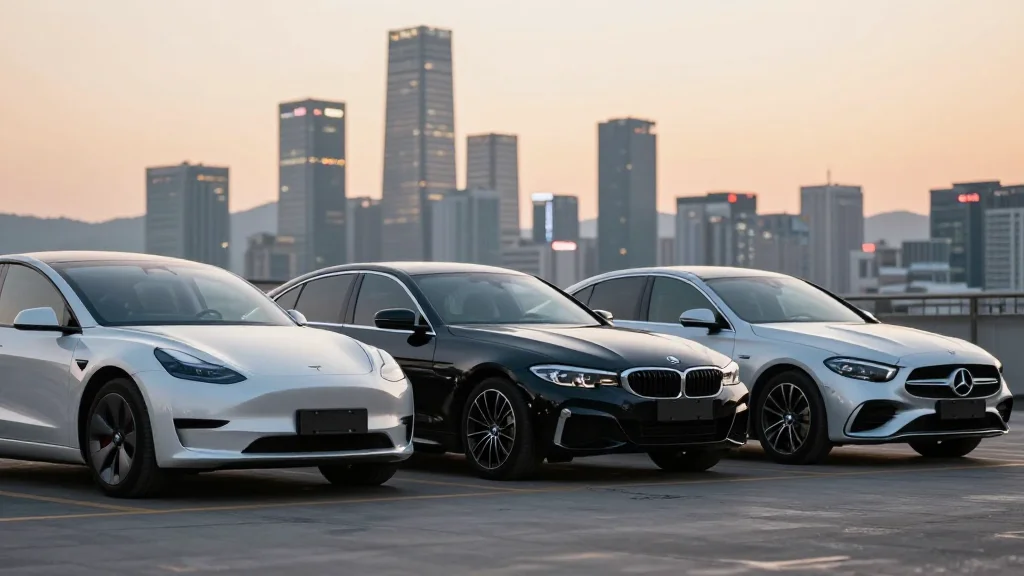
South Korean Vehicle Import Sales Surge 35% in March
Companies Mentioned
Why It Matters
The rapid rise of imports signals shifting consumer preference toward electrified vehicles, pressuring domestic manufacturers to accelerate EV strategies.
Key Takeaways
- •Import sales rose 35% YoY, reaching 33,970 units in March.
- •BEVs and HEVs drove the import surge, outpacing domestic market decline.
- •BMW and Mercedes‑Benz together hold ~26% of import volume.
- •Tesla sales jumped over fourfold, topping 20,000 units year‑to‑date.
- •BYD targets 10,000 South Korean sales, adding three new models.
Pulse Analysis
The Korean auto market is witnessing a pronounced pivot toward imported electrified vehicles. In March 2026, imported light‑passenger car registrations climbed 35% year‑over‑year to 33,970 units, while the combined sales of the country’s five major domestic manufacturers slipped to 326,648 units for the first quarter. Analysts attribute the surge primarily to battery‑electric (BEV) and hybrid‑electric (HEV) models, which benefit from expanding charging infrastructure and generous government subsidies. This trend mirrors a broader regional shift as consumers prioritize range, technology, and sustainability over traditional brand loyalty.
German marques continue to dominate the import segment, with BMW and its Mini subsidiary accounting for roughly a quarter of all imported units. Mercedes‑Benz, under its newly appointed CEO Shirin Emeera, is rolling out ten new or facelifted models, many built on dedicated electric platforms, to cement its foothold. Tesla’s South Korean sales exploded more than fourfold, reaching nearly 21,000 units, underscoring the brand’s price‑competitive advantage after recent tariff adjustments. Meanwhile, BYD, Volkswagen, Polestar and Stellantis are expanding their line‑ups, signaling intensified competition for market share among both legacy and newcomer players.
The accelerating import growth puts pressure on domestic manufacturers such as Hyundai and Kia to fast‑track their EV roadmaps, lest they lose relevance in a market that now values zero‑emission technology. Policy makers are likely to respond with tighter emissions standards and additional incentives, which could further tilt the balance toward imports that already meet global safety and efficiency benchmarks. For suppliers and investors, the shift highlights opportunities in battery sourcing, software integration, and charging‑network development, while also raising questions about long‑term brand loyalty in South Korea’s evolving automotive landscape.
South Korean vehicle import sales surge 35% in March
Comments
Want to join the conversation?
Loading comments...